Department of Gastroenterological Surgery, Cancer Institute Hospital of Japanese Foundation for Cancer Research, 3-8-31 Ariake, Koto-ku, Tokyo, 135-8550, Japan.
Department of Gastroenterological Surgery, National Hospital Organization Kyushu Cancer Center, 3-1-1 Notame, Minami-ku, Fukuoka, 811-1395, Japan.
Esophagus. 2022 Jan;19(1):1-26. doi: 10.1007/s10388-021-00879-1. Epub 2021 Sep 22.
The registration committee for esophageal cancer in the Japan Esophageal Society (JES) has collected the patients' characteristics, treatment, and outcomes annually.
We analyzed the data of patients who had visited the participating hospitals in 2014. We collected the data with a web-based data collection system using the National Clinical Database. We used the Japanese Classification of Esophageal Cancer 10th edition by JES and the TNM classification 7th edition by the Union of International Cancer Control (UICC) for cancer staging.
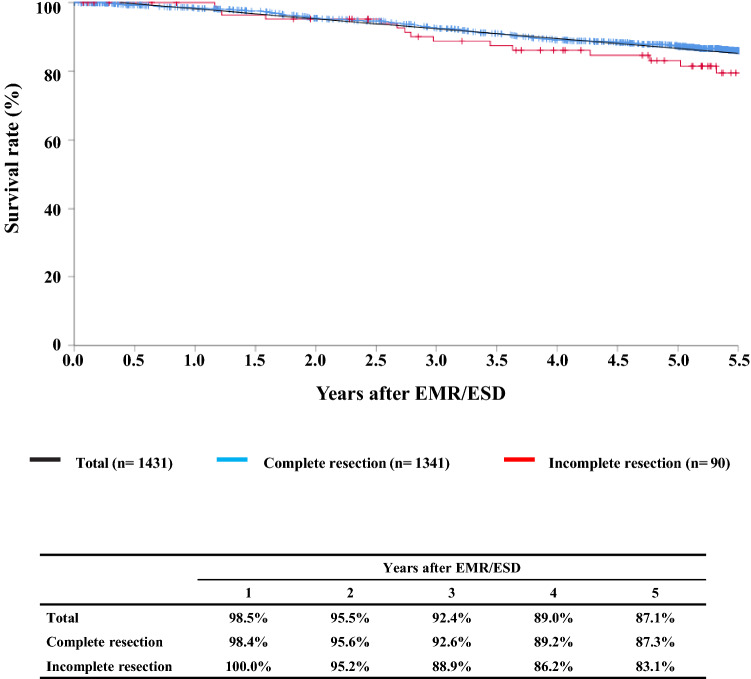
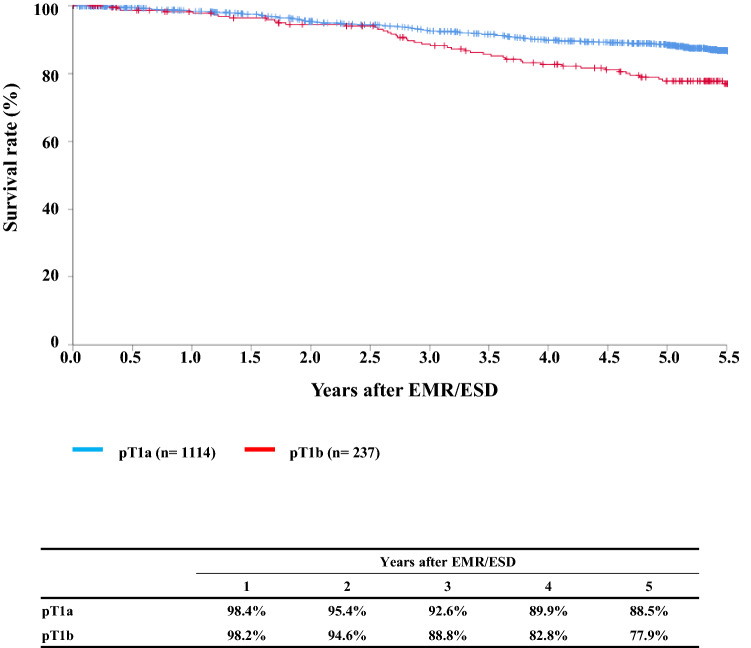
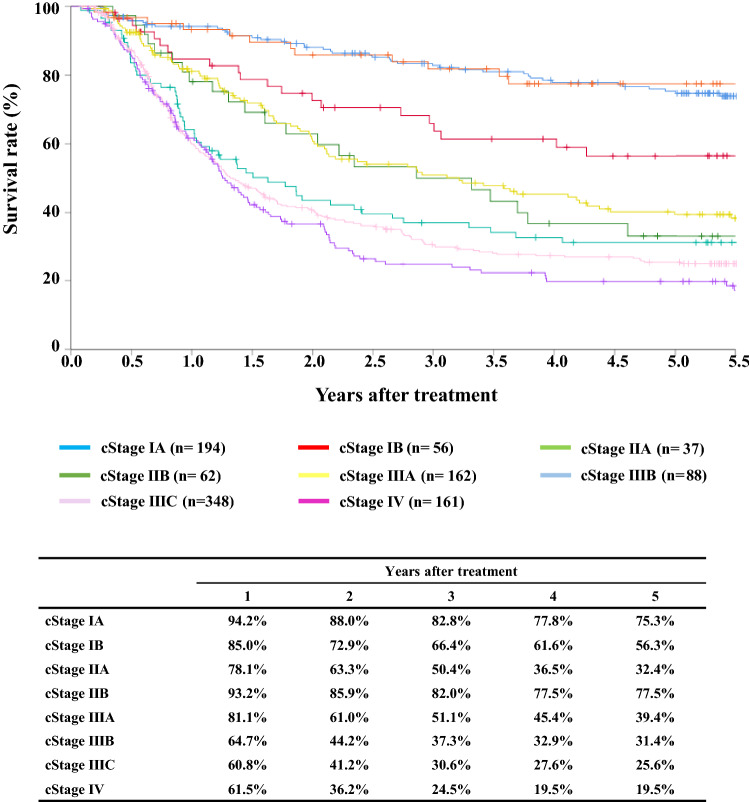
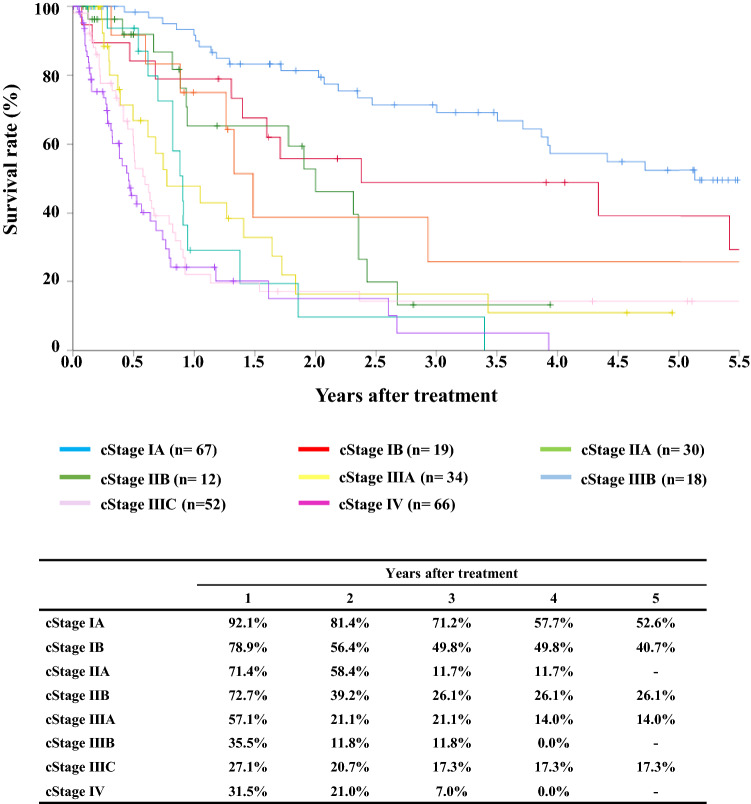
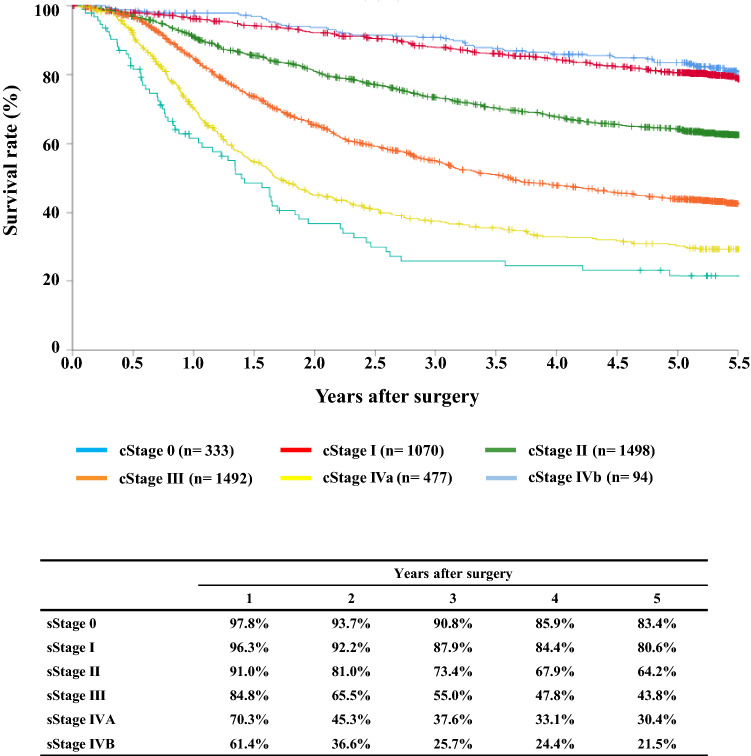
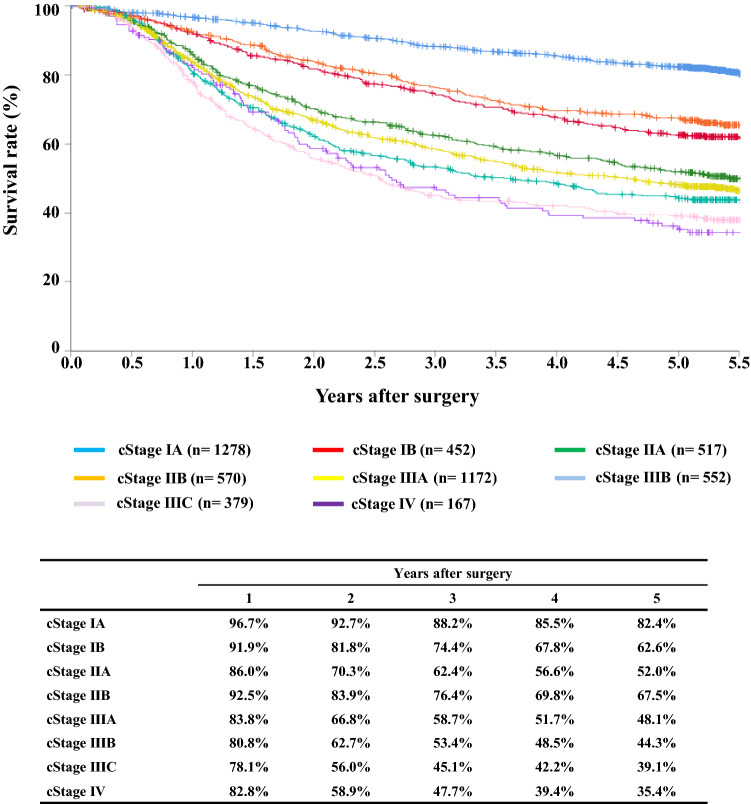
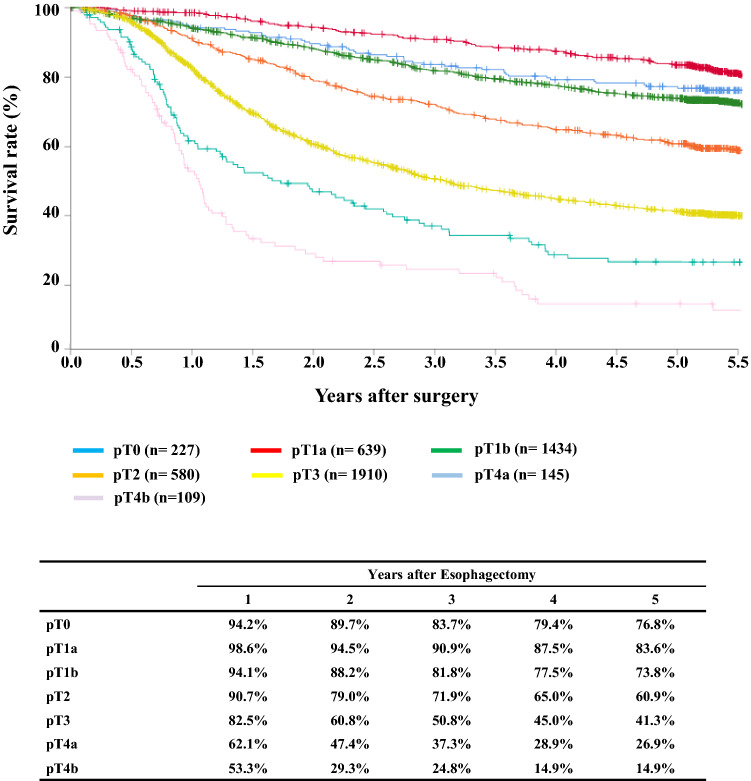
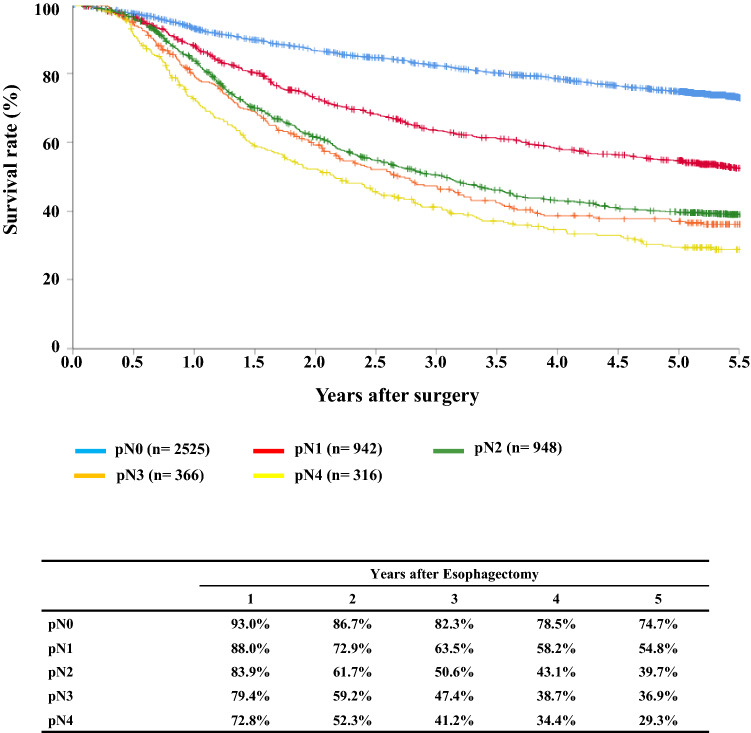
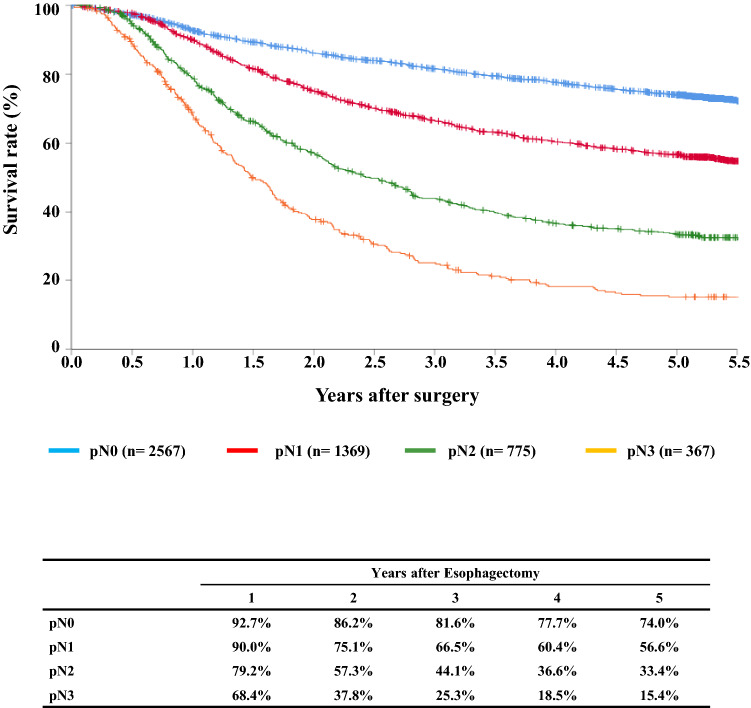
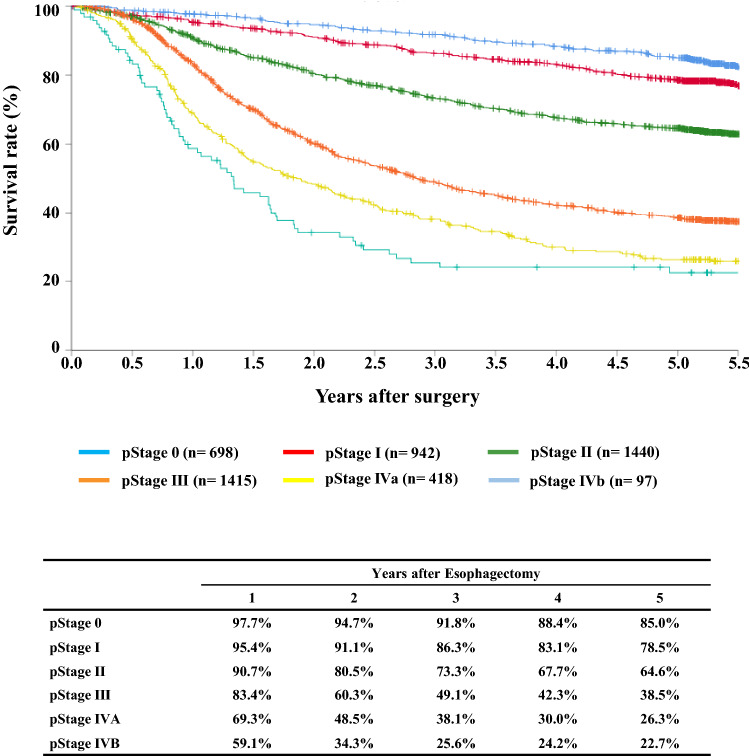
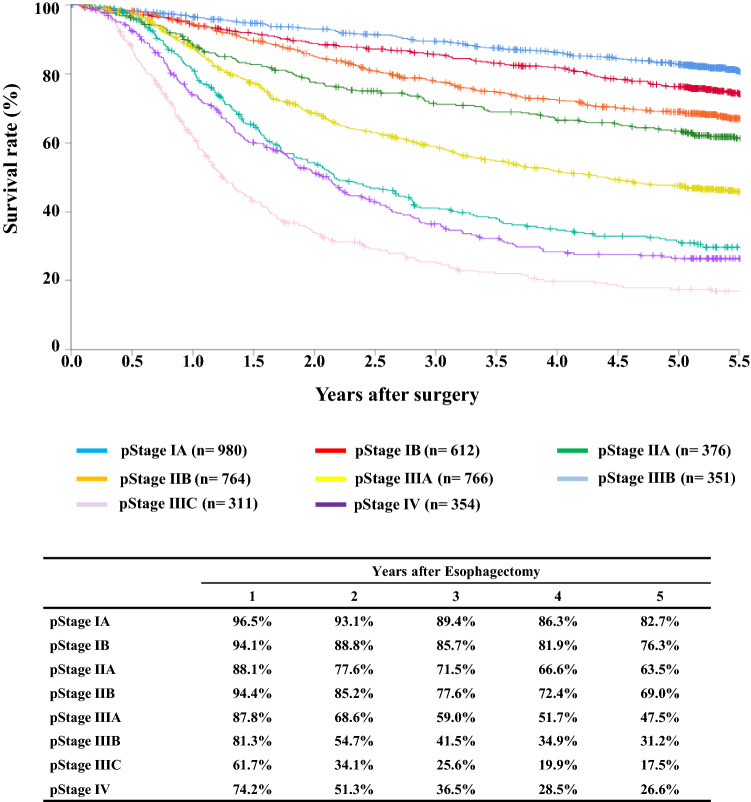
A total of 9026 cases were registered from 344 institutions in Japan. Squamous cell carcinoma and adenocarcinoma accounted for 87.9% and 7.1%, respectively. The 5-year survival rates of patients treated using endoscopic resection, concurrent chemoradiotherapy, radiotherapy alone, and esophagectomy were 87.1%, 33.7%, 25.3%, and 59.3%, respectively. Esophagectomy was performed in 5204 cases. Concerning the approach used for esophagectomy, 48.1% of the cases were treated thoracoscopically. The operative mortality (within 30 days after surgery) was 0.75%, and the hospital mortality was 2.0%. The survival curves showed an excellent discriminatory ability both in the clinical and pathologic stages by the JES system. The survival of pStage IV was better than IIIC in the UICC system, because pStage IV included the patients with supraclavicular lymph-node metastasis (M1 LYM).
We hope that this report contributes to improving all aspects of diagnosing and treating esophageal cancer in Japan.
日本食管协会(JES)的食管癌注册委员会每年都会收集患者的特征、治疗和结果。
我们分析了 2014 年访问参与医院的患者数据。我们使用国家临床数据库的基于网络的数据收集系统收集数据。我们使用 JES 的第 10 版日本食管癌分类和 UICC 的第 7 版 TNM 分类进行癌症分期。
从日本的 344 家机构共登记了 9026 例患者。鳞状细胞癌和腺癌分别占 87.9%和 7.1%。接受内镜切除、同步放化疗、单纯放疗和食管切除术治疗的患者 5 年生存率分别为 87.1%、33.7%、25.3%和 59.3%。5204 例患者接受了食管切除术。在食管切除术的方法方面,48.1%的病例采用了胸腔镜手术。手术死亡率(术后 30 天内)为 0.75%,住院死亡率为 2.0%。生存曲线显示,JES 系统的临床和病理分期均具有良好的区分能力。UICC 系统中 pStage IV 的生存率优于 IIIC,因为 pStage IV 包括锁骨上淋巴结转移(M1 LYM)的患者。
我们希望本报告有助于提高日本食管癌的诊断和治疗的各个方面。