Department of Virology, School of Medicine, Iran University of Medical Sciences, Tehran, Iran.
Research Center for Clinical Virology, Tehran University of Medical Sciences, Tehran, Iran.
Sci Rep. 2021 Sep 22;11(1):18851. doi: 10.1038/s41598-021-97860-w.
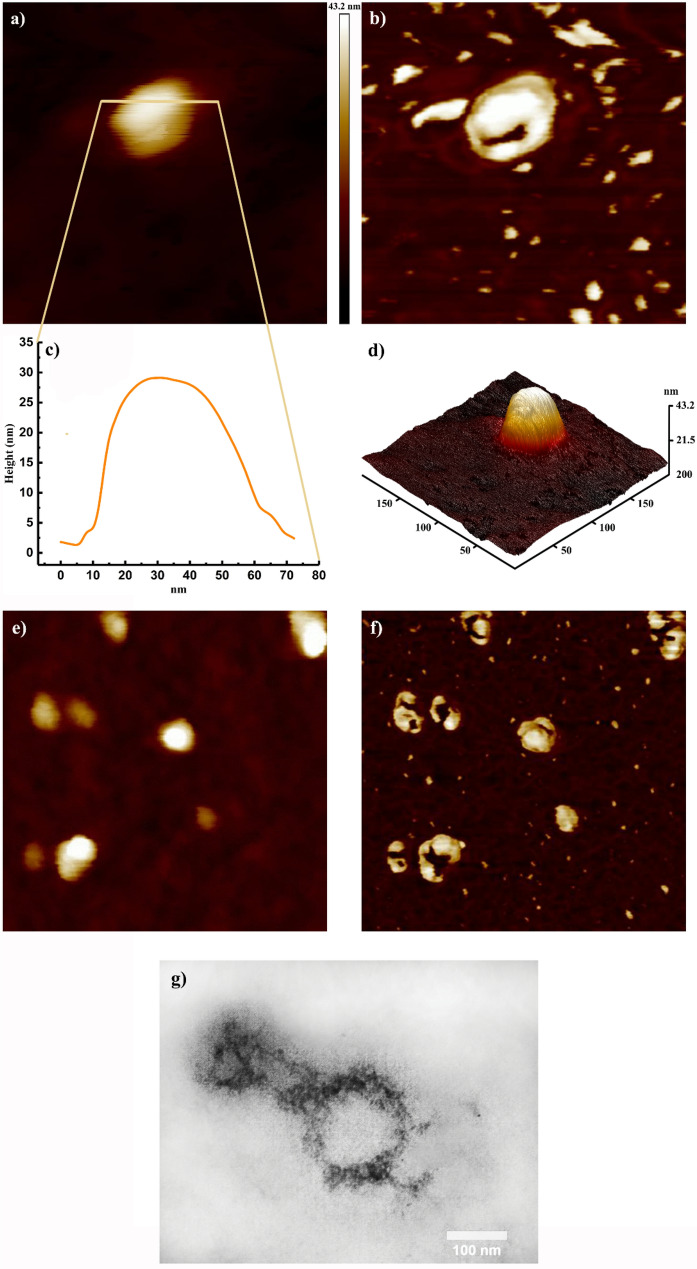
In this pandemic SARS-CoV-2 crisis, any attempt to contain and eliminate the virus will also stop its spread and consequently decrease the risk of severe illness and death. While ozone treatment has been suggested as an effective disinfection process, no precise mechanism of action has been previously reported. This study aimed to further investigate the effect of ozone treatment on SARS-CoV-2. Therefore, virus collected from nasopharyngeal and oropharyngeal swab and sputum samples from symptomatic patients was exposed to ozone for different exposure times. The virus morphology and structure were monitored and analyzed through Atomic Force Microscopy (AFM), Transmission Electron Microscopy (TEM), Atomic Absorption Spectroscopy (AAS), and ATR-FTIR. The obtained results showed that ozone treatment not only unsettles the virus morphology but also alters the virus proteins' structure and conformation through amino acid disturbance and Zn ion release from the virus non-structural proteins. These results could provide a clearer pathway for virus elimination and therapeutics preparation.
在当前的 SARS-CoV-2 大流行危机中,任何试图控制和消灭病毒的努力都将阻止其传播,从而降低严重疾病和死亡的风险。虽然臭氧处理已被提议作为一种有效的消毒过程,但以前没有报道过其确切的作用机制。本研究旨在进一步研究臭氧处理对 SARS-CoV-2 的影响。因此,从有症状患者的鼻咽和口咽拭子以及痰液样本中收集病毒,并将其暴露于臭氧中不同的暴露时间。通过原子力显微镜(AFM)、透射电子显微镜(TEM)、原子吸收光谱(AAS)和衰减全反射傅里叶变换红外光谱(ATR-FTIR)监测和分析病毒形态和结构。获得的结果表明,臭氧处理不仅破坏了病毒形态,还通过干扰氨基酸和从病毒非结构蛋白中释放 Zn 离子改变了病毒蛋白的结构和构象。这些结果可能为病毒消除和治疗药物制备提供更清晰的途径。