Applegate Tanya J, Krafsur Greta M, Boon June A, Zhang Hui, Li Min, Holt Timothy N, Ambler S Kelly, Abrams Benjamin A, Gustafson Daniel L, Bartels Karsten, Garry Franklyn B, Stenmark Kurt R, Brown R Dale
Department of Clinical Sciences, Colorado State University College of Veterinary Medicine and Biomedical Sciences, Fort Collins, CO, United States.
Division of Clinical Research, Medicine and Pathobiologic Services, RTI, L.L.C., Brookings, SD, United States.
Front Physiol. 2021 Sep 6;12:712583. doi: 10.3389/fphys.2021.712583. eCollection 2021.
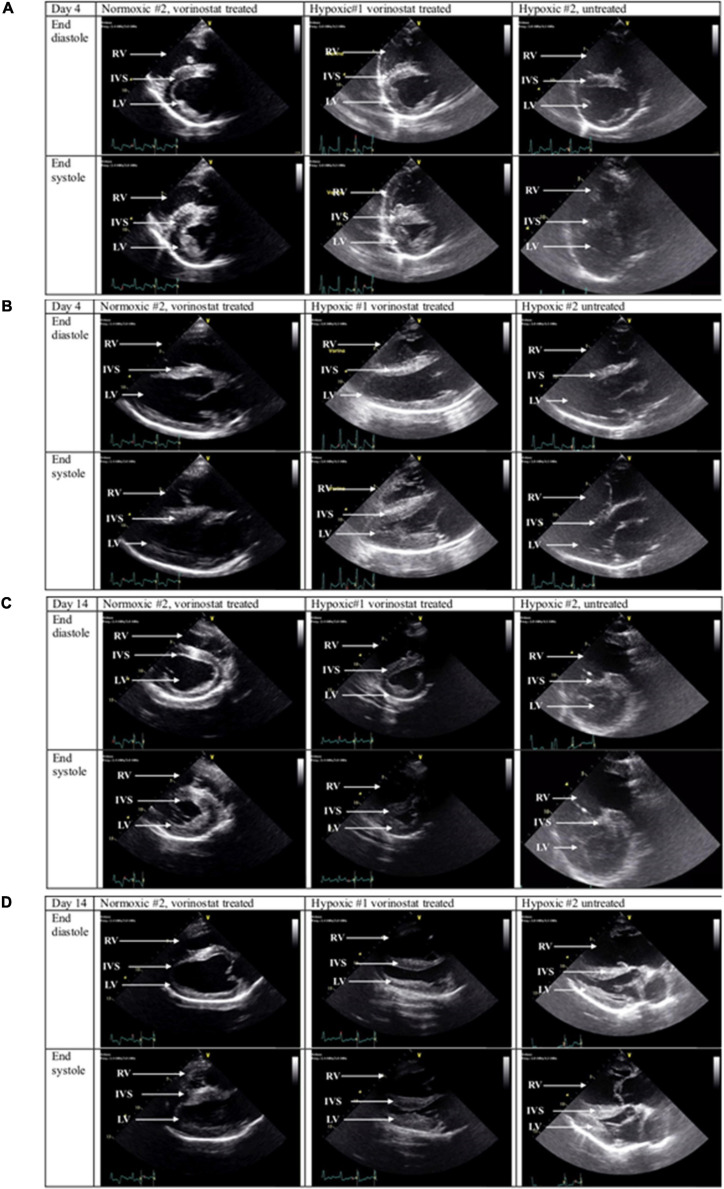
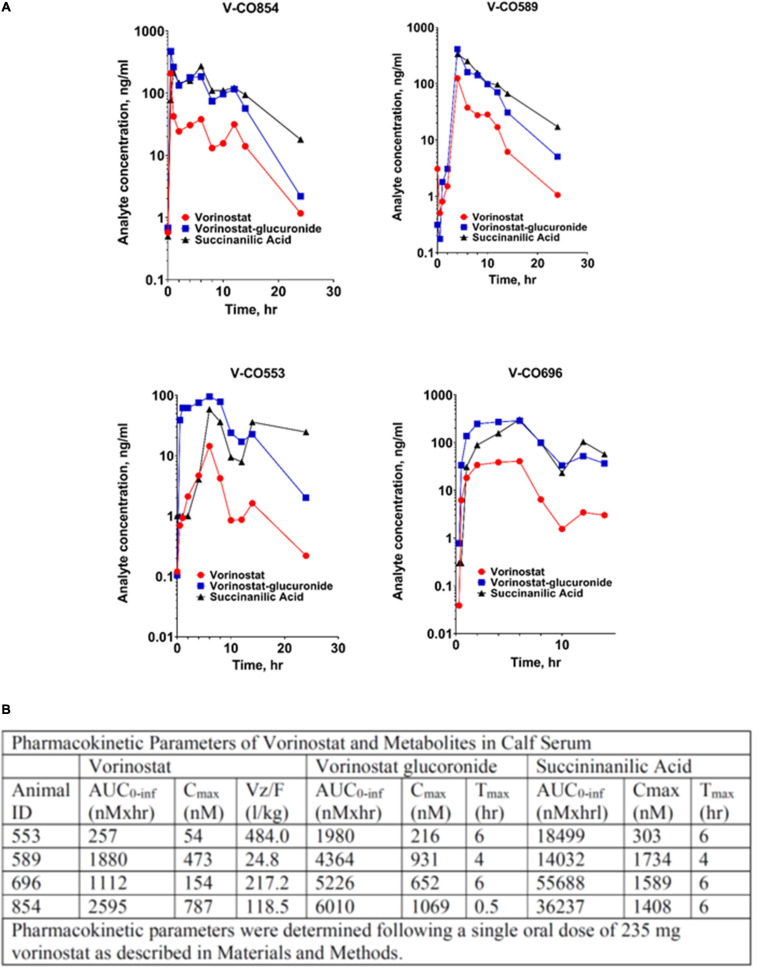
Pulmonary hypertension (PH) is an incurable condition in humans; driven by pulmonary vascular remodeling partially mediated by epigenetic mechanisms; and leading to right ventricular hypertrophy, failure, and death. We hypothesized that targeting chromatin-modifying histone deacetylases may provide benefit. In this Brief Report we describe case comparison studies using the histone deacetylase inhibitor vorinostat (suberanilohydroxamic acid, 5 mg/kg/day for the first 5 study days) in an established model of severe neonatal bovine PH induced by 14 days of environmental hypoxia. Echocardiographic, hemodynamic, and pharmacokinetic data were obtained in hypoxia-exposed (one each, vorinostat-treated vs. untreated) and normoxic vorinostat-treated control animals ( = 2). Echocardiography detected PH changes by day 4 and severe PH over 14 days of continued hypoxic exposure. RV dysfunction at day 4 was less severe in vorinostat-treated compared to untreated hypoxic calves. Cardioprotective effects were partially maintained following cessation of treatment through the duration of hypoxic exposure, accompanied by hemodynamic evidence suggestive of reduced pulmonary vascular stiffening, and modulated expression of HDAC1 protein and genes involved in RV and pulmonary vascular remodeling and pathological RV hypertrophy. Control calves did not develop PH, nor show adverse cardiac or clinical effects. These results provide novel translation of epigenetic-directed therapy to a large animal severe PH model that recapitulates important features of human disease.
肺动脉高压(PH)在人类中是一种无法治愈的疾病;由部分由表观遗传机制介导的肺血管重塑驱动;并导致右心室肥大、衰竭和死亡。我们假设靶向染色质修饰组蛋白脱乙酰酶可能有益。在本简要报告中,我们描述了在由14天环境缺氧诱导的严重新生牛PH的既定模型中,使用组蛋白脱乙酰酶抑制剂伏立诺他(辛二酰苯胺异羟肟酸,在研究的前5天每天5mg/kg)进行的病例对照研究。在暴露于缺氧的动物(各1只,伏立诺他治疗组与未治疗组)和常氧伏立诺他治疗的对照动物(n = 2)中获取了超声心动图、血流动力学和药代动力学数据。超声心动图在第4天检测到PH变化,在持续缺氧暴露14天后检测到严重PH。与未治疗的缺氧小牛相比,伏立诺他治疗的小牛在第4天的右心室功能障碍较轻。在治疗停止后直至缺氧暴露期结束,心脏保护作用部分得以维持,伴有血流动力学证据提示肺血管僵硬度降低,以及HDAC1蛋白和参与右心室及肺血管重塑和病理性右心室肥大的基因表达受到调节。对照小牛未发生PH,也未表现出不良心脏或临床效应。这些结果为表观遗传导向疗法在大型动物严重PH模型中的新转化提供了依据,该模型概括了人类疾病的重要特征。