Department of Biology, Faculty of Sciences, University of Mohaghegh Ardabili, 56199-11367, Ardabil, Iran.
BMC Microbiol. 2021 Sep 23;21(1):258. doi: 10.1186/s12866-021-02315-x.
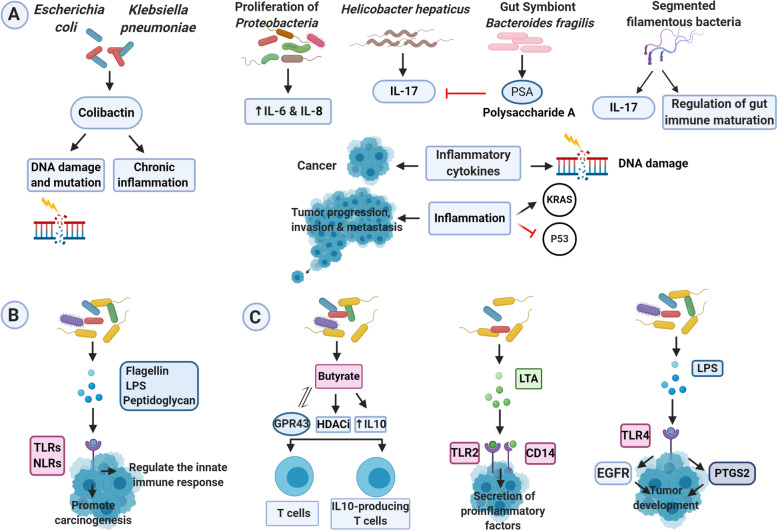
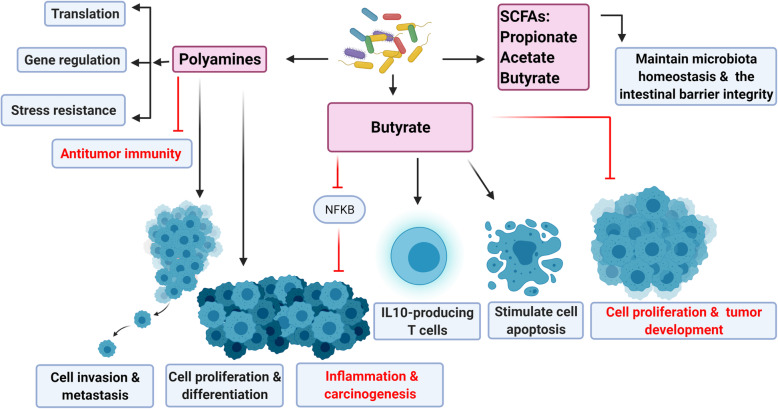
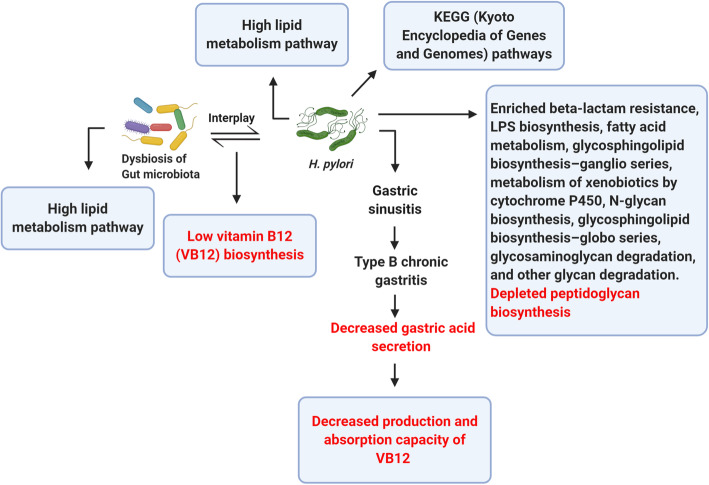
Chronic Helicobacter pylori infection is a critical risk factor for gastric cancer (GC). However, only 1-3 % of people with H. pylori develop GC. In gastric carcinogenesis, non-H. pylori bacteria in the stomach might interact with H. pylori. Bacterial dysbiosis in the stomach can strengthen gastric neoplasia development via generating tumor-promoting metabolites, DNA damaging, suppressing antitumor immunity, and activating oncogenic signaling pathways. Other bacterial species may generate short-chain fatty acids like butyrate that may inhibit carcinogenesis and inflammation in the human stomach. The present article aimed at providing a comprehensive overview of the effects of gut microbiota and H. pylori on the development of GC. Next, the potential mechanisms of intestinal microbiota were discussed in gastric carcinogenesis. We also disserted the complicated interactions between H. pylori, intestinal microbiota, and host in gastric carcinogenesis, thus helping us to design new strategies for preventing, diagnosing, and treating GC.
慢性幽门螺杆菌感染是胃癌(GC)的一个关键危险因素。然而,只有 1-3%的幽门螺杆菌感染者会发展为 GC。在胃癌的发生过程中,胃内的非幽门螺杆菌细菌可能与幽门螺杆菌相互作用。胃内细菌失调会通过产生促进肿瘤的代谢物、损伤 DNA、抑制抗肿瘤免疫和激活致癌信号通路来增强胃肿瘤的发展。其他细菌物种可能会产生丁酸等短链脂肪酸,从而抑制人类胃内的癌变和炎症。本文旨在全面概述肠道微生物群和幽门螺杆菌对 GC 发展的影响。接下来,讨论了肠道微生物群在胃癌发生中的潜在机制。我们还阐述了幽门螺杆菌、肠道微生物群和宿主在胃癌发生中的复杂相互作用,从而帮助我们设计预防、诊断和治疗 GC 的新策略。