Ofoedu Chigozie E, Iwouno Jude O, Ofoedu Ebelechukwu O, Ogueke Chika C, Igwe Victory S, Agunwah Ijeoma M, Ofoedum Arinze F, Chacha James S, Muobike Onyinye P, Agunbiade Adedoyin O, Njoku Njideka E, Nwakaudu Angela A, Odimegwu Nkiru E, Ndukauba Onyekachi E, Ogbonna Chukwuka U, Naibaho Joncer, Korus Maciej, Okpala Charles Odilichukwu R
Department of Food Science and Engineering, South China University of Technology, Guangzhou, Guangdong, China.
Department of Food Science and Technology, Federal University of Technology, Owerri, Imo State, Nigeria.
PeerJ. 2021 Sep 1;9:e11940. doi: 10.7717/peerj.11940. eCollection 2021.
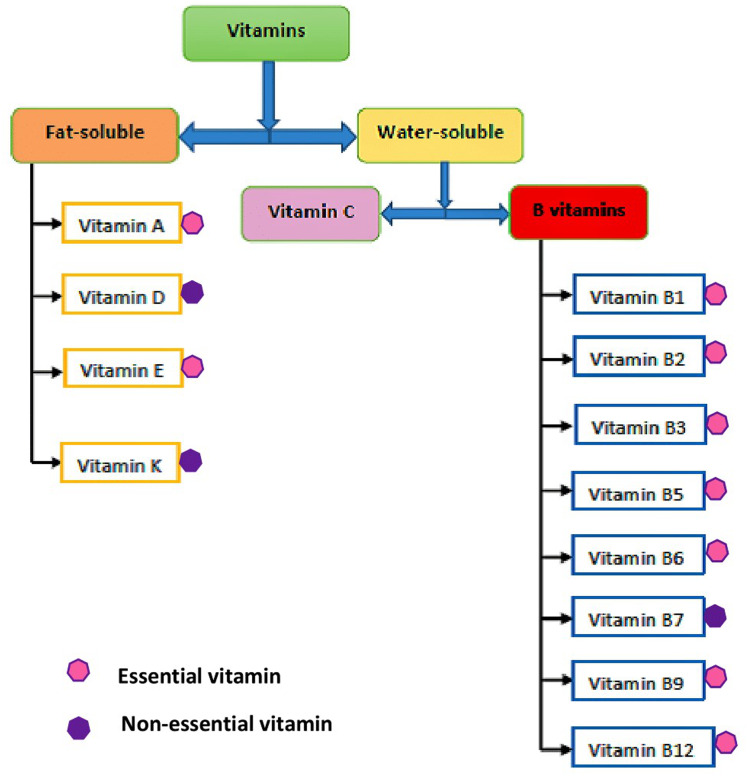
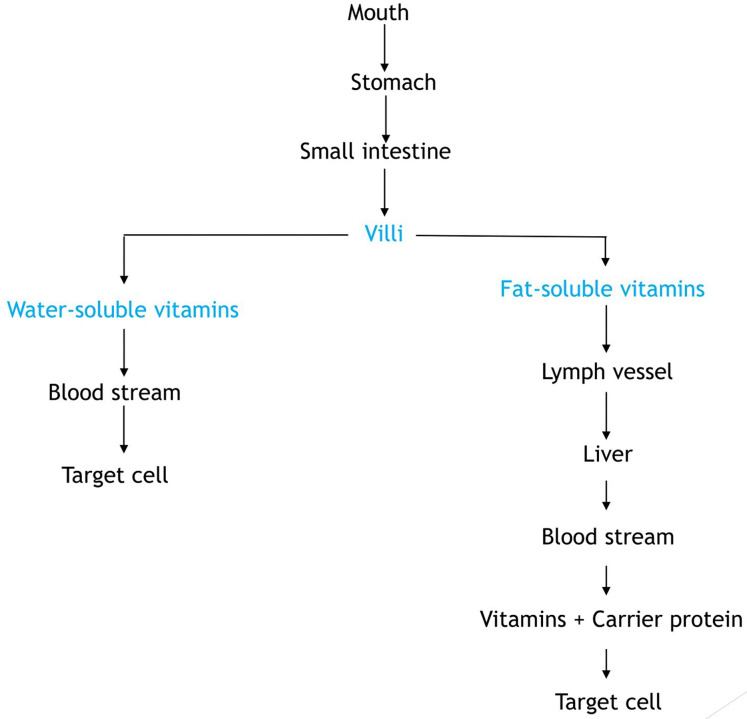
The significant attention gained by food-sourced vitamins has provided insights into numerous current researches; for instance, the potential reversal of epigenetic age using a diet and lifestyle intervention, the balance between food and dietary supplements in the general population, the role of diet and food intake in age-related macular degeneration, and the association of dietary supplement use, nutrient intake and mortality among adults. As relevant literature about food-sourced vitamin increases, continuous synthesis is warranted. To supplement existing information, this perspective review discussed food-sourced vitamins for consumer diet and health needs, scoping from vitamin absorption, metabolic functions, utilization, to balancing nutritional requirements. Relevant literatures were identified through a search of databases like Google Scholar, Web of Science, the Interscience Online Library, ScienceDirect, and PubMed. We demonstrated that vitamins whether from plant- and animal-based sources are prerequisites for the metabolic functions of the human body. The fat- and water-soluble classification of vitamins remains consistent with their respective absorption and dissolution potentials, underpinned by numerous physiological functions. Vitamins, largely absorbed in the small intestine, have their bioavailability dependent on the food composition, its associated interactions, as well as alignment with their metabolic functions, which involves antioxidants, coenzymes, electron acceptor/donor, and hormones. Moreover, vitamin deficiencies, in every form, pose a serious threat to human health. Vitamin toxicities remain rare, but can still occur mainly from supplementation, although it appears much less in water-soluble vitamins of which some excesses get readily removed by the human body, different from the fat-soluble ones that are stored in tissues and organs. Besides discussions of absorption, transport, and cellular uptake of vitamins, this perspective review also included approaches to meeting vitamin requirements and therapeutic strategies against micronutrient deficiency and COVID-19. We have also attempted on how to strike the balance between food-sourced vitamins and dietary supplements.
食物来源的维生素受到的高度关注为当前众多研究提供了思路;例如,通过饮食和生活方式干预潜在逆转表观遗传年龄、普通人群中食物与膳食补充剂的平衡、饮食和食物摄入在年龄相关性黄斑变性中的作用,以及成年人使用膳食补充剂、营养素摄入与死亡率之间的关联。随着关于食物来源维生素的相关文献不断增加,持续进行综述很有必要。为补充现有信息,本综述探讨了满足消费者饮食和健康需求的食物来源维生素,范围涵盖维生素的吸收、代谢功能、利用以及营养需求的平衡。通过搜索谷歌学术、科学网、Interscience在线图书馆、ScienceDirect和PubMed等数据库确定了相关文献。我们证明,无论是来自植物和动物来源的维生素都是人体代谢功能的先决条件。维生素的脂溶性和水溶性分类与其各自的吸收和溶解潜力一致,并由多种生理功能支撑。维生素主要在小肠吸收,其生物利用度取决于食物成分、相关相互作用以及与代谢功能的匹配情况,代谢功能涉及抗氧化剂、辅酶、电子受体/供体和激素。此外,各种形式的维生素缺乏都会对人类健康构成严重威胁。维生素中毒仍然罕见,但主要仍可能由补充剂引起,尽管水溶性维生素中这种情况似乎少得多,人体能轻易排出一些过量的水溶性维生素,而脂溶性维生素则储存在组织和器官中。除了讨论维生素的吸收、运输和细胞摄取外,本综述还包括满足维生素需求的方法以及针对微量营养素缺乏和新冠疫情的治疗策略。我们还尝试探讨了如何在食物来源的维生素和膳食补充剂之间取得平衡。