Cong Shan, Liu Xiaohong, Jiang Yuxiao, Zhang Wei, Zhao Zhigang
Key Lab of Nanodevices and Applications, Suzhou Institute of Nano-Tech and Nano-Bionics, Chinese Academy of Sciences (CAS), Suzhou 215123, China.
Chongqing Institute of Green and Intelligent Technology, Chinese Academy of Sciences, Chongqing 400714, China.
Innovation (Camb). 2020 Oct 13;1(3):100051. doi: 10.1016/j.xinn.2020.100051. eCollection 2020 Nov 25.
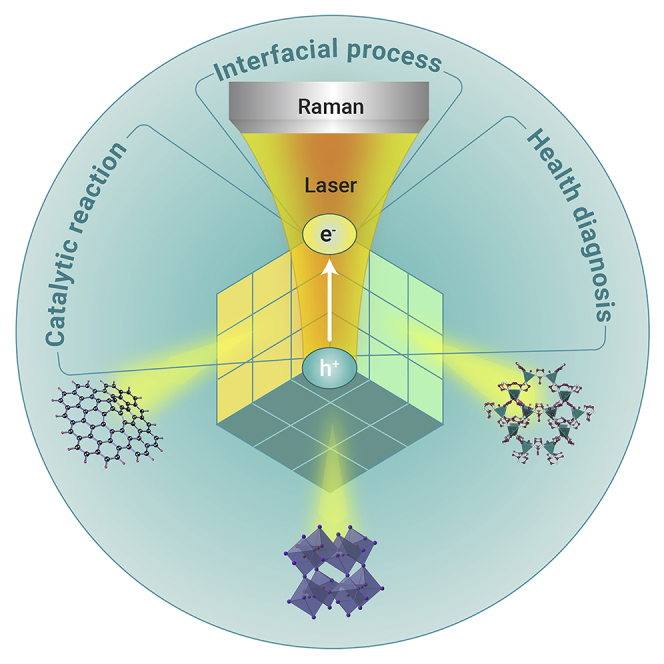
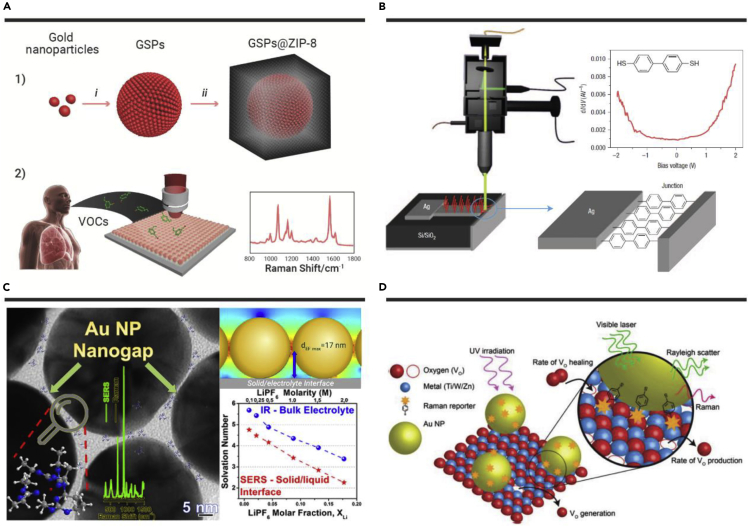
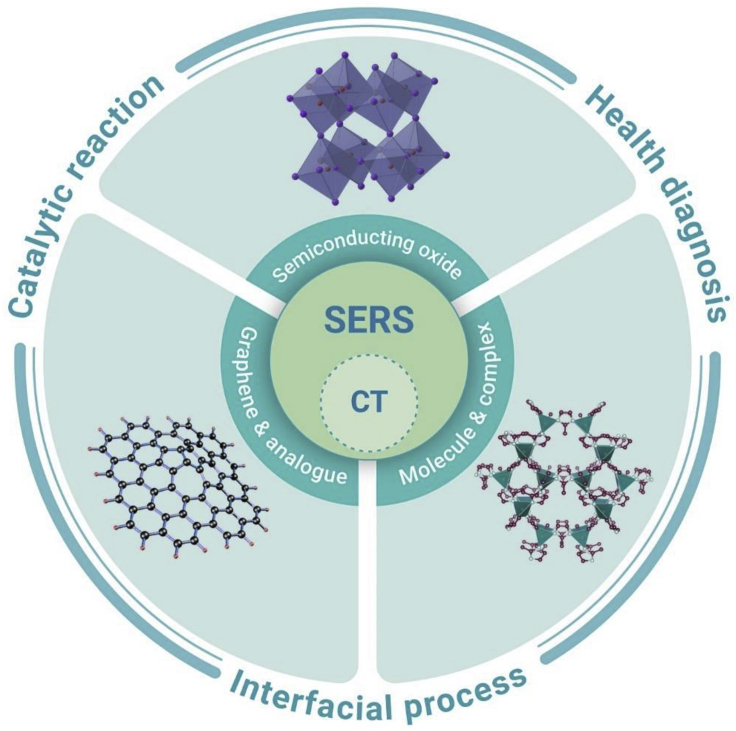
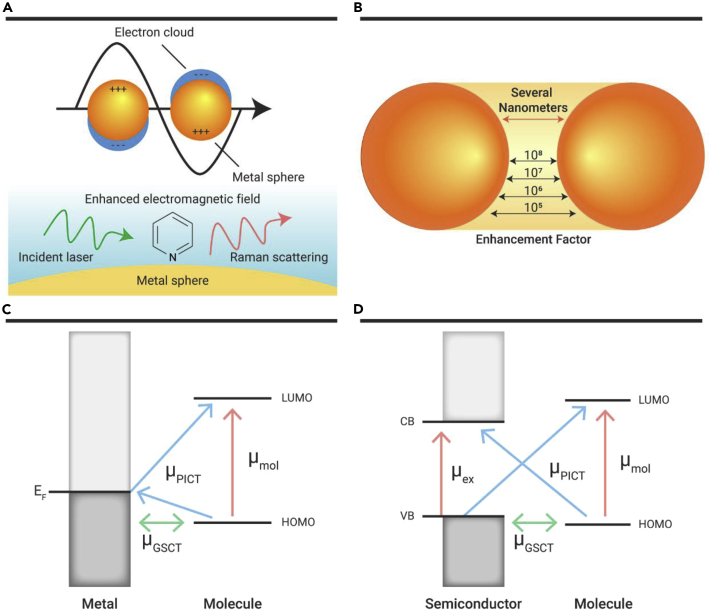
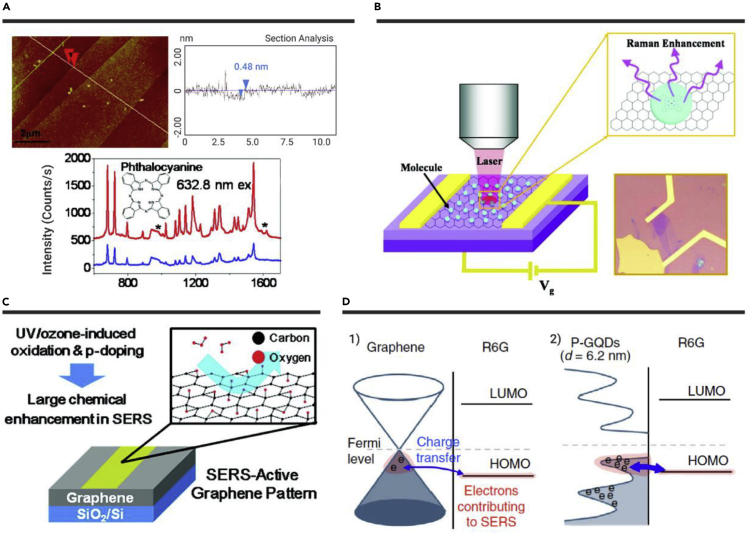
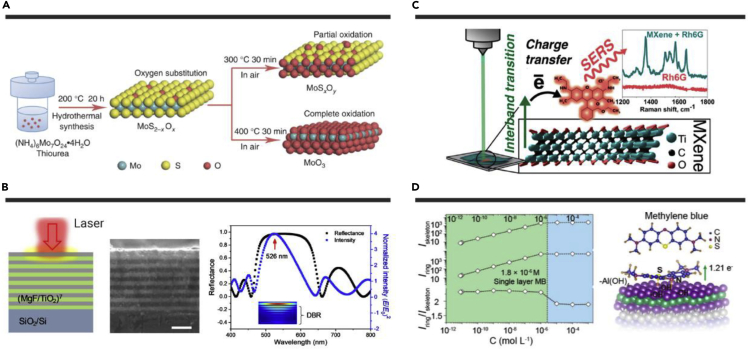
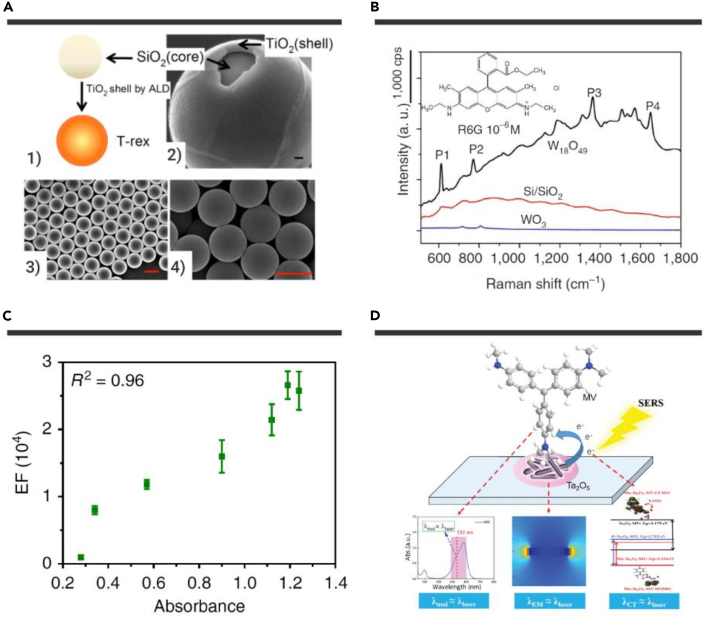
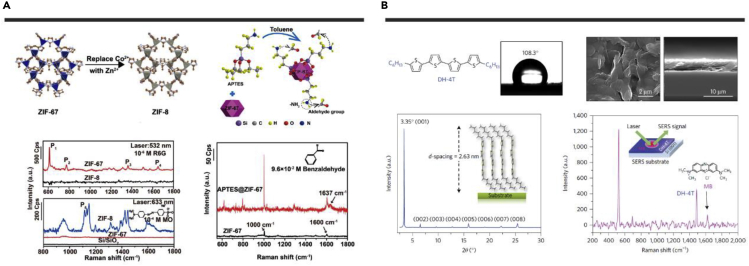
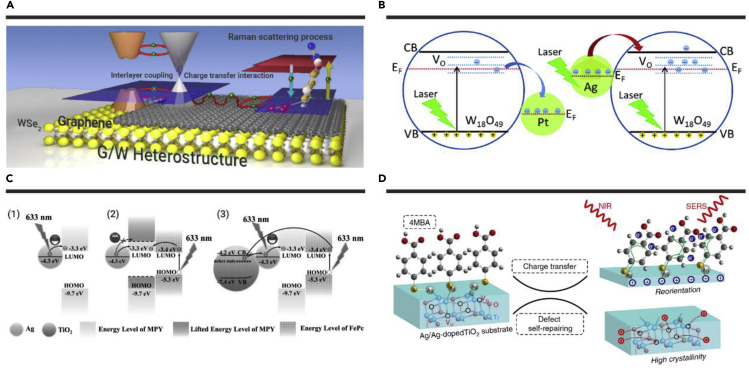
Surface enhanced Raman scattering (SERS) is a fingerprint spectral technique whose performance is highly dependent on the physicochemical properties of the substrate materials. In addition to the traditional plasmonic metal substrates that feature prominent electromagnetic enhancements, boosted SERS activities have been reported recently for various categories of non-metal materials, including graphene, MXenes, transition-metal chalcogens/oxides, and conjugated organic molecules. Although the structural compositions of these semiconducting substrates vary, chemical enhancements induced by interfacial charge transfer are often the major contributors to the overall SERS behavior, which is distinct from that of the traditional SERS based on plasmonic metals. Regarding charge-transfer-induced SERS enhancements, this short review introduces the basic concepts underlying the SERS enhancements, the most recent semiconducting substrates that use novel manipulation strategies, and the extended applications of these versatile substrates.
表面增强拉曼散射(SERS)是一种指纹光谱技术,其性能高度依赖于基底材料的物理化学性质。除了具有显著电磁增强特性的传统等离子体金属基底外,最近还报道了各类非金属材料(包括石墨烯、MXenes、过渡金属硫族化合物/氧化物和共轭有机分子)具有增强的SERS活性。尽管这些半导体基底的结构组成各不相同,但界面电荷转移引起的化学增强通常是整体SERS行为的主要贡献因素,这与基于等离子体金属的传统SERS不同。关于电荷转移诱导的SERS增强,本简短综述介绍了SERS增强背后的基本概念、采用新型操纵策略的最新半导体基底以及这些多功能基底的扩展应用。