James Shanalee C, Fraser Karl, Young Wayne, Heenan Phoebe E, Gearry Richard B, Keenan Jacqueline I, Talley Nicholas J, Joyce Susan A, McNabb Warren C, Roy Nicole C
The Riddet Institute, Massey University, Palmerston North 4474, New Zealand.
School of Food and Advanced Technology, Massey University, Palmerston North 4472, New Zealand.
Metabolites. 2021 Sep 9;11(9):612. doi: 10.3390/metabo11090612.
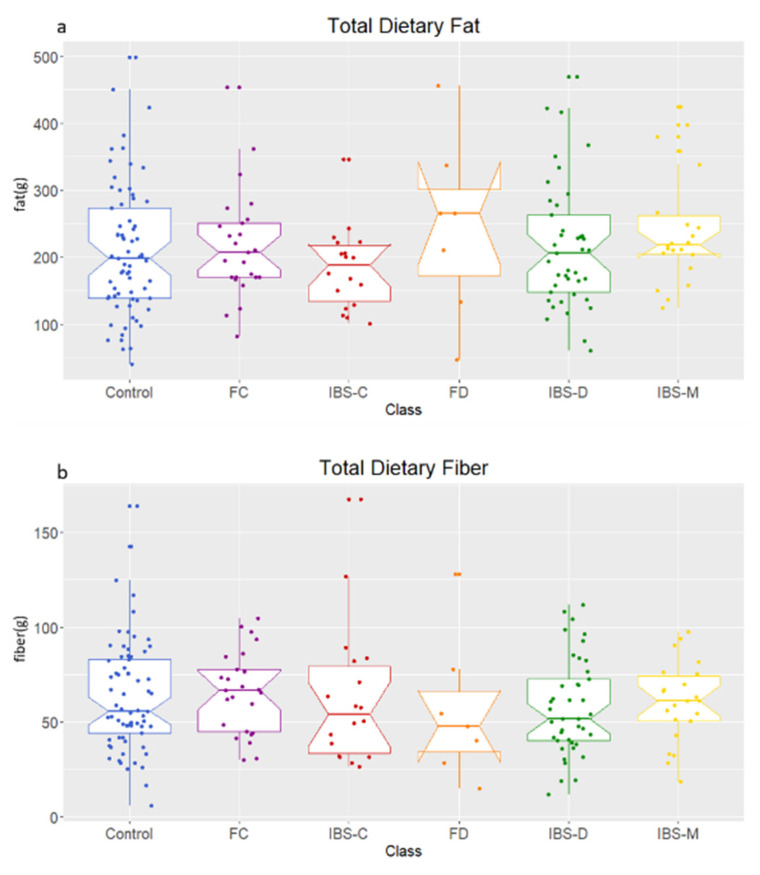
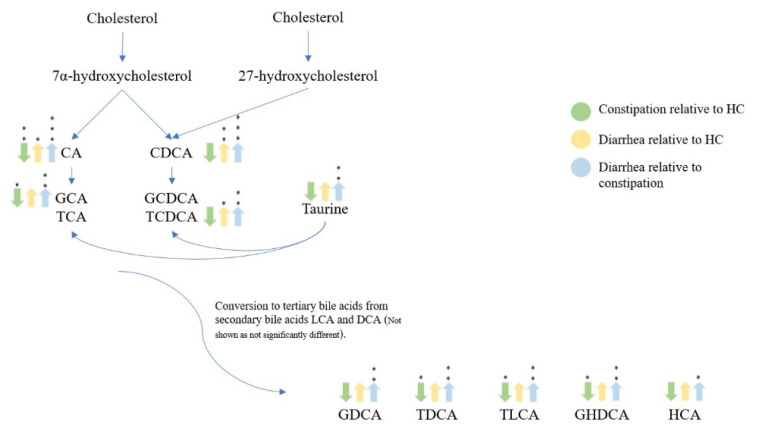
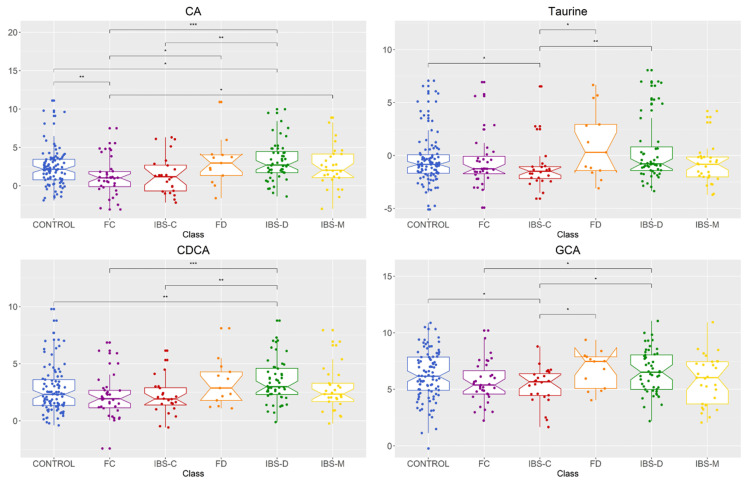
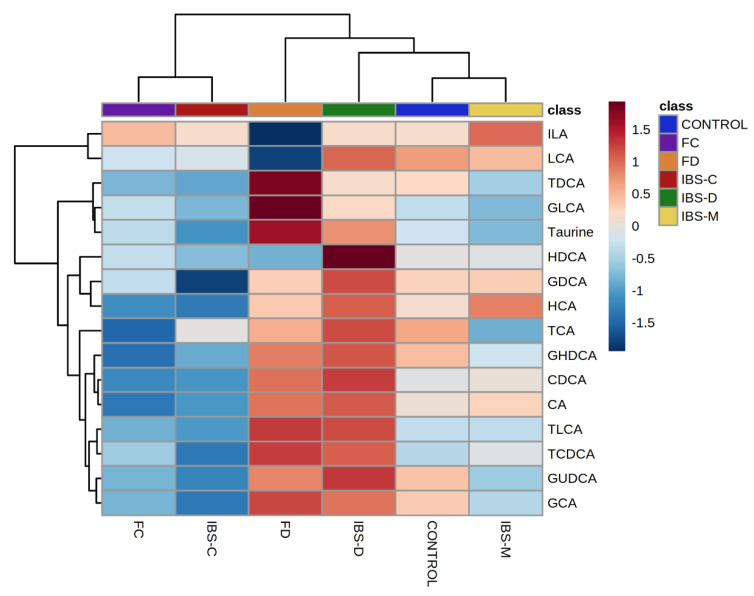
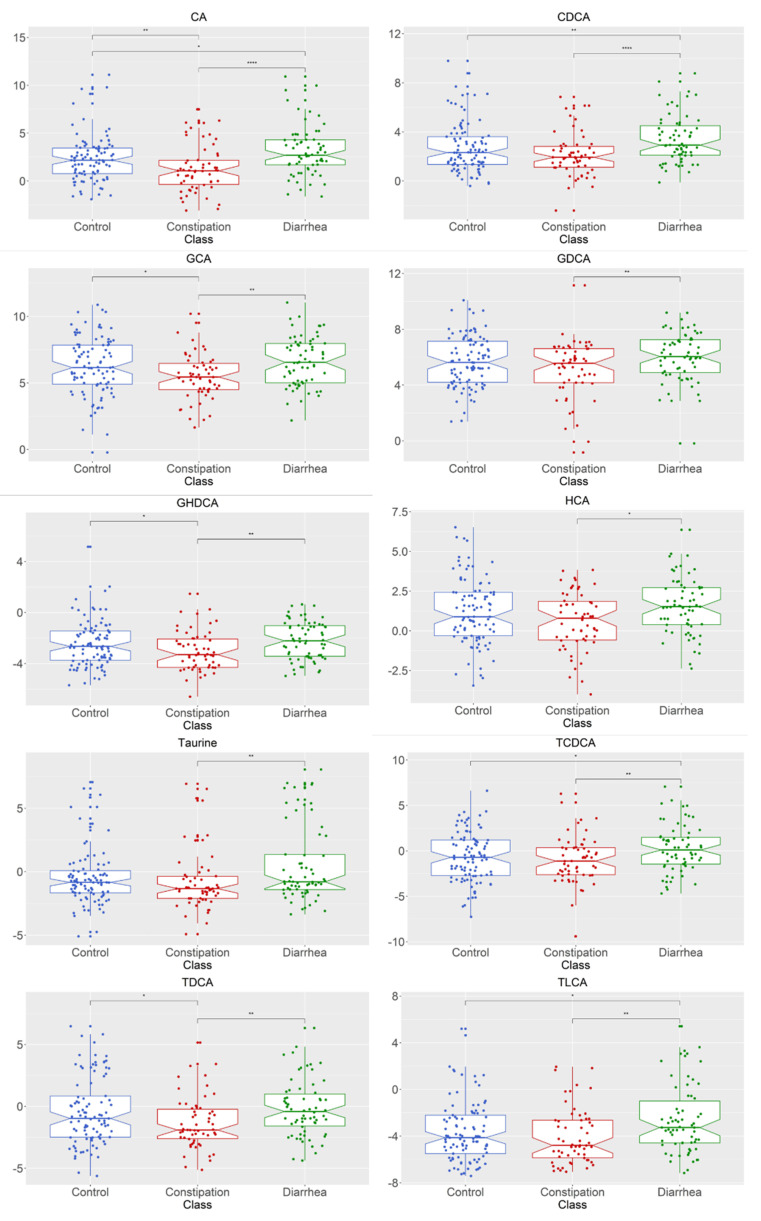
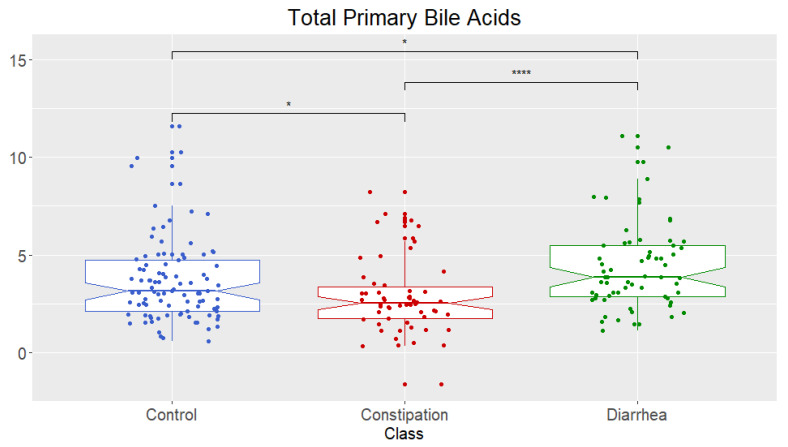
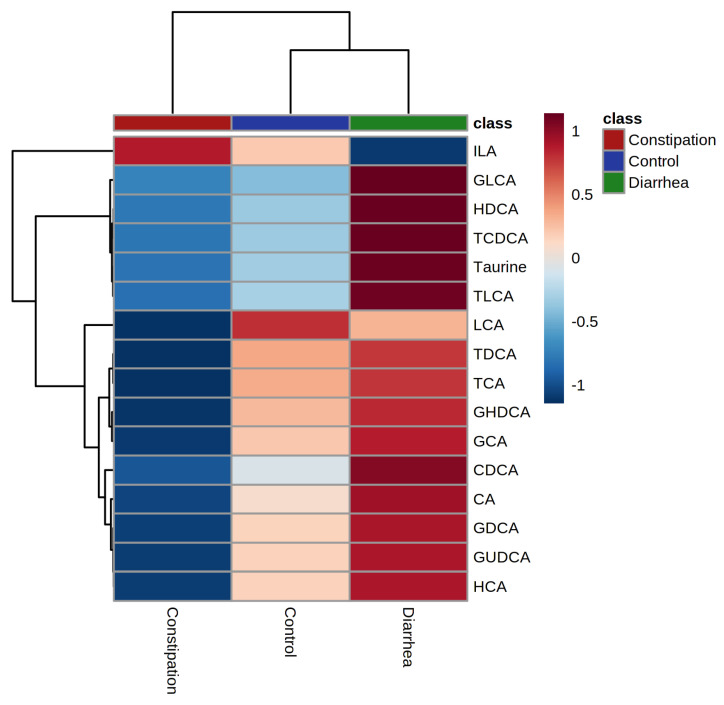
Bile acids are metabolites involved in nutrient absorption and signaling with levels influenced by dietary intake, metabolic processes, and the gut microbiome. We aimed to quantify 23 bile acids in fecal samples to ascertain if concentrations differed between healthy participants and those with functional gut disorders. Fecal bile acids were measured using liquid chromatography-mass spectrometry (LC-MS) in the COMFORT (The Christchurch IBS cohort to investigate mechanisms for gut relief and improved transit) cohort of 250 participants with Rome IV IBS (IBS-constipation (C), IBS-diarrhea (D), IBS-mixed (M)), functional gut disorders (functional constipation (FC), functional diarrhea (FD)) and healthy controls (FC = 35, FD = 13, IBS-C = 24, IBS-D = 52, IBS-M = 29, and control = 97). Dietary information was recorded to ascertain three-day dietary intake before fecal samples were collected. Fecal bile acid concentrations, predominantly primary bile acids, were significantly different between all functional gut disorder participants and healthy controls (CDCA = 0.011, CA = 0.003) and between constipation (FC + IBS-C) and diarrhea (FD + IBS-D) groups (CDCA = 0.001, CA 0.0002). Comparison of bile acids between all functional groups showed four metabolites were significantly different, although analysis of combined groups (FC + IBS-C vs. FD + IBS-D) showed that 10 metabolites were significantly different. The bile acid profiles of FD individuals were similar to those with IBS-D, and likewise, those with FC were similar to IBS-C. Individuals with a diarrhea phenotype (FD + IBS-D) had higher concentrations of bile acids compared to those with constipation (FC + IBS-C). Bile acid metabolites distinguish between individuals with functional gut disorders and healthy controls but are similar in constipation (or diarrhea) whether classified as IBS or not.
胆汁酸是参与营养吸收和信号传导的代谢产物,其水平受饮食摄入、代谢过程和肠道微生物群的影响。我们旨在对粪便样本中的23种胆汁酸进行定量,以确定健康参与者与功能性肠道疾病患者的胆汁酸浓度是否存在差异。在250名患有罗马IV型肠易激综合征(便秘型肠易激综合征(IBS-C)、腹泻型肠易激综合征(IBS-D)、混合型肠易激综合征(IBS-M))、功能性肠道疾病(功能性便秘(FC)、功能性腹泻(FD))和健康对照者(FC = 35,FD = 13,IBS-C = 24,IBS-D = 52,IBS-M = 29,对照 = 97)的COMFORT(基督城肠易激综合征队列研究肠道缓解和改善转运机制)队列中,使用液相色谱-质谱联用(LC-MS)法测定粪便胆汁酸。在收集粪便样本前记录饮食信息,以确定三天的饮食摄入量。所有功能性肠道疾病参与者与健康对照者之间,粪便胆汁酸浓度(主要是初级胆汁酸)存在显著差异(鹅去氧胆酸(CDCA) = 0.011,胆酸(CA) = 0.003),便秘组(FC + IBS-C)与腹泻组(FD + IBS-D)之间也存在显著差异(CDCA = 0.001,CA = 0.0002)。所有功能组之间胆汁酸的比较显示,有四种代谢产物存在显著差异,尽管合并组(FC + IBS-C与FD + IBS-D)分析显示有10种代谢产物存在显著差异。FD个体的胆汁酸谱与IBS-D个体相似,同样,FC个体与IBS-C个体相似。与便秘型个体(FC + IBS-C)相比,腹泻型个体(FD + IBS-D)的胆汁酸浓度更高。胆汁酸代谢产物可区分功能性肠道疾病患者与健康对照者,但便秘(或腹泻)患者的胆汁酸代谢产物相似,无论是否归类为IBS。