Lin Yan, Liu Yuqin, Zhang Guanghui, Cai Qinghe, Hu Weihua, Xiao Lixin, Thekkur Pruthu, Golub Jonathan E, Harries Anthony D
International Union against Tuberculosis and Lung Disease, 2 Rue Jean Lantier, 75001 Paris, France.
International Union against Tuberculosis and Lung Disease, No. 1 Xindonglu, Beijing 100600, China.
Trop Med Infect Dis. 2021 Sep 10;6(3):164. doi: 10.3390/tropicalmed6030164.
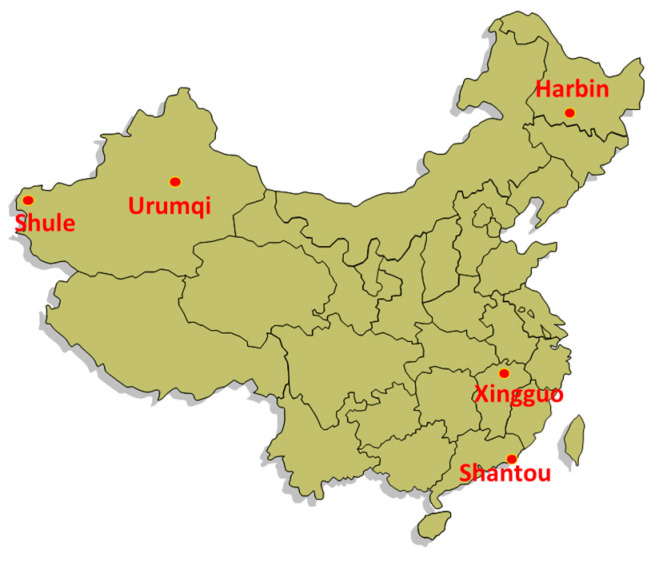
There is growing evidence that a substantial proportion of people who complete anti-tuberculosis treatment experience significant morbidity and mortality which can negatively affect their quality of life. It is suggested that national tuberculosis programs conduct end-of-treatment assessments, but whether this is feasible is currently not known. We therefore assessed whether tuberculosis program staff could assess functional and general health status of patients at the end of treatment in five TB clinics in four provinces in China. There were 115 patients, aged 14-82 years, who completed anti-tuberculosis treatment and a post-TB assessment. There were 54 (47%) patients who continued to have symptoms, the commonest being cough, dyspnea and fatigue. Symptom continuation was significantly more common in the 22 patients with diabetes ( = 0.027) and the 12 patients previously treated for TB ( = 0.008). There were 12 (10%) current smokers, an abnormal chest X-ray was found in 106 (92%) patients and distance walked in the 6-min walking test (6MWT) ranged from 30-750 m (mean 452 ± 120); 24 (21%) patients walked less than 400 m. Time taken to perform the post-TB assessment, including the 6MWT, ranged from 8-45 min (mean 21 ± 8 min). In 98% of the completed questionnaires, health workers stated that conducting post-TB assessments was feasible and useful. This study shows that post-TB assessments can be conducted under routine programmatic conditions and that there is significant morbidity that needs to be addressed.
越来越多的证据表明,相当一部分完成抗结核治疗的人经历了严重的发病和死亡情况,这会对他们的生活质量产生负面影响。有人建议国家结核病防治项目进行治疗结束评估,但目前尚不清楚这是否可行。因此,我们评估了中国四个省份五家结核病诊所的结核病防治项目工作人员是否能够在治疗结束时评估患者的功能和总体健康状况。共有115名年龄在14至82岁之间的患者完成了抗结核治疗并进行了结核病后评估。有54名(47%)患者仍有症状,最常见的是咳嗽、呼吸困难和疲劳。症状持续在22名糖尿病患者中更为常见(P = 0.027),在12名既往接受过结核病治疗的患者中也更为常见(P = 0.008)。有12名(10%)当前吸烟者,106名(92%)患者胸部X线检查异常,6分钟步行试验(6MWT)的步行距离为30至750米(平均452±120米);24名(21%)患者步行距离不足400米。进行包括6MWT在内的结核病后评估所需时间为8至45分钟(平均21±8分钟)。在98%完成的问卷中,卫生工作者表示进行结核病后评估是可行且有用的。这项研究表明,结核病后评估可以在常规项目条件下进行,并且存在需要解决的严重发病情况。