Department of Internal Medicine, Chosun University College of Medicine, Gwangju, Korea.
Department of Microbiology and Immunology, Seoul National University College of Medicine, Seoul, Korea.
Korean J Intern Med. 2022 Jan;37(1):201-209. doi: 10.3904/kjim.2021.093. Epub 2021 Sep 27.
BACKGROUND/AIMS: Coronavirus disease 2019 (COVID-19) is associated with acute respiratory syndrome. The mechanisms underlying the different degrees of pneumonia severity in patients with COVID-19 remain elusive. This study provides evidence that COVID-19 is associated with eosinophil-mediated inflammation.
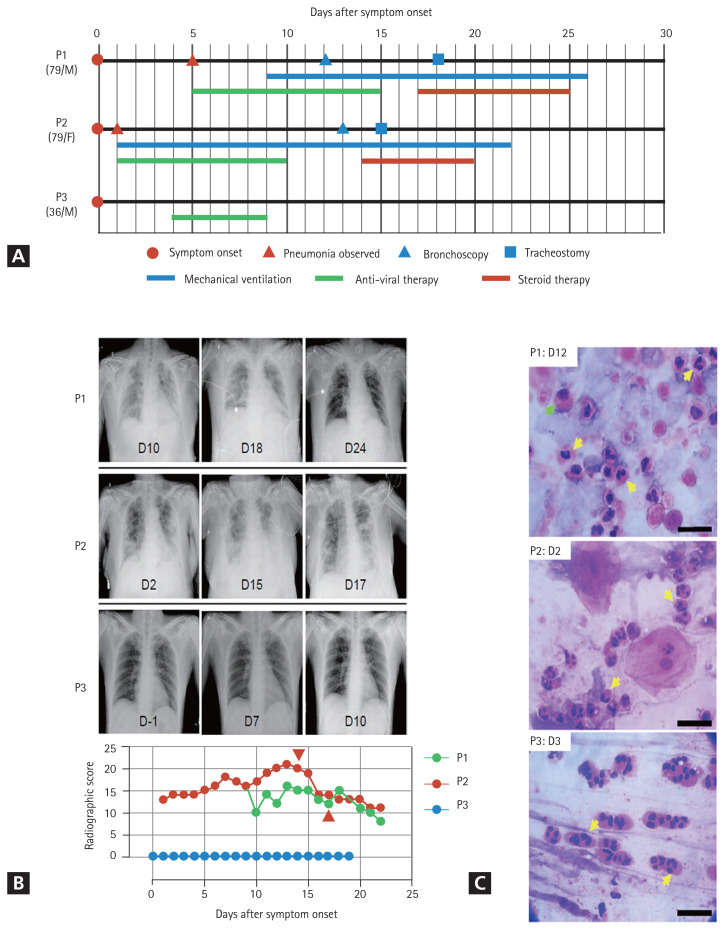
We performed a retrospective case series of three patients with laboratory and radiologically confirmed COVID-19 pneumonia admitted to Chosun University Hospital. Demographic and clinical data on inflammatory cell lung infiltration and cytokine levels in patients with COVID-19 were collected.
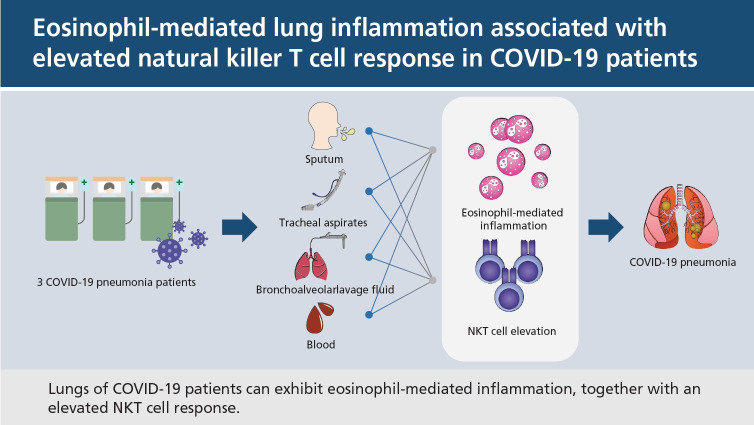
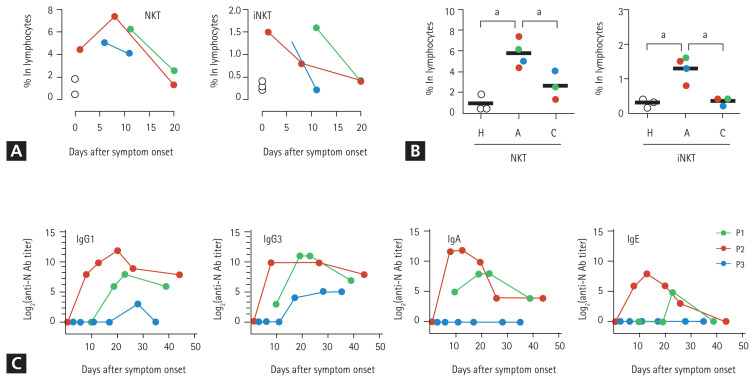
Cytological analysis of sputum, tracheal aspirates, and bronchoalveolar lavage fluid (BALF) samples from all three patients revealed massive infiltration of polymorphonuclear cells (PMNs), such as eosinophils and neutrophils. All sputum and BALF specimens contained high levels of eosinophil cationic proteins. The infiltration of PMNs into the lungs, together with elevated levels of natural killer T (NKT) cells in BALF and peripheral blood samples from patients with severe pneumonia in the acute phase was confirmed by flow cytometry.
These results suggest that the lungs of COVID-19 patients can exhibit eosinophil-mediated inflammation, together with an elevated NKT cell response, which is associated with COVID-19 pneumonia.
背景/目的:2019 年冠状病毒病(COVID-19)与急性呼吸综合征有关。COVID-19 患者肺炎严重程度不同的潜在机制仍不清楚。本研究提供了 COVID-19 与嗜酸性粒细胞介导的炎症相关的证据。
我们对 3 名经实验室和影像学证实患有 COVID-19 肺炎的患者进行了回顾性病例系列研究,这些患者均被收入朝鲜大学医院。收集了 COVID-19 患者肺部炎症细胞浸润和细胞因子水平的人口统计学和临床数据。
对所有 3 名患者的痰、气管抽吸物和支气管肺泡灌洗液(BALF)样本的细胞学分析显示,大量多形核细胞(PMN)浸润,如嗜酸性粒细胞和中性粒细胞。所有痰和 BALF 标本均含有高水平的嗜酸性粒细胞阳离子蛋白。通过流式细胞术证实,COVID-19 患者肺部存在 PMN 浸润,同时在急性重症肺炎患者的 BALF 和外周血样本中 NKT 细胞水平升高。
这些结果表明,COVID-19 患者的肺部可能会出现嗜酸性粒细胞介导的炎症,同时伴有 NKT 细胞反应升高,这与 COVID-19 肺炎有关。