Department of Mathematics and Statistics, Hamilton College, Clinton, NY, USA.
Department of Mathematics, Dartmouth College, Hanover, NH, USA.
Cell Rep Methods. 2021 Aug 23;1(4). doi: 10.1016/j.crmeth.2021.100058. Epub 2021 Jul 29.
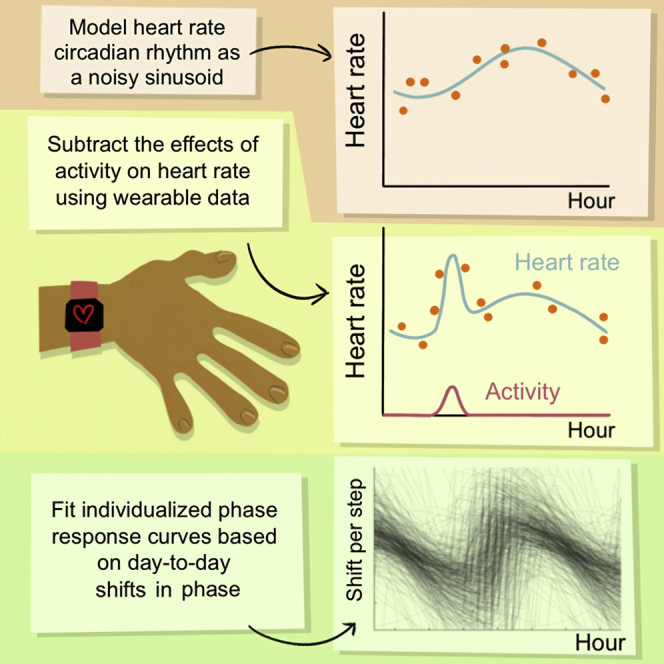
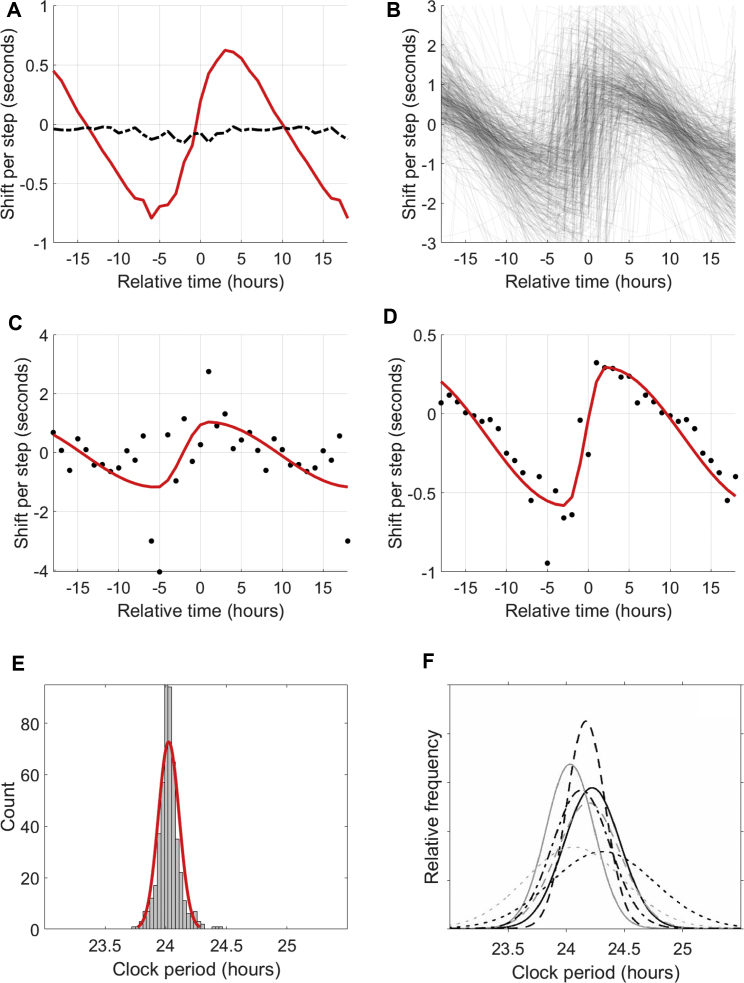
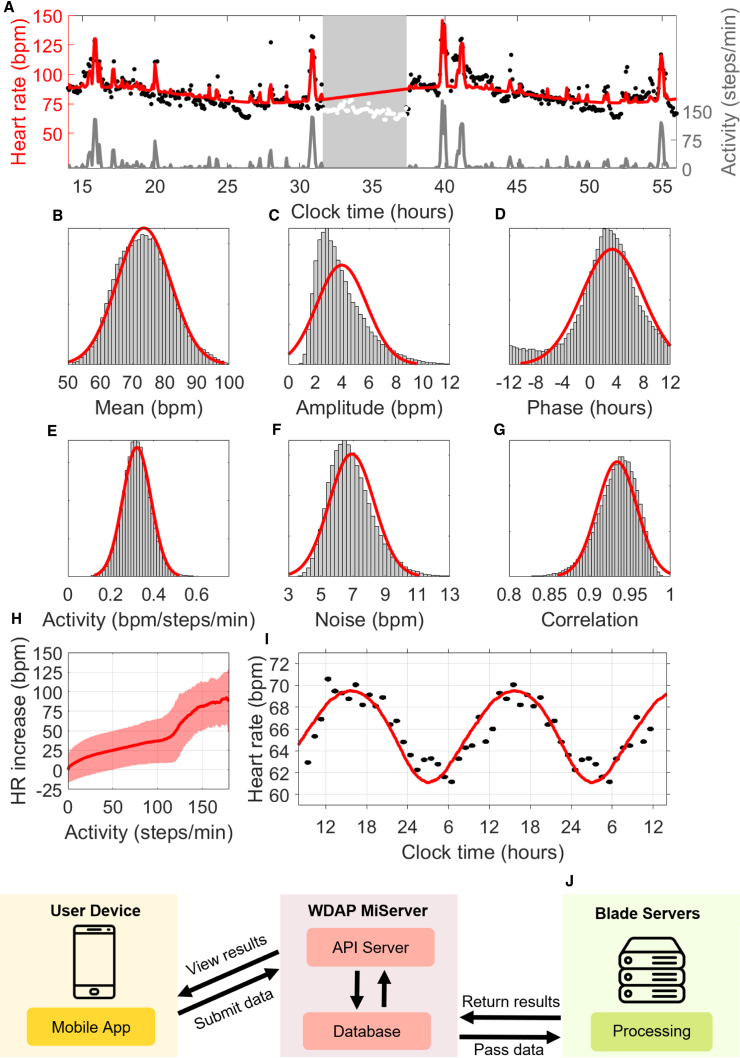
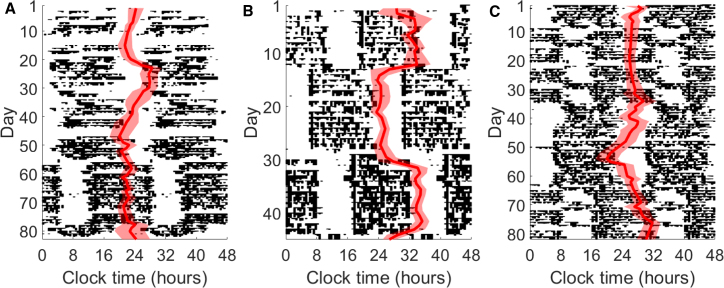
Millions of wearable-device users record their heart rate (HR) and activity. We introduce a statistical method to extract and track six key physiological parameters from these data, including an underlying circadian rhythm in HR (CRHR), the direct effects of activity, and the effects of meals, posture, and stress through hormones like cortisol. We test our method on over 130,000 days of real-world data from medical interns on rotating shifts, showing that CRHR dynamics are distinct from those of sleep-wake or physical activity patterns and vary greatly among individuals. Our method also estimates a personalized phase-response curve of CRHR to activity for each individual, representing a passive and personalized determination of how human circadian timekeeping continually changes due to real-world stimuli. We implement our method in the "Social Rhythms" iPhone and Android app, which anonymously collects data from wearable-device users and provides analysis based on our method.
数以百万计的可穿戴设备用户记录他们的心率 (HR) 和活动。我们介绍了一种统计方法,可以从这些数据中提取和跟踪六个关键生理参数,包括心率 (CRHR) 的基本昼夜节律、活动的直接影响,以及通过皮质醇等激素对进餐、姿势和压力的影响。我们在来自轮班医疗实习生的超过 130000 天的真实世界数据上测试了我们的方法,结果表明 CRHR 动力学与睡眠-觉醒或体力活动模式明显不同,并且个体之间差异很大。我们的方法还为每个人估计了 CRHR 对活动的个性化相位响应曲线,代表了由于现实世界的刺激,人体生物钟如何不断被动和个性化地变化的一种确定。我们在“社交节律”iPhone 和 Android 应用程序中实现了我们的方法,该应用程序匿名从可穿戴设备用户收集数据,并基于我们的方法进行分析。