Fahmy Sherif Ashraf, Azzazy Hassan Mohamed El-Said, Schaefer Jens
Department of Chemistry, School of Sciences & Engineering, The American University in Cairo, AUC Avenue, P.O. Box 74, New Cairo 11835, Egypt.
School of Life and Medical Sciences, University of Hertfordshire Hosted by Global Academic Foundation, R5 New Garden City, New Capital AL109AB, Cairo 11835, Egypt.
Pharmaceutics. 2021 Aug 27;13(9):1345. doi: 10.3390/pharmaceutics13091345.
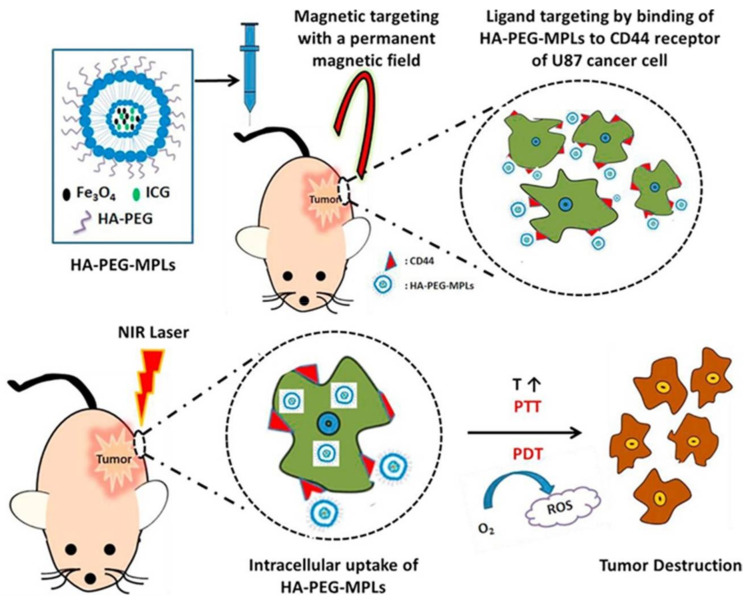
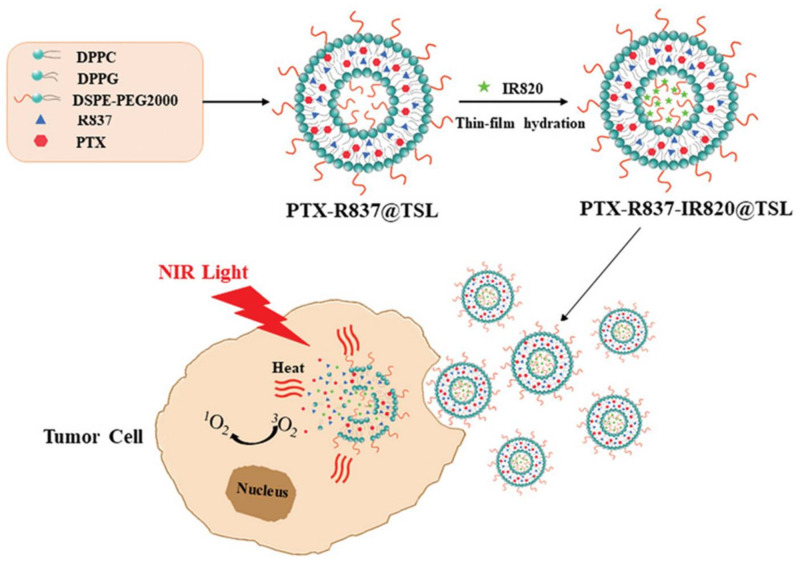
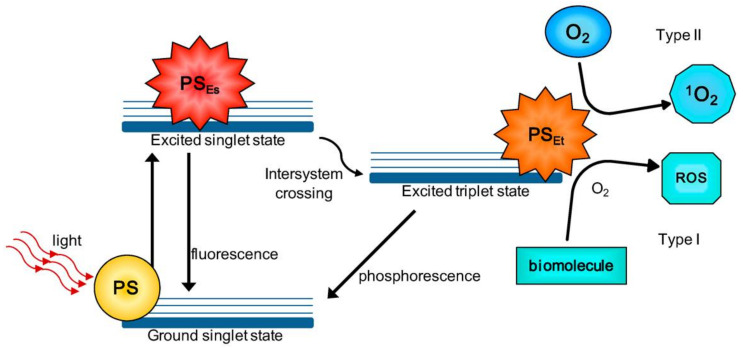
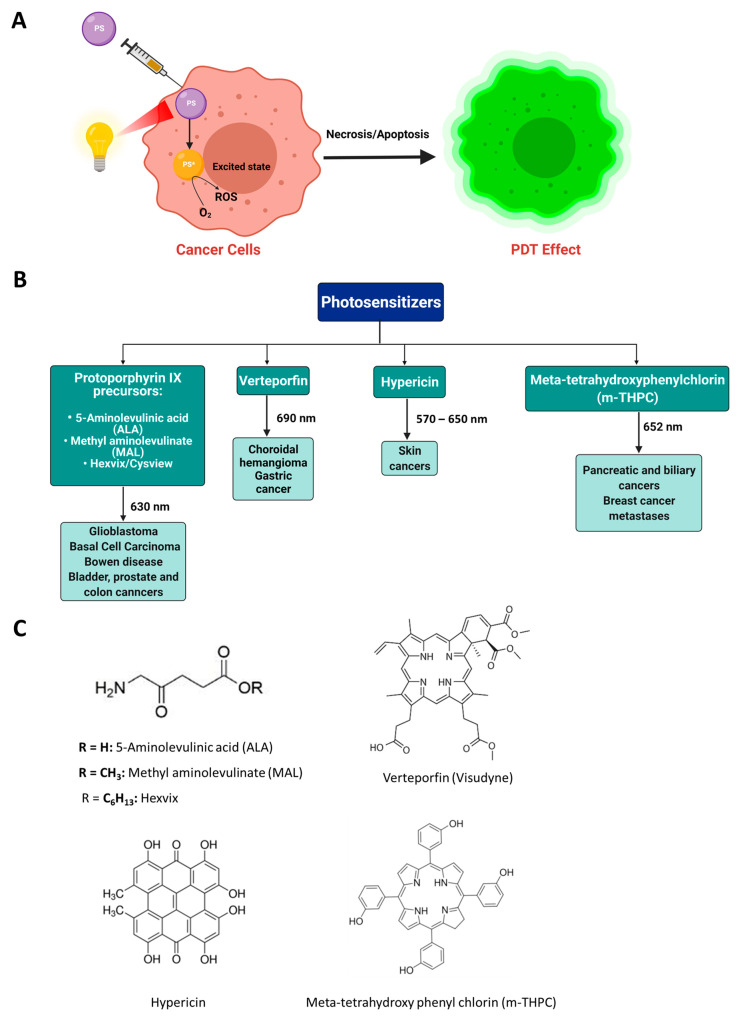
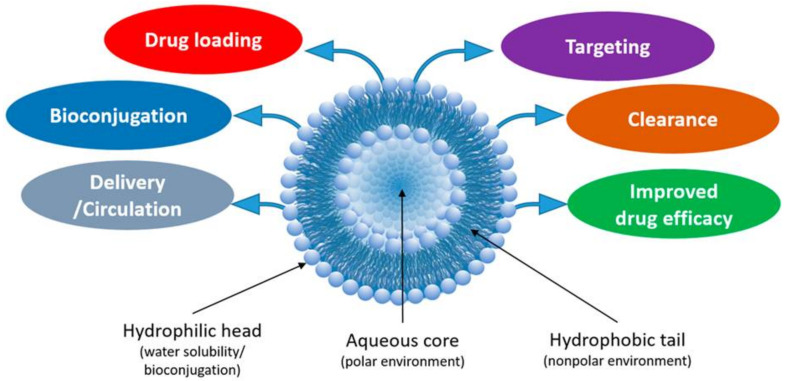
Photodynamic therapy (PDT) is a promising non-invasive strategy in the fight against that which circumvents the systemic toxic effects of chemotherapeutics. It relies on photosensitizers (PSs), which are photoactivated by light irradiation and interaction with molecular oxygen. This generates highly reactive oxygen species (such as O, HO, O, ·OH), which kill cancer cells by necrosis or apoptosis. Despite the promising effects of PDT in cancer treatment, it still suffers from several shortcomings, such as poor biodistribution of hydrophobic PSs, low cellular uptake, and low efficacy in treating bulky or deep tumors. Hence, various nanoplatforms have been developed to increase PDT treatment effectiveness and minimize off-target adverse effects. Liposomes showed great potential in accommodating different PSs, chemotherapeutic drugs, and other therapeutically active molecules. Here, we review the state-of-the-art in encapsulating PSs alone or combined with other chemotherapeutic drugs into liposomes for effective tumor PDT.
光动力疗法(PDT)是一种很有前景的非侵入性策略,用于对抗那些规避化疗药物全身毒性作用的疾病。它依赖于光敏剂(PSs),光敏剂通过光照射以及与分子氧相互作用而被光激活。这会产生高活性氧物种(如O、HO、O、·OH),这些活性氧物种通过坏死或凋亡杀死癌细胞。尽管光动力疗法在癌症治疗中效果显著,但它仍然存在一些缺点,比如疏水性光敏剂的生物分布不佳、细胞摄取率低以及治疗体积较大或位置较深的肿瘤时疗效较低。因此,人们开发了各种纳米平台来提高光动力疗法的治疗效果,并将脱靶副作用降至最低。脂质体在容纳不同的光敏剂、化疗药物和其他治疗活性分子方面显示出巨大潜力。在此,我们综述了将光敏剂单独或与其他化疗药物一起封装到脂质体中以实现有效的肿瘤光动力疗法的最新进展。