Plewa Szymon, Poplawska-Domaszewicz Karolina, Florczak-Wyspianska Jolanta, Klupczynska-Gabryszak Agnieszka, Sokol Bartosz, Miltyk Wojciech, Jankowski Roman, Kozubski Wojciech, Kokot Zenon J, Matysiak Jan
Department of Inorganic and Analytical Chemistry, Poznan University of Medical Sciences, 60-780 Poznan, Poland.
Department of Neurology, Poznan University of Medical Sciences, 60-355 Poznan, Poland.
Pharmaceuticals (Basel). 2021 Sep 17;14(9):935. doi: 10.3390/ph14090935.
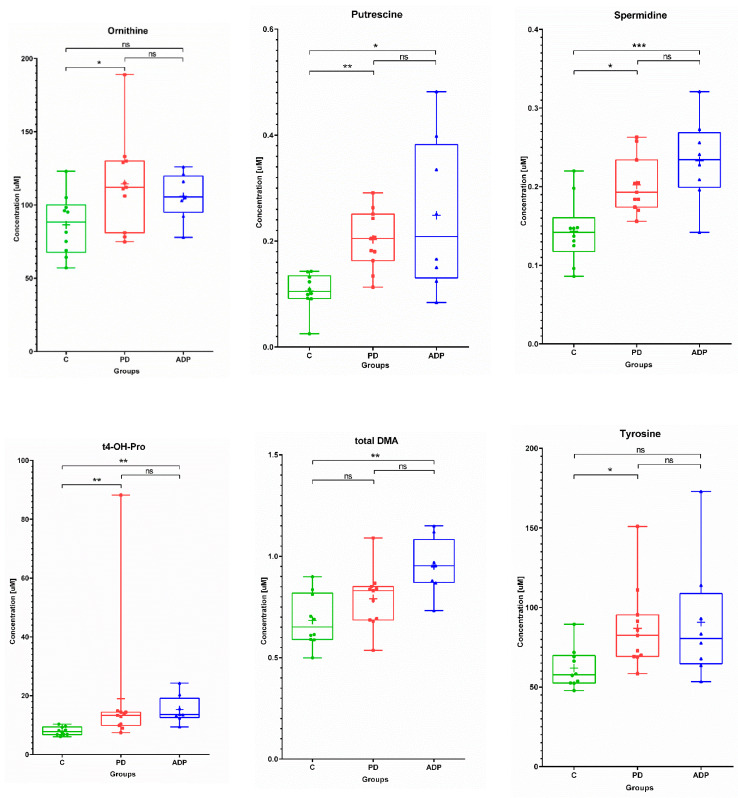
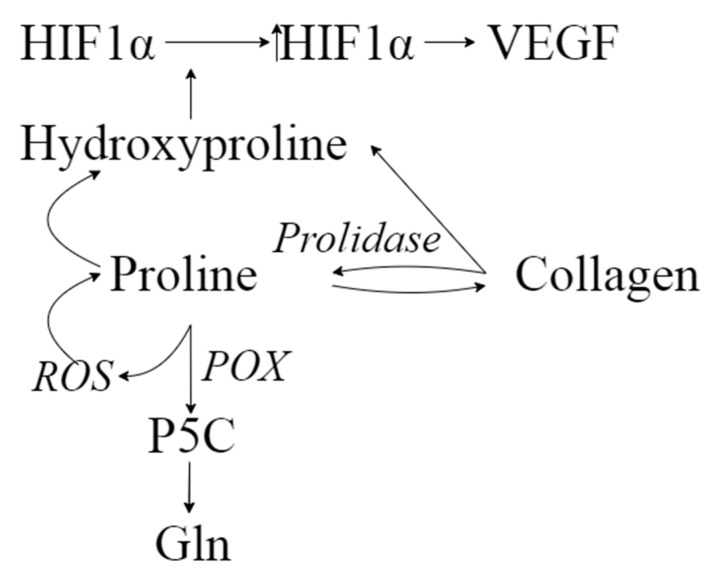
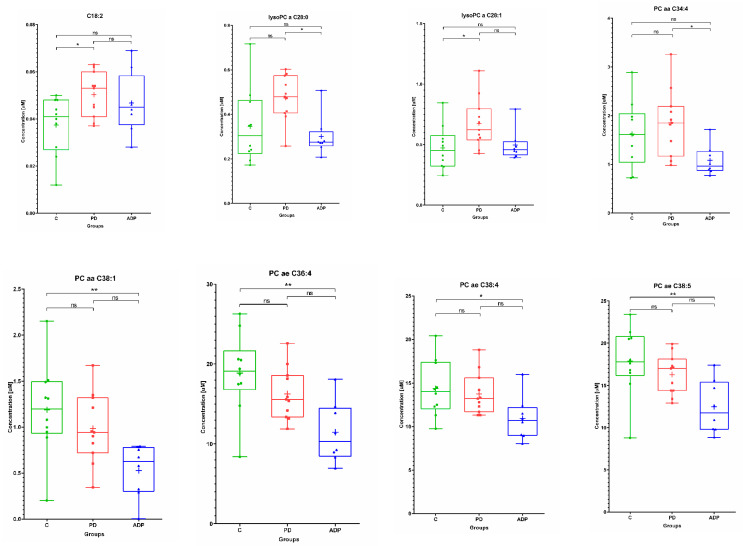
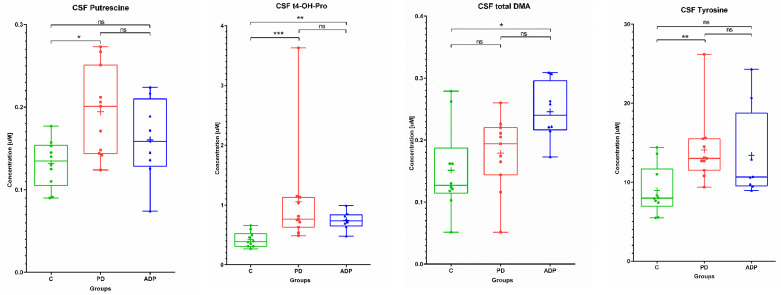
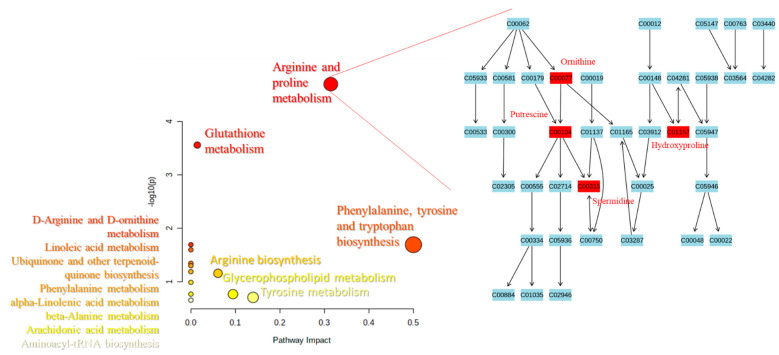
Parkinson's disease (PD) is a major public health problem. Since currently there are no reliable diagnostic tools to reveal the early steps of PD, new methods should be developed, including those searching the variations in human metabolome. Alterations in human metabolites could help to establish an earlier and more accurate diagnosis. The presented research shows a targeted metabolomics study of both of the serum and CSF from PD patients, atypical parkinsonian disorders (APDs) patients, and the control. The use of the LC-MS/MS system enabled to quantitate 144 analytes in the serum and 51 in the CSF. This information about the concentration enabled for selection of the metabolites useful for differentiation between the studied group of patients, which should be further evaluated as candidates for markers of screening and differential diagnosis of PD and APDs. Among them, the four compounds observed to be altered in both the serum and CSF seem to be the most important: tyrosine, putrescine, trans-4-hydroxyproline, and total dimethylarginine. Furthermore, we indicated the metabolic pathways potentially related to neurodegeneration processes. Our studies present evidence that the proline metabolism might be related to neurodegeneration processes underlying PD and APDs. Further studies on the proposed metabolites and founded metabolic pathways may significantly contribute to understanding the molecular background of PD and improving the diagnostics and treatment in the future.
帕金森病(PD)是一个重大的公共卫生问题。由于目前尚无可靠的诊断工具来揭示PD的早期阶段,因此应开发新的方法,包括那些寻找人类代谢组变化的方法。人类代谢物的改变有助于建立更早、更准确的诊断。本研究展示了对PD患者、非典型帕金森病(APD)患者和对照组的血清和脑脊液进行的靶向代谢组学研究。使用液相色谱-串联质谱(LC-MS/MS)系统能够定量血清中的144种分析物和脑脊液中的51种分析物。这些关于浓度的信息有助于选择对所研究的患者组进行区分有用的代谢物,这些代谢物应进一步评估作为PD和APD筛查及鉴别诊断标志物的候选物。其中,在血清和脑脊液中均观察到改变的四种化合物似乎最为重要:酪氨酸、腐胺、反式-4-羟基脯氨酸和总二甲基精氨酸。此外,我们指出了可能与神经退行性变过程相关的代谢途径。我们的研究表明,脯氨酸代谢可能与PD和APD潜在的神经退行性变过程有关。对所提出的代谢物和已发现的代谢途径的进一步研究可能会显著有助于理解PD的分子背景,并在未来改善诊断和治疗。