Osman Abdinasir Yusuf, Elmi Sharifo Ali, Simons David, Elton Linzy, Haider Najmul, Khan Mohd Azam, Othman Iekhsan, Zumla Alimuddin, McCoy David, Kock Richard
The Royal Veterinary College, University of London, Hawkshead Lane, North Mymms, Hatfield AL9 7TA, UK.
Faculty of Veterinary Medicine, Universiti Malaysia Kelantan, Pengkalan Chepa, Kota Bharu 16100, Malaysia.
Pathogens. 2021 Sep 9;10(9):1160. doi: 10.3390/pathogens10091160.
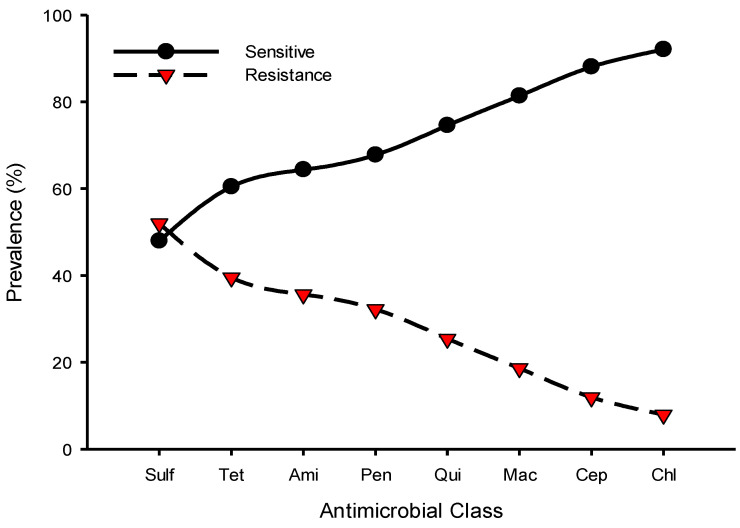
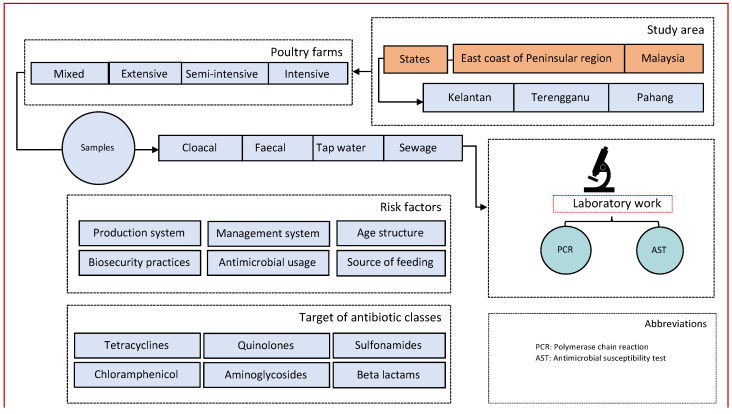
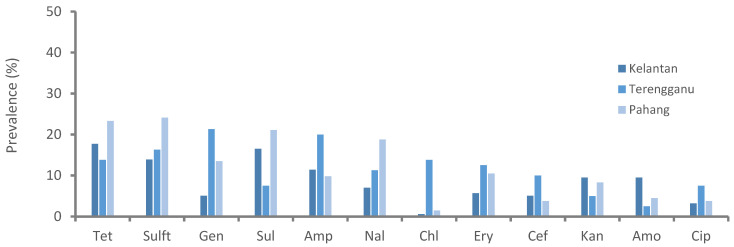
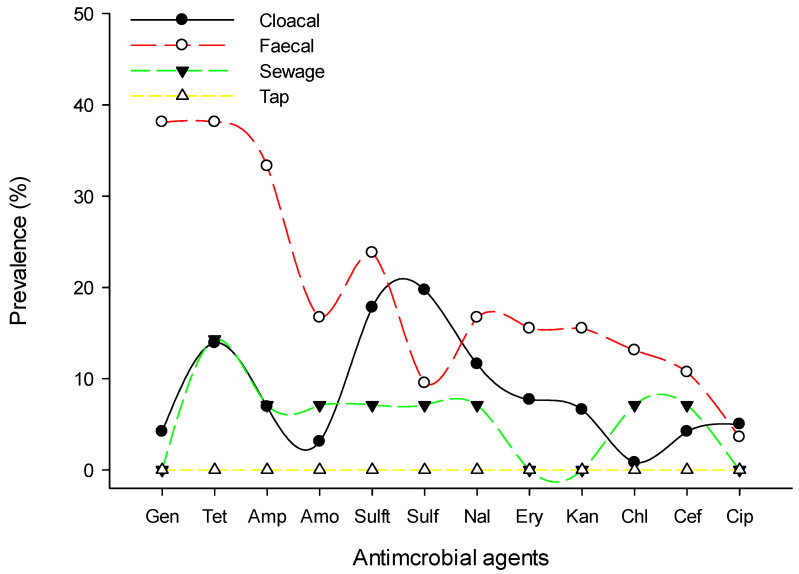
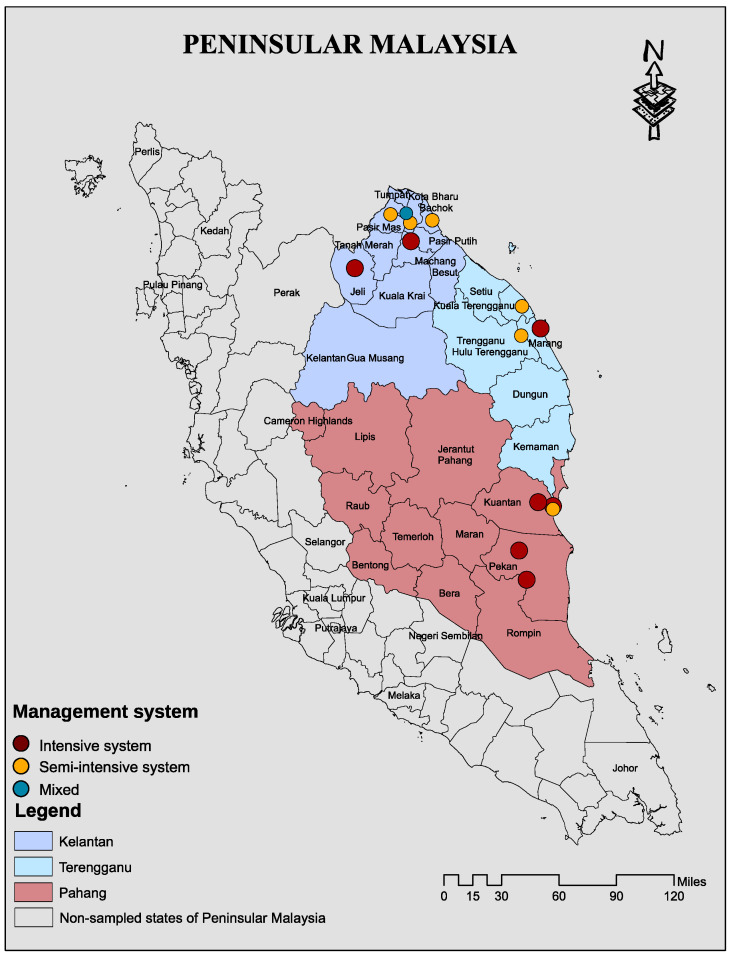
The burden of antimicrobial use in agricultural settings is one of the greatest challenges facing global health and food security in the modern era. Malaysian poultry operations are a relevant but understudied component of epidemiology of antimicrobial resistance. We aimed to identify the prevalence, resistance patterns, and risk factors associated with isolates from poultry farms in three states of East Coast Peninsular Malaysia. Between 8 February 2019 and 23 February 2020, a total of 371 samples (cloacal swabs = 259; faecal = 84; Sewage = 14, Tap water = 14) was collected from poultry operations. Characteristics of the sampled farms and associated risk factors were obtained using semi-structured questionnaires. Presumptive spp. isolates were identified based on colony morphology with subsequent biochemical and PCR confirmation. Susceptibility of isolates was tested against a panel of 12 antimicrobials using disk diffusion method. Our findings revealed that the proportion of spp.-positive isolates across sample source were as following: cloacal swab (46.3%, 120/259); faecal (59.5%, 50/84); in tap water (14.3%, 2/14); and in sewage sample (35.7%, 5/14). Isolates from faecal (15.5%, 13/84), cloacal (1.2%, 3/259), and sewage (7.1%, 1/14) samples were significantly resistant to at least five classes of antimicrobials. Resistance to Sulfonamides class (52%, 92/177) was predominantly observed followed by tetracycline (39.5%, 70/177) and aminoglycosides (35.6%, 63/177). Multivariate regression analysis identified intensive management system (OR = 1.55, 95% CI = 1.00-2.40) as a leading driver of antimicrobial resistance (AMR) acquisition. A prevalence of resistance to common antimicrobials was recorded for sulfamethoxazole (33.9%), tetracycline (39.5%), and trimethoprim-sulphamethoxazole (37.9%). A close association between different risk factors and the prevalence of AMR of strains suggests a concern over rising misuse of veterinary antimicrobials that may contribute to the emergence and evolution of multidrug-resistant pathogen isolates. One Health approach is recommended to achieve a positive health outcome for all species.
农业环境中抗菌药物的使用负担是现代全球健康和粮食安全面临的最大挑战之一。马来西亚的家禽养殖业务是抗菌药物耐药性流行病学中一个相关但研究不足的组成部分。我们旨在确定马来西亚半岛东海岸三个州的家禽养殖场分离株的流行率、耐药模式和相关风险因素。在2019年2月8日至2020年2月23日期间,共从家禽养殖场收集了371份样本(泄殖腔拭子 = 259份;粪便 = 84份;污水 = 14份;自来水 = 14份)。使用半结构化问卷获取抽样养殖场的特征和相关风险因素。根据菌落形态初步鉴定出假定的菌株,随后进行生化和PCR确认。使用纸片扩散法对分离株进行12种抗菌药物的敏感性测试。我们的研究结果显示,不同样本来源中菌株阳性分离株的比例如下:泄殖腔拭子(46.3%,120/259);粪便(59.5%,50/84);自来水中(14.3%,2/14);污水样本中(35.7%,5/14)。来自粪便(15.5%,13/84)、泄殖腔(1.2%,3/259)和污水(7.1%,1/14)样本的分离株对至少五类抗菌药物具有显著耐药性。主要观察到对磺胺类药物的耐药性(52%,92/177),其次是四环素(39.5%,70/177)和氨基糖苷类(35.6%,63/177)。多变量回归分析确定集约化管理系统(OR = 1.55,95% CI = 1.00 - 2.40)是获得抗菌药物耐药性(AMR)的主要驱动因素。记录到磺胺甲恶唑(33.9%)、四环素(39.5%)和甲氧苄啶 - 磺胺甲恶唑(37.9%)对常见抗菌药物的耐药率。不同风险因素与菌株AMR流行率之间的密切关联表明,人们担心兽医抗菌药物的滥用增加可能导致多重耐药病原体分离株的出现和演变。建议采用“同一健康”方法为所有物种实现积极的健康结果。