Sewelam Nasser, El-Shetehy Mohamed, Mauch Felix, Maurino Veronica G
Institute of Developmental and Molecular Biology of Plants, Cluster of Excellence on Plant Sciences (CEPLAS), Heinrich Heine University Düsseldorf, Universitätsstraße 1, 40225 Düsseldorf, Germany.
Department of Botany and Microbiology, Faculty of Science, Tanta University, Tanta 31773, Egypt.
Plants (Basel). 2021 Sep 18;10(9):1946. doi: 10.3390/plants10091946.
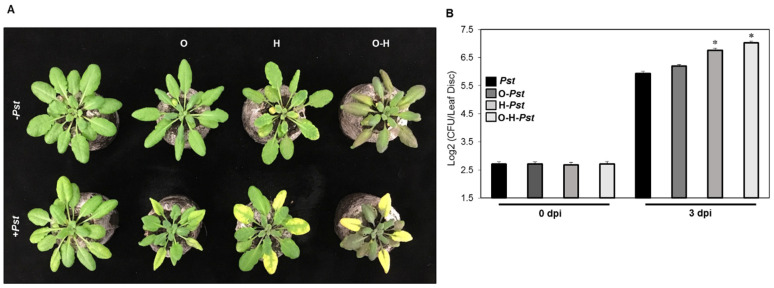
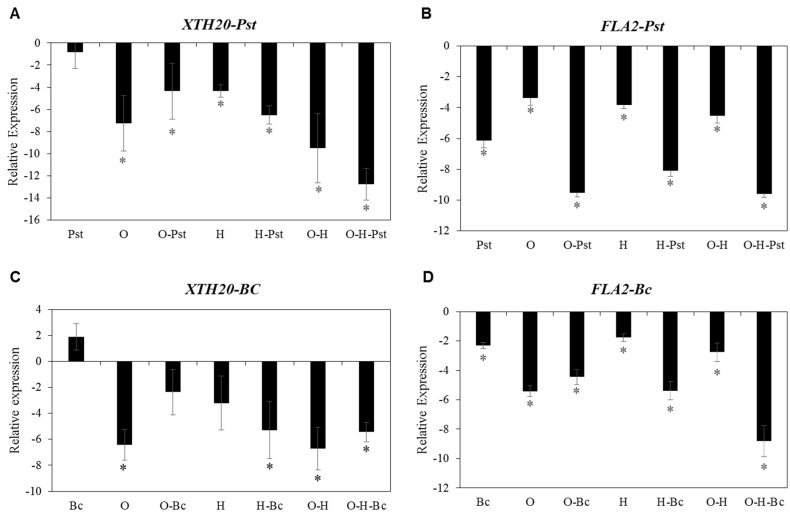
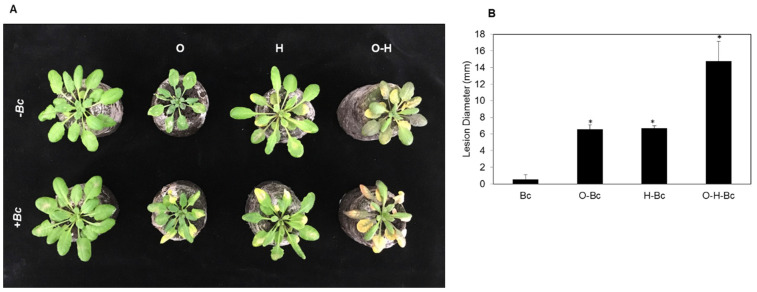
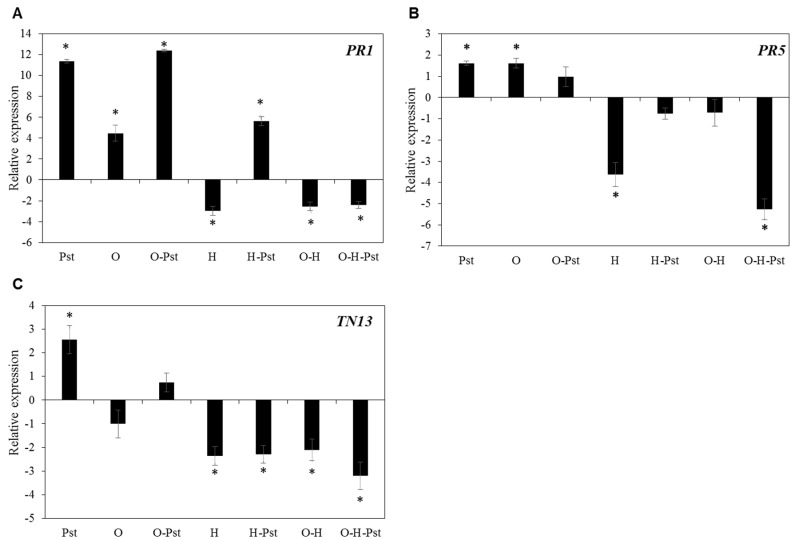
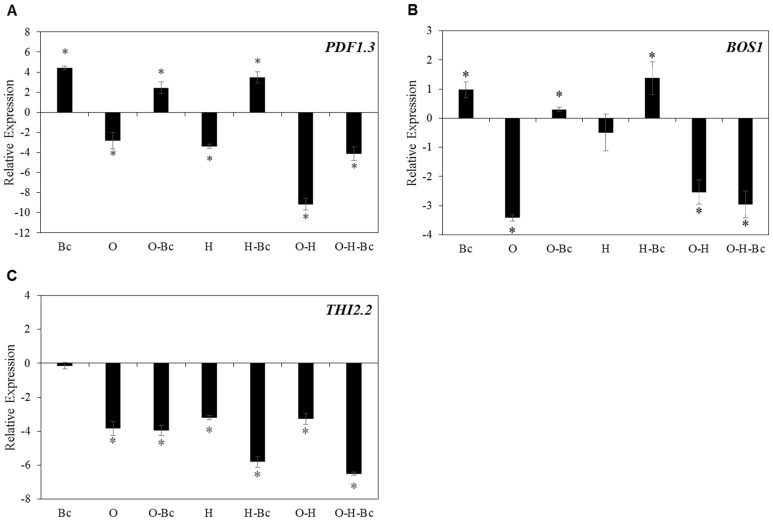
Plants are frequently exposed to simultaneous abiotic and biotic stresses, a condition that induces complex responses, negatively affects crop productivity and is becoming more exacerbated with current climate change. In this study, we investigated the effects of individual and combined heat and osmotic stresses on Arabidopsis susceptibility to the biotrophic pathogen pv. () and the necrotrophic pathogen (). Our data showed that combined abiotic and biotic stresses caused an enhanced negative impact on plant disease resistance in comparison with individual and infections. Pretreating plants with individual heat or combined osmotic-heat stress strongly reduced the expression of many defense genes including pathogenesis-related proteins ( and ) and the gene encoding the TIR-NBS protein, which are involved in disease resistance towards . We also found that combined osmotic-heat stress caused high plant susceptibility to infection and reduced expression of a number of defense genes, including (), () and () genes, which are important for disease resistance towards . The impaired disease resistance against both and under combined abiotic stress is associated with reduced expression of cell wall-related genes. Taken together, our data emphasize that the combination of global warming-associated abiotic stresses such as heat and osmotic stresses makes plants more susceptible to pathogen infection, thus threatening future global food security.
植物经常同时遭受非生物和生物胁迫,这种情况会引发复杂的反应,对作物生产力产生负面影响,并且随着当前气候变化而愈发严重。在本研究中,我们调查了单独的以及热胁迫和渗透胁迫组合对拟南芥对活体营养型病原菌丁香假单胞菌番茄致病变种(Pseudomonas syringae pv. tomato)和死体营养型病原菌灰葡萄孢菌(Botrytis cinerea)易感性的影响。我们的数据表明,与单独感染相比,非生物和生物胁迫组合对植物抗病性产生了更大的负面影响。用单独的热胁迫或渗透 - 热胁迫组合预处理植物,会强烈降低许多防御基因的表达,包括病程相关蛋白(PR1和PR2)以及编码TIR - NBS蛋白的RPS2基因,这些基因参与对丁香假单胞菌番茄致病变种的抗病性。我们还发现,渗透 - 热胁迫组合使植物对灰葡萄孢菌感染高度敏感,并降低了许多防御基因的表达,包括EDS1、PAD4和NPR1基因,这些基因对抵抗灰葡萄孢菌很重要。在组合非生物胁迫下对丁香假单胞菌番茄致病变种和灰葡萄孢菌的抗病性受损与细胞壁相关基因表达降低有关。综上所述,我们的数据强调,与全球变暖相关的非生物胁迫如热胁迫和渗透胁迫的组合使植物更容易受到病原体感染,从而威胁到未来的全球粮食安全。