Department of Subject Didactics and Educational Research and Development, University College of Teacher Education Tyrol, Innsbruck, Austria.
Department of Sport Science, University of Innsbruck, Innsbruck, Austria.
J Int Soc Sports Nutr. 2021 Sep 27;18(1):64. doi: 10.1186/s12970-021-00460-2.
The primary nutritional challenge facing endurance runners is meeting the nutrient requirements necessary to optimize the performance and recovery of prolonged training sessions. Supplement intake is a commonly used strategy by elite and recreational distance runners to meet nutritional recommendations. This study was conducted to investigate the patterns of supplement intake among different groups of distance runners and the potential association between supplement intake and sex, age, running and racing experiences.In a cross-sectional design, from a total of 317 runners participating in this survey, 119 distance runners were involved in the final sample after data clearance, assigned into three groups of 10-km runners (n = 24), half-marathoners (n = 44), and (ultra-)marathoners (n = 51). Personal characteristics, training and racing experiences, as well as patterns of supplement intake, including type, frequency, and dosage, were evaluated by questionnaire. Food Frequency Questionnaire was implemented to assess macronutrient intake. ANOVA and logistic regression were used for statistical analysis.While 50 % of total distance runners reported consuming supplements regularly, no differences between distance groups in consumption of carbohydrate/protein, mineral, or vitamin supplements were observed (p > 0.05). In addition, age, sex, running and racing experience showed no significant association with supplement intake (p > 0.05). Vitamin supplements had the highest intake rate in runners by 43 % compared to minerals (34 %) and carbohydrate/protein supplements (19 %).The present findings provide a window into the targeted approaches of long-distance runners as well as their coaches and sport nutrition specialists when applying and suggesting sustainable nutritional strategies for training and competition.Trial registration: ISRCTN73074080. Retrospectively registered 12th June 2015.
耐力跑运动员面临的主要营养挑战是满足营养需求,以优化长时间训练的表现和恢复。补充剂的摄入是精英和休闲长跑运动员满足营养建议的常用策略。本研究旨在调查不同组别长跑运动员的补充剂摄入模式,以及补充剂摄入与性别、年龄、跑步和比赛经验之间的潜在关联。
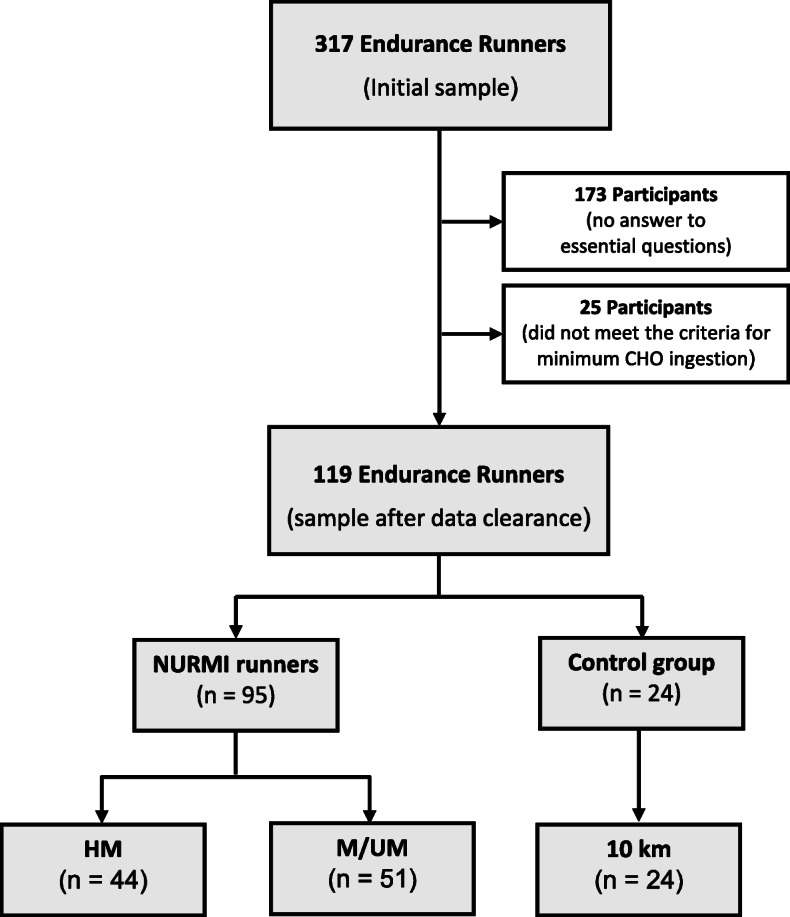
在横断面设计中,在参与这项调查的 317 名跑步者中,共有 119 名长跑者在数据清理后被纳入最终样本,分为三组:10 公里跑者(n=24)、半程马拉松跑者(n=44)和(超长)马拉松跑者(n=51)。通过问卷评估个人特征、训练和比赛经历,以及补充剂摄入模式,包括类型、频率和剂量。实施了食物频率问卷来评估宏量营养素的摄入。采用 ANOVA 和逻辑回归进行统计分析。
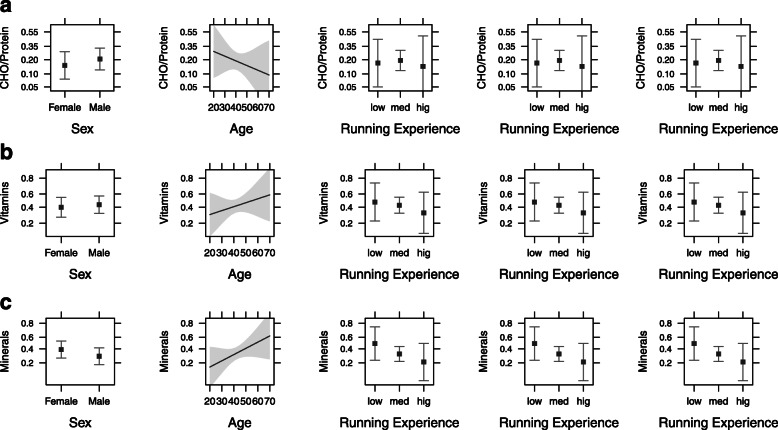
虽然 50%的长跑运动员报告定期服用补充剂,但在消耗碳水化合物/蛋白质、矿物质或维生素补充剂方面,不同距离组之间没有差异(p>0.05)。此外,年龄、性别、跑步和比赛经验与补充剂摄入没有显著关联(p>0.05)。与矿物质(34%)和碳水化合物/蛋白质补充剂(19%)相比,维生素补充剂的摄入率最高,达到 43%。
本研究结果为长跑运动员及其教练和运动营养专家在应用和建议训练和比赛的可持续营养策略时,提供了一个了解他们目标方法的窗口。
ISRCTN73074080。2015 年 6 月 12 日回顾性注册。