• 文献检索
  • 文档翻译
  • 深度研究
  • 学术资讯
  • Suppr Zotero 插件Zotero 插件
  • 邀请有礼
  • 套餐&价格
  • 历史记录
应用&插件
Suppr Zotero 插件Zotero 插件浏览器插件Mac 客户端Windows 客户端微信小程序
定价
高级版会员购买积分包购买API积分包
服务
文献检索文档翻译深度研究API 文档MCP 服务
关于我们
关于 Suppr公司介绍联系我们用户协议隐私条款
关注我们

Suppr 超能文献

核心技术专利:CN118964589B侵权必究
粤ICP备2023148730 号-1Suppr @ 2026

文献检索

告别复杂PubMed语法,用中文像聊天一样搜索,搜遍4000万医学文献。AI智能推荐,让科研检索更轻松。

立即免费搜索

文件翻译

保留排版,准确专业,支持PDF/Word/PPT等文件格式,支持 12+语言互译。

免费翻译文档

深度研究

AI帮你快速写综述,25分钟生成高质量综述,智能提取关键信息,辅助科研写作。

立即免费体验

乌干达对新冠病毒的恐惧及媒体对草药使用的影响:一项横断面研究。

Fear of COVID-19 and the Media Influence on Herbal Medication Use in Uganda: A Cross-Sectional Study.

作者信息

Musoke Phillip, Nantaayi Brandy, Kato Ndawula Rodney, Wannyana Babrah, Ssewante Nelson, Wekha Godfrey, Olum Ronald, Nakyagaba Lourita, Rhoda Nassozi Dianah, Nabukeera Germinah, Marvin Kanyike Andrew, Ojilong Daniel, Madut Akech Gabriel, Kajjimu Jonathan, Kiwumulo Joshua, Agira Drake, Okot Jerom, Bongomin Felix

机构信息

School of Medicine, College of Health Sciences, Makerere University, Kampala, Uganda.

School of Clinical Medicine and Dentistry, Kampala International University Western Campus, Bushenyi, Uganda.

出版信息

Risk Manag Healthc Policy. 2021 Sep 21;14:3965-3975. doi: 10.2147/RMHP.S332325. eCollection 2021.

DOI:10.2147/RMHP.S332325
PMID:34584474
原文链接:https://pmc.ncbi.nlm.nih.gov/articles/PMC8464377/
Abstract

BACKGROUND

The coronavirus disease-2019 (COVID-19) pandemic has created fear in people around the world. This has led to the widespread use of various herbal remedies in its prevention and treatment regardless of the paucity of scientific evidence about their safety and efficacy. This study assessed the fear of COVID-19 and the influence of media on the use of herbal medicine to prevent or treat COVID-19 in Uganda.

METHODS

In the first 2 weeks of July 2021, a descriptive online cross-sectional study was carried out anonymously in the general population in Uganda. A validated questionnaire was used to collect data on herbal medicine use and the influence of media. Fear of COVID-19 was rated using the Fear of COVID-19 Scale (FCV-19S).

RESULTS

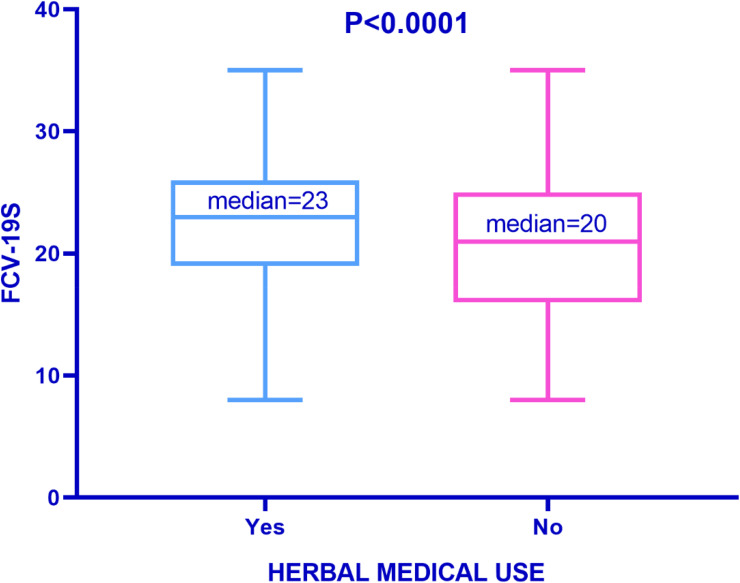
We recruited 488 participants, 273 (55.9%) were female, with a median age of 25 (range: 18-73) years. Sixty-seven (57.8%) participants had a confirmed COVID-19 diagnosis. The mean FCV-19S score was 21.7 SD 5.9 with 53.3% reporting high levels of COVID-19 fear. About 57.4% of participants reported using herbal remedies either to prevent or treat COVID-19-like symptoms. Media was the main source of information, with more than 80% of the participants reporting seeing or accessing information about herbal medication use. Women (adjusted odds ratio (aOR): 1.74, 95% CI: 1.2-2.5, p=0.003) and people with a previously confirmed COVID-19 diagnosis (aOR: 3.1, 95% CI: 1.35-7.14, p=0.008) had a statistically significantly higher FCV-19S score. Being unemployed (aOR: 1.0, 95% CI: 1.1-2.3, p=0.008) and a female (aOR: 1.0, 95% CI: 1.1-2.3, p=0.012) were statistically significantly associated with herbal medicine use. Participants who used herbal remedies had a higher median FCV-19S score compared to non-users (23 versus 21, p<0.001).

CONCLUSION

The use of herbal medicines to treat or prevent COVID-19 is a widespread practice among the general population in Uganda amidst the high levels of fear of COVID-19.

摘要

背景

2019年冠状病毒病(COVID-19)大流行在全球范围内引发了人们的恐惧。这导致各种草药疗法在预防和治疗中被广泛使用,尽管关于其安全性和有效性的科学证据匮乏。本研究评估了乌干达民众对COVID-19的恐惧以及媒体对使用草药预防或治疗COVID-19的影响。

方法

2021年7月的前两周,在乌干达普通人群中开展了一项匿名描述性在线横断面研究。使用经过验证的问卷收集有关草药使用和媒体影响的数据。使用COVID-19恐惧量表(FCV-19S)对COVID-19恐惧程度进行评分。

结果

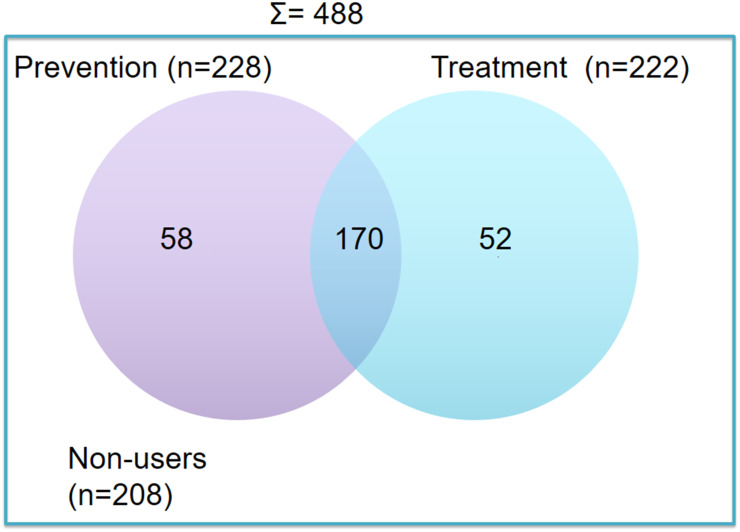
我们招募了488名参与者,其中273名(55.9%)为女性,中位年龄为25岁(范围:18 - 73岁)。67名(57.8%)参与者确诊感染了COVID-19。FCV-19S平均得分为21.7(标准差5.9),53.3%的参与者报告对COVID-19的恐惧程度较高。约57.4%的参与者报告使用草药预防或治疗类似COVID-19的症状。媒体是主要信息来源,超过80%的参与者报告看过或获取过有关草药使用的信息。女性(调整优势比(aOR):1.74,95%置信区间:1.2 - 2.5,p = 0.003)和先前确诊感染COVID-19的人(aOR:3.1,95%置信区间:1.35 - 7.14,p = 0.008)的FCV-19S得分在统计学上显著更高。失业(aOR:1.0,95%置信区间:1.1 - 2.3,p = 0.008)和女性(aOR:1.0,95%置信区间:1.1 - 2.3,p = 0.012)在统计学上与草药使用显著相关。与未使用者相比,使用草药的参与者的FCV-19S中位得分更高(23分对21分,p < 0.001)。

结论

在乌干达普通人群中,尽管对COVID-19高度恐惧,但使用草药治疗或预防COVID-19仍是一种普遍做法。
https://cdn.ncbi.nlm.nih.gov/pmc/blobs/9b55/8464377/8ceb5fd1b4c3/RMHP-14-3965-g0002.jpg
https://cdn.ncbi.nlm.nih.gov/pmc/blobs/9b55/8464377/6d155c7c4db0/RMHP-14-3965-g0001.jpg
https://cdn.ncbi.nlm.nih.gov/pmc/blobs/9b55/8464377/8ceb5fd1b4c3/RMHP-14-3965-g0002.jpg
https://cdn.ncbi.nlm.nih.gov/pmc/blobs/9b55/8464377/6d155c7c4db0/RMHP-14-3965-g0001.jpg
https://cdn.ncbi.nlm.nih.gov/pmc/blobs/9b55/8464377/8ceb5fd1b4c3/RMHP-14-3965-g0002.jpg

相似文献

1
Fear of COVID-19 and the Media Influence on Herbal Medication Use in Uganda: A Cross-Sectional Study.乌干达对新冠病毒的恐惧及媒体对草药使用的影响:一项横断面研究。
Risk Manag Healthc Policy. 2021 Sep 21;14:3965-3975. doi: 10.2147/RMHP.S332325. eCollection 2021.
2
Adherence to Mediterranean diet and dietary changes according to the fear of COVID-19 during the pandemic: a cross-sectional study.坚持地中海饮食和根据对 COVID-19 的恐惧改变饮食在大流行期间:一项横断面研究。
J Nutr Sci. 2023 May 8;12:e56. doi: 10.1017/jns.2023.40. eCollection 2023.
3
A Preliminary Report on Herbal Medicine Use Among Patients Hospitalized at Two-Large COVID-19 Treatment Centers in Uganda.乌干达两个大型新冠治疗中心住院患者使用草药的初步报告。
Risk Manag Healthc Policy. 2021 Nov 12;14:4609-4617. doi: 10.2147/RMHP.S339408. eCollection 2021.
4
Experiencing fear during the pandemic: validation of the fear of COVID-19 scale in Polish.疫情期间的恐惧体验:波兰语版新冠恐惧量表的验证
PeerJ. 2021 Apr 26;9:e11263. doi: 10.7717/peerj.11263. eCollection 2021.
5
The effect of the COVID-19 pandemic on community mental health: A psychometric and prevalence study in Turkey.新冠大流行对社区心理健康的影响:土耳其的心理测量和患病率研究。
Health Soc Care Community. 2021 Sep;29(5):e204-e213. doi: 10.1111/hsc.13270. Epub 2021 Jan 1.
6
Real-world predictors of changes in fear of COVID-19 in the Japanese general population: a large-scale internet-based cohort study with 20,712 participants.真实世界中预测日本普通人群对 COVID-19 恐惧变化的因素:一项涉及 20712 名参与者的大规模基于互联网的队列研究。
BMC Psychiatry. 2024 Jun 11;24(1):435. doi: 10.1186/s12888-024-05899-6.
7
Fear of COVID-19 among patients with prior SARS-CoV-2 infection: A cross-sectional study in Estonian family practices.既往 SARS-CoV-2 感染患者对 COVID-19 的恐惧:爱沙尼亚家庭实践中的一项横断面研究。
Eur J Gen Pract. 2023 Dec;29(2):2195163. doi: 10.1080/13814788.2023.2195163. Epub 2023 Jun 1.
8
Fear of COVID-19 scale: Psychometric properties, reliability and validity in Egyptian population.COVID-19 恐惧量表:在埃及人群中的心理测量学特性、信度和效度。
Diabetes Metab Syndr. 2021 Jul-Aug;15(4):102153. doi: 10.1016/j.dsx.2021.05.026. Epub 2021 Jun 5.
9
Psychological and Behavioral Responses to the COVID-19 Pandemic in Greece.希腊对新冠疫情的心理和行为反应。
Front Psychiatry. 2020 Aug 19;11:821. doi: 10.3389/fpsyt.2020.00821. eCollection 2020.
10
Fear and depressive symptoms amid COVID-19: A cross-sectional pilot study among adult population in Bangladesh.新冠疫情期间的恐惧与抑郁症状:孟加拉国成年人口的一项横断面试点研究。
Heliyon. 2021 Jul;7(7):e07395. doi: 10.1016/j.heliyon.2021.e07395. Epub 2021 Jun 24.

引用本文的文献

1
Herbal supplements as treatment options for COVID-19: A call for clinical development of herbal supplements for emerging and re-emerging viral threats in Sub-Saharan Africa.草药补充剂作为治疗新冠肺炎的选择:呼吁对撒哈拉以南非洲新出现和再次出现的病毒威胁进行草药补充剂的临床开发。
Sci Afr. 2023 Jul;20:e01627. doi: 10.1016/j.sciaf.2023.e01627. Epub 2023 Mar 5.
2
Self-Reported Medication Use among Pregnant and Postpartum Women during the Third Wave of the COVID-19 Pandemic: A European Multinational Cross-Sectional Study.《COVID-19 大流行第三波期间孕妇和产后女性自我报告的用药情况:一项欧洲多中心横断面研究》。
Int J Environ Res Public Health. 2022 Apr 27;19(9):5335. doi: 10.3390/ijerph19095335.
3

本文引用的文献

1
Use of and attitudes towards herbal medicine during the COVID-19 pandemic: A cross-sectional study in Vietnam.新冠疫情期间越南民众对草药的使用情况及态度:一项横断面研究
Eur J Integr Med. 2021 Jun;44:101328. doi: 10.1016/j.eujim.2021.101328. Epub 2021 Apr 21.
2
The Impact of Media on Public Health Awareness Concerning the Use of Natural Remedies Against the COVID-19 Outbreak in Saudi Arabia.媒体对沙特阿拉伯公众关于使用天然药物对抗新冠疫情的健康意识的影响。
Int J Gen Med. 2021 Jul 2;14:3145-3152. doi: 10.2147/IJGM.S317348. eCollection 2021.
3
Prevalence of using herbs and natural products as a protective measure during the COVID-19 pandemic among the Saudi population: an online cross-sectional survey.
Pharmacological Adherence Behavior Changes during COVID-19 Outbreak in a Portugal Patient Cohort.
葡萄牙患者队列中新冠疫情期间的药物依从行为变化
Int J Environ Res Public Health. 2022 Jan 20;19(3):1135. doi: 10.3390/ijerph19031135.
4
A Preliminary Report on Herbal Medicine Use Among Patients Hospitalized at Two-Large COVID-19 Treatment Centers in Uganda.乌干达两个大型新冠治疗中心住院患者使用草药的初步报告。
Risk Manag Healthc Policy. 2021 Nov 12;14:4609-4617. doi: 10.2147/RMHP.S339408. eCollection 2021.
沙特人群中在新冠疫情期间使用草药和天然产品作为防护措施的流行情况:一项在线横断面调查
Saudi Pharm J. 2021 May;29(5):410-417. doi: 10.1016/j.jsps.2021.04.001. Epub 2021 Apr 8.
4
Phobia and Fear of COVID-19: origins, complications and management, a narrative review.恐惧症和对 COVID-19 的恐惧:起源、并发症和管理,叙述性综述。
Ann Ig. 2021 Jul-Aug;33(4):360-370. doi: 10.7416/ai.2021.2446.
5
Levels and predictors of fear and health anxiety during the current outbreak of COVID-19 in immunocompromised and chronic disease patients in Saudi Arabia: A cross-sectional correlational study.在沙特阿拉伯,免疫功能低下和患有慢性疾病的患者中,当前 COVID-19 爆发期间的恐惧和健康焦虑的水平和预测因素:一项横断面相关性研究。
PLoS One. 2021 Apr 26;16(4):e0250554. doi: 10.1371/journal.pone.0250554. eCollection 2021.
6
The relationship between fear of COVID-19 and mental health problems: A meta-analysis.新型冠状病毒肺炎恐惧与心理健康问题之间的关系:一项荟萃分析。
Death Stud. 2022;46(3):515-523. doi: 10.1080/07481187.2021.1889097. Epub 2021 Feb 27.
7
Confirming validity of The Fear of COVID-19 Scale in Japanese with a nationwide large-scale sample.使用全国范围内的大样本确认《COVID-19 恐惧量表》在日语中的有效性。
PLoS One. 2021 Feb 10;16(2):e0246840. doi: 10.1371/journal.pone.0246840. eCollection 2021.
8
Knowledge about COVID-19 and beliefs about and use of herbal products during the COVID-19 pandemic: A cross-sectional study in Saudi Arabia.新冠疫情期间关于新冠病毒的知识以及对草药产品的认知与使用:沙特阿拉伯的一项横断面研究
Saudi Pharm J. 2020 Nov;28(11):1326-1332. doi: 10.1016/j.jsps.2020.08.023. Epub 2020 Sep 1.
9
Perceived fear of COVID-19 infection according to sex, age and occupational risk using the Brazilian version of the Fear of COVID-19 Scale.基于性别、年龄和职业风险的 COVID-19 感染恐惧感知,使用巴西版的恐惧 COVID-19 量表。
Death Stud. 2022;46(3):533-542. doi: 10.1080/07481187.2020.1809786. Epub 2020 Aug 26.
10
The Psychometric Validation of FCV19S in Urdu and Socio-Demographic Association with Fear in the People of the Khyber Pakhtunkhwa (KPK) Province in Pakistan.乌尔都语版FCV19S的心理测量学验证及其与巴基斯坦开伯尔-普赫图赫瓦省(KPK)民众恐惧情绪的社会人口学关联
Int J Ment Health Addict. 2022;20(1):426-436. doi: 10.1007/s11469-020-00371-4. Epub 2020 Jul 12.