Waisman Center, University of Wisconsin-Madison, Madison, WI, 53705, USA.
Neuroscience Training Program, University of Wisconsin-Madison, Madison, WI, 53705, USA.
Brain Struct Funct. 2022 Jan;227(1):131-144. doi: 10.1007/s00429-021-02393-7. Epub 2021 Sep 28.
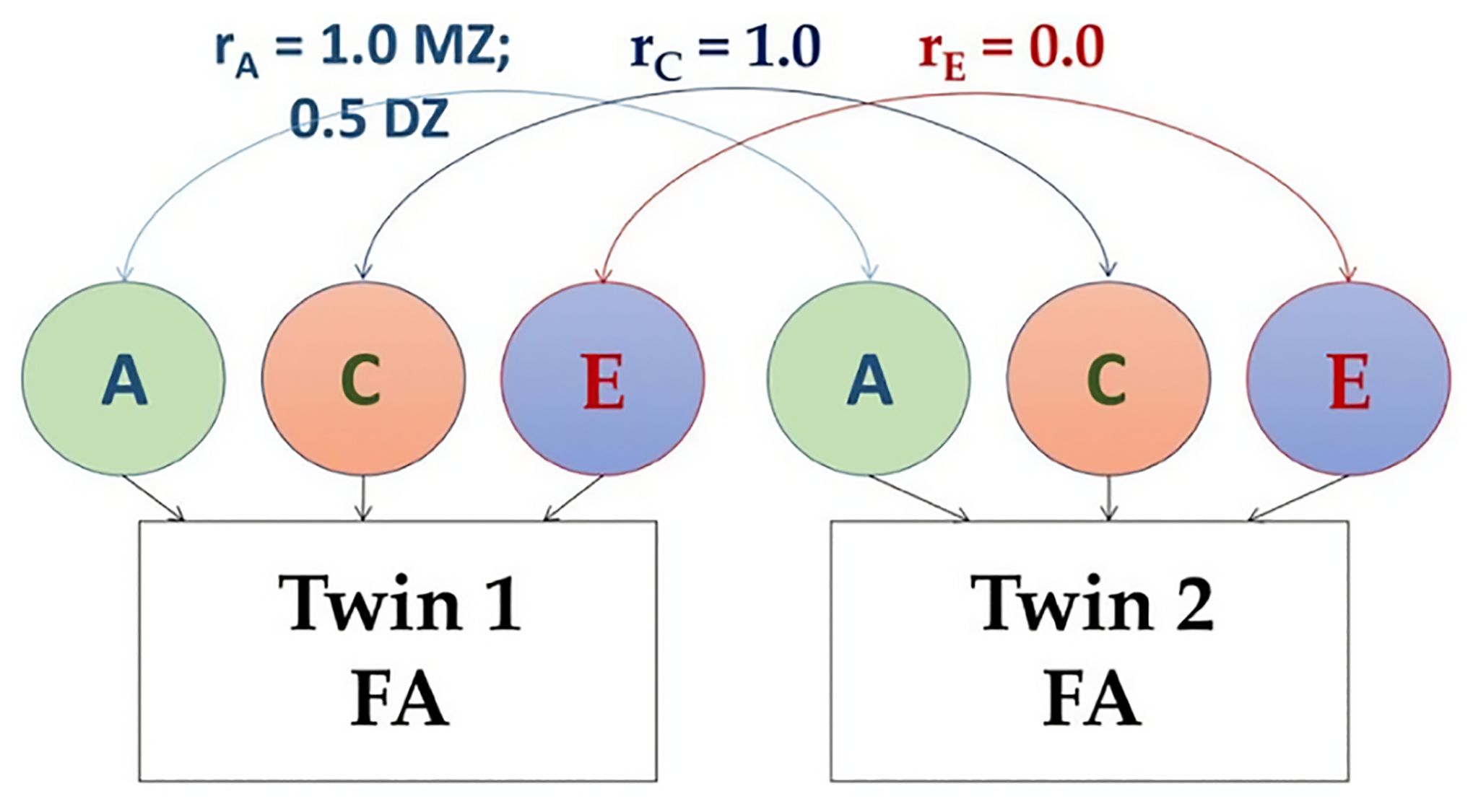
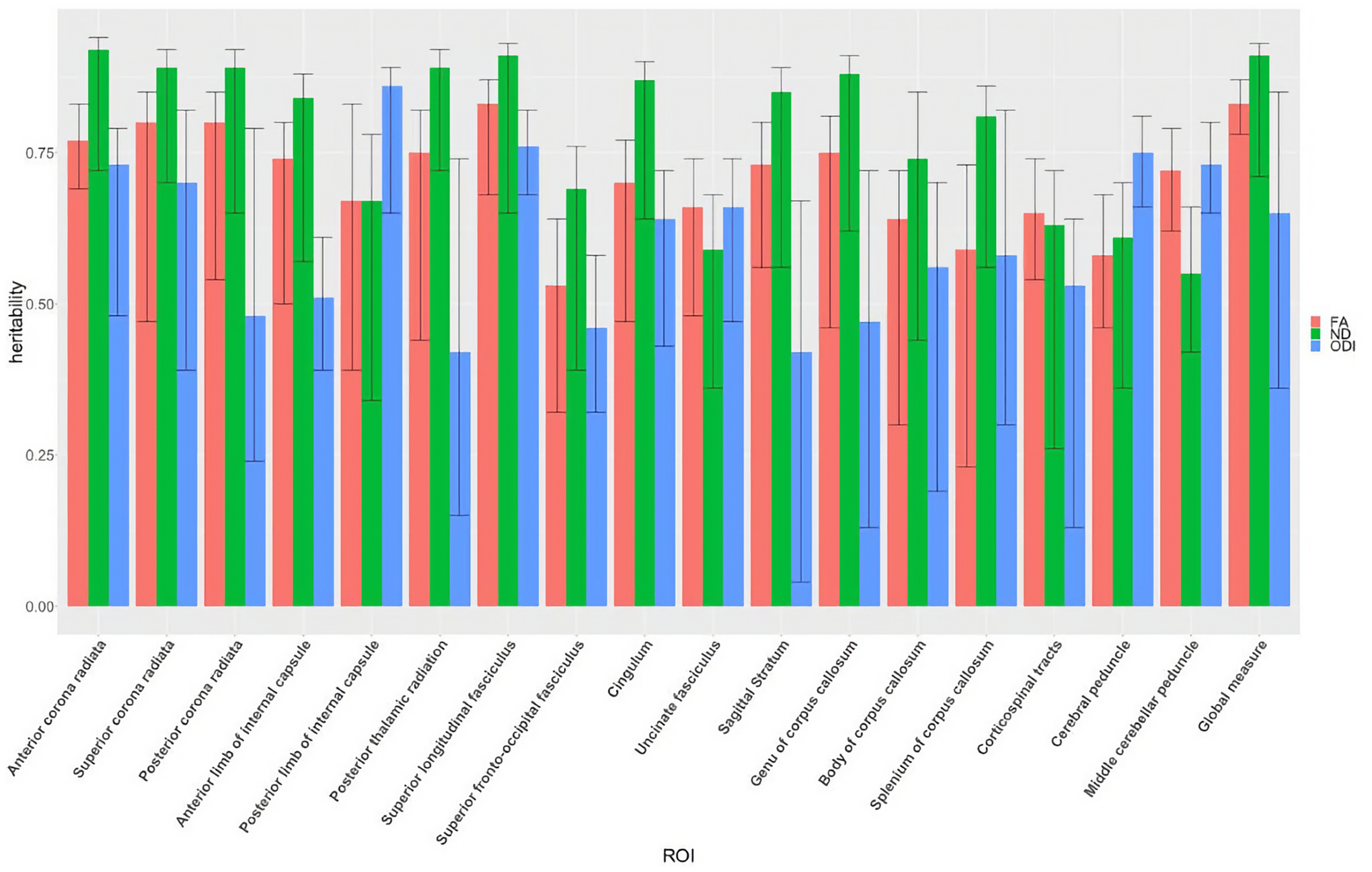
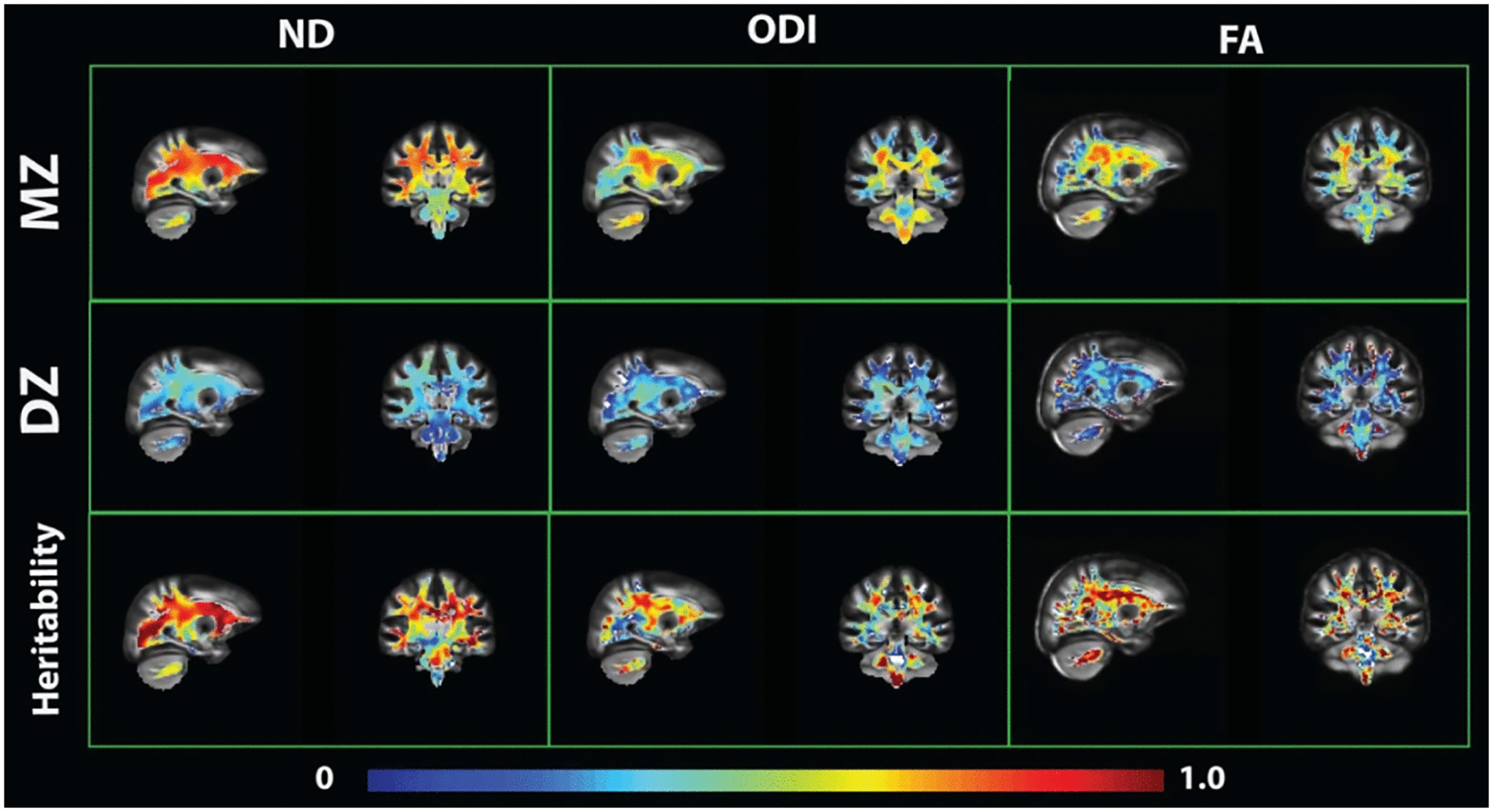
Quantitative neuroimaging studies in twin samples can investigate genetic contributions to brain structure and microstructure. Diffusion tensor imaging (DTI) studies with twin samples have shown moderate to high heritability in white matter microstructure. This study investigates the genetic and environmental contributions of another widely used diffusion MRI model not yet applied to twin studies, neurite orientation dispersion and density imaging (NODDI). The NODDI model is a multicompartment model of the diffusion-weighted MRI signal, providing estimates of neurite density (ND) and the orientation dispersion index (ODI). A cohort of monozygotic (MZ) and same-sex dizygotic (DZ) twins (N = 460 individuals) between 13 and 24 years of age were scanned with a multi-shell diffusion weighted imaging protocol. Select white matter (WM) regions of interest (ROI) were extracted. Biometric structural equation modeling estimated the relative contributions from additive genetic (A) and common (C) and unique environmental (E) factors. Genetic factors for the NODDI measures accounted for 91% and 65% of the variation of global ND and ODI, respectively, compared with 83% for FA. We observed higher heritability for ND than both FA and ODI in 25 of 30 discrete white matter regions that we examined, suggesting ND may be more sensitive to underlying genetic sources of variation. This study demonstrated that genetic factors play a key role in the development of white matter microstructure using both DTI and NODDI.
定量神经影像学研究在双胞胎样本中可以研究遗传对大脑结构和微观结构的贡献。具有双胞胎样本的扩散张量成像(DTI)研究表明,大脑白质微观结构的遗传率为中等至高等。本研究调查了另一种广泛使用的扩散 MRI 模型的遗传和环境贡献,该模型尚未应用于双胞胎研究,即神经丝取向分散和密度成像(NODDI)。NODDI 模型是扩散加权 MRI 信号的多室模型,提供神经丝密度(ND)和取向分散指数(ODI)的估计值。一组 13 至 24 岁的同卵(MZ)和同性别异卵(DZ)双胞胎(N=460 人)被扫描了多壳扩散加权成像协议。提取了白质(WM)感兴趣区(ROI)。生物计量结构方程模型估计了加性遗传(A)、共同(C)和独特环境(E)因素的相对贡献。与 FA 相比,NODDI 测量的遗传因素分别解释了全球 ND 和 ODI 变化的 91%和 65%。我们观察到,在我们检查的 30 个离散白质区域中的 25 个区域中,ND 的遗传率高于 FA 和 ODI,这表明 ND 可能对白质微观结构的遗传变异来源更为敏感。本研究表明,遗传因素在使用 DTI 和 NODDI 对大脑白质微观结构的发育中起着关键作用。