Department of Medicine, Kwame Nkrumah University of Science and Technology, Kumasi, Ghana (F.S.S., A.S., D.O.).
Weill Institute for Neurosciences, School of Medicine, University of California San-Francisco (B.O., O.J.A., R.T.).
Stroke. 2022 Jan;53(1):134-144. doi: 10.1161/STROKEAHA.120.032072. Epub 2021 Sep 30.
To identify the qualitative and quantitative contributions of conventional risk factors for occurrence of ischemic stroke and its key pathophysiologic subtypes among West Africans.
The SIREN (Stroke Investigative Research and Educational Network) is a multicenter, case-control study involving 15 sites in Ghana and Nigeria. Cases include adults aged ≥18 years with ischemic stroke who were etiologically subtyped using the A-S-C-O-D classification into atherosclerosis, small-vessel occlusion, cardiac pathology, other causes, and dissection. Controls were age- and gender-matched stroke-free adults. Detailed evaluations for vascular, lifestyle, and psychosocial factors were performed. We used conditional logistic regression to estimate adjusted odds ratios with 95% CI.
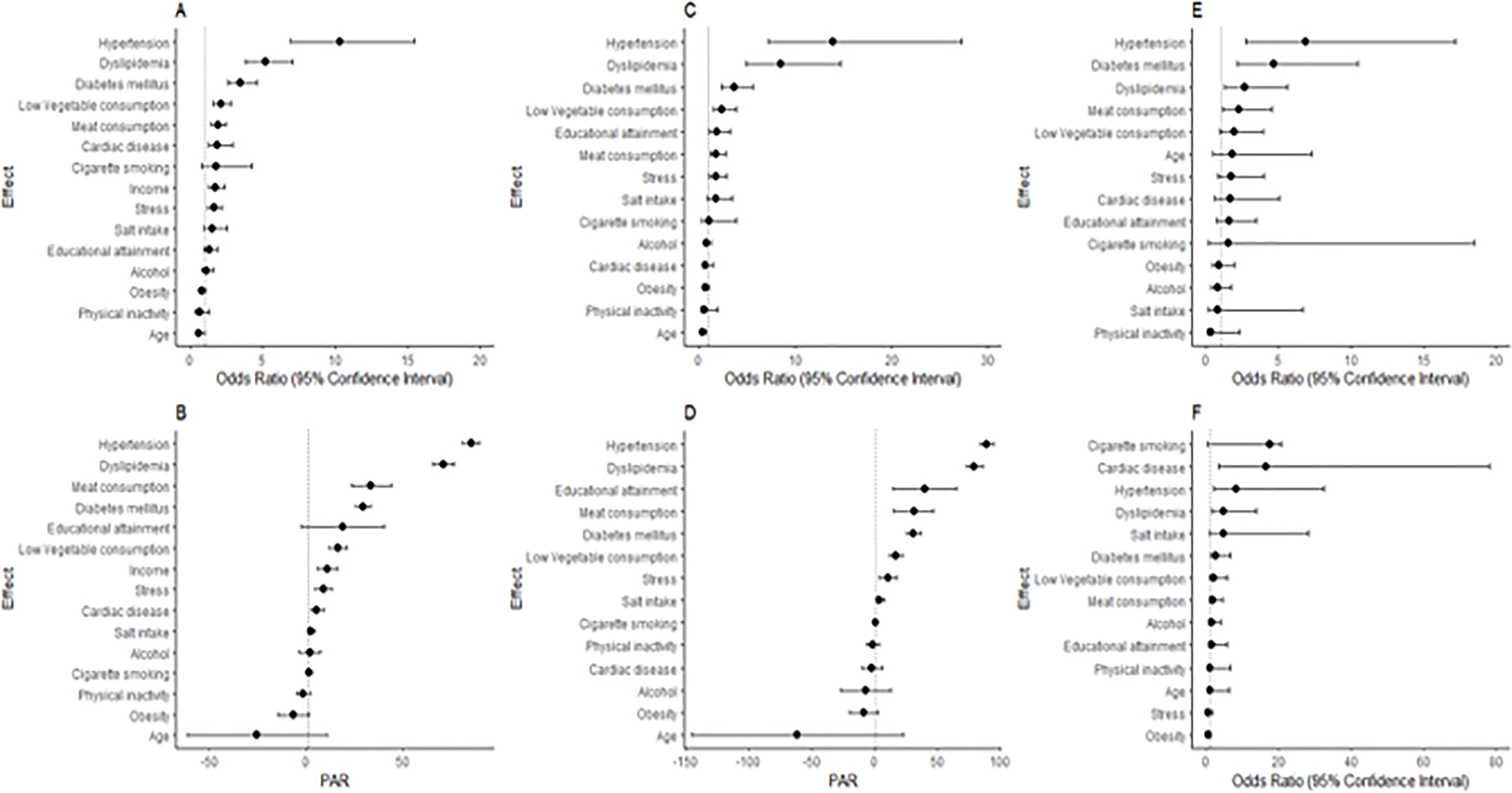
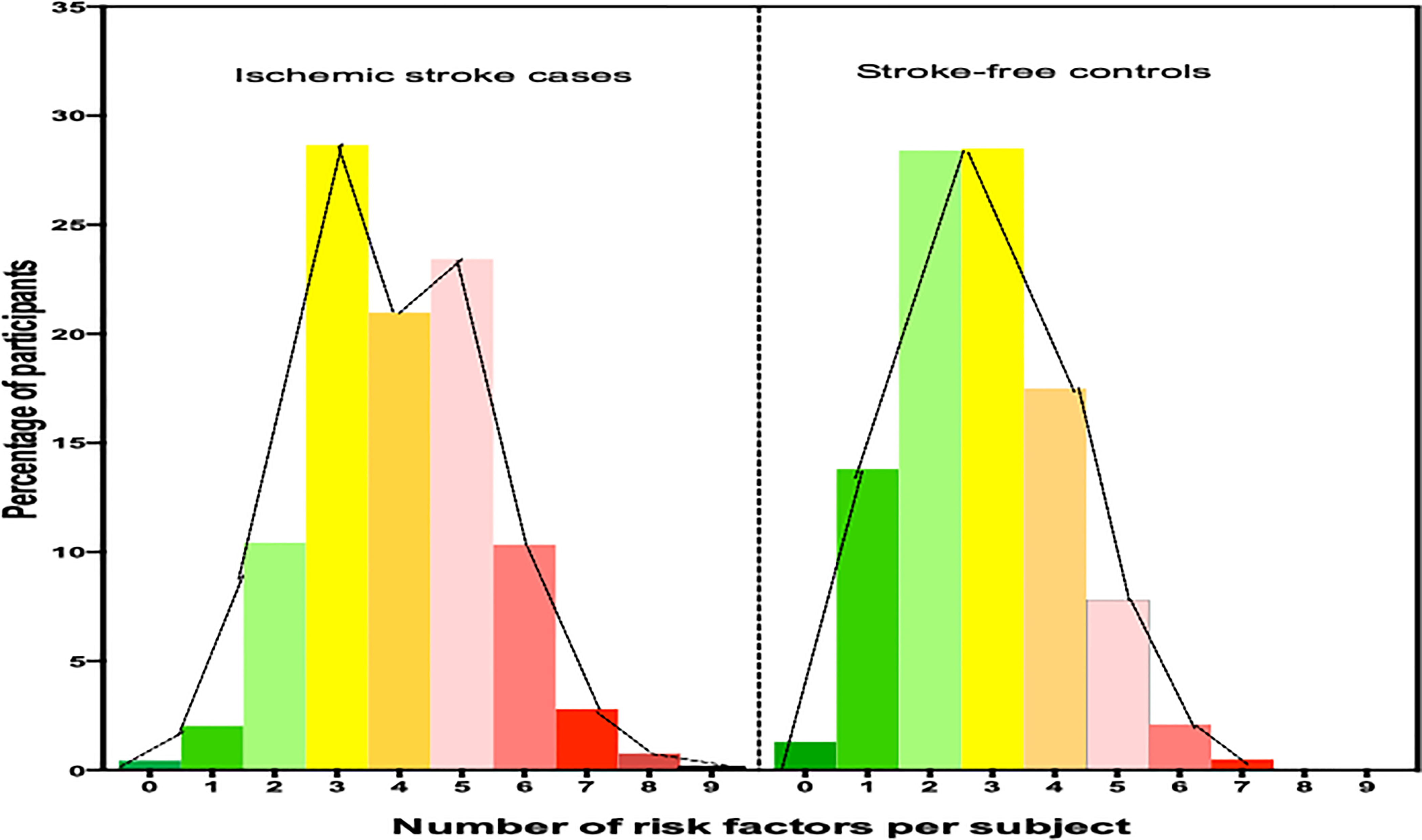
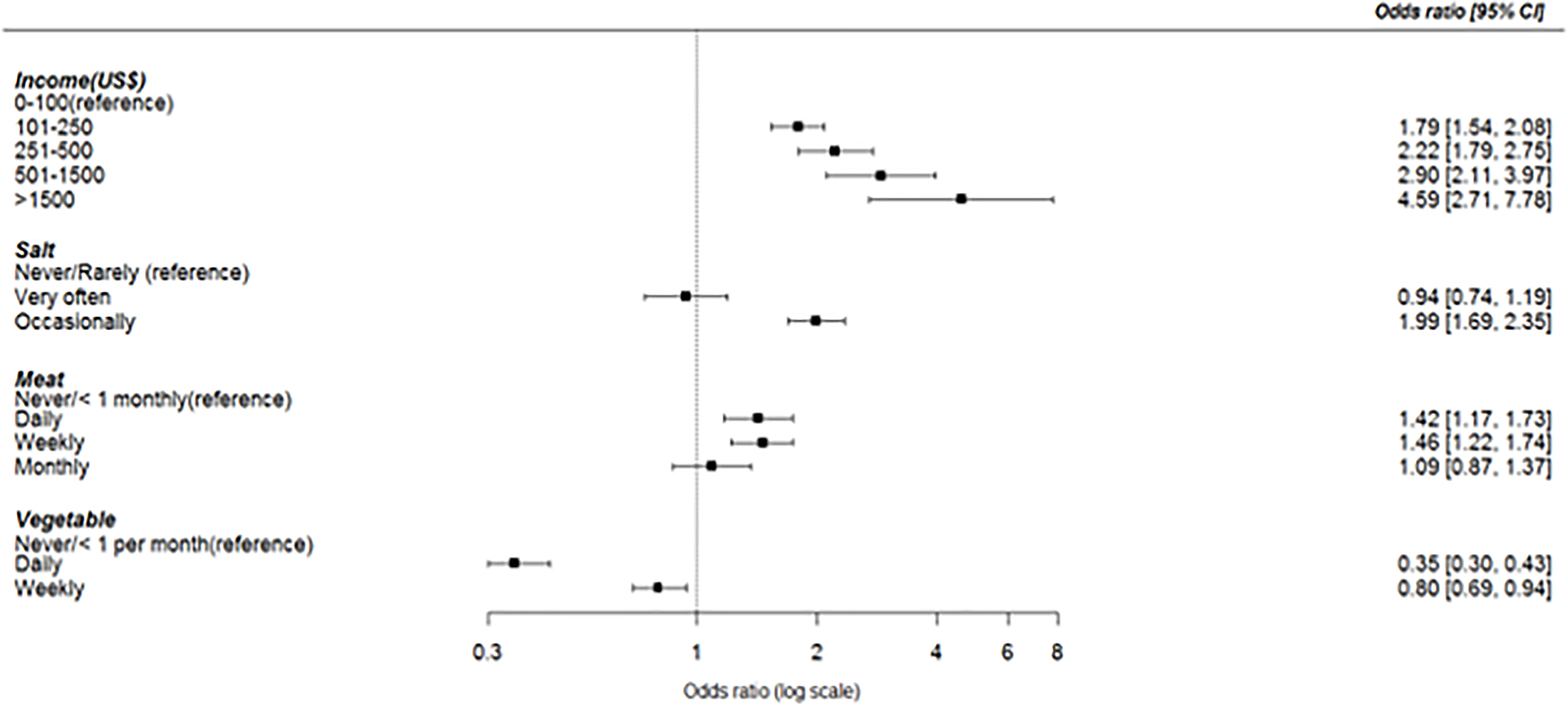
There were 2431 ischemic stroke case and stroke-free control pairs with respective mean ages of 62.2±14.0 versus 60.9±13.7 years. There were 1024 (42.1%) small vessel occlusions, 427 (17.6%) large-artery atherosclerosis, 258 (10.6%) cardio-embolic, 3 (0.1%) carotid dissections, and 719 (29.6%) undetermined/other causes. The adjusted odds ratio (95% CI) for the 8 dominant risk factors for ischemic stroke were hypertension, 10.34 (6.91-15.45); dyslipidemia, 5.16 (3.78-7.03); diabetes, 3.44 (2.60-4.56); low green vegetable consumption, 1.89 (1.45-2.46); red meat consumption, 1.89 (1.45-2.46); cardiac disease, 1.88 (1.22-2.90); monthly income $100 or more, 1.72 (1.24-2.39); and psychosocial stress, 1.62 (1.18-2.21). Hypertension, dyslipidemia, diabetes were confluent factors shared by small-vessel, large-vessel and cardio-embolic subtypes. Stroke cases and stroke-free controls had a mean of 5.3±1.5 versus 3.2±1.0 adverse cardio-metabolic risk factors respectively (<0.0001).
Traditional vascular risk factors demonstrate important differential effect sizes with pathophysiologic, clinical and preventative implications on the occurrence of ischemic stroke among indigenous West Africans.
本研究旨在确定传统危险因素对西非人群缺血性卒中发生及其关键病理生理亚型的定性和定量贡献。
SIREN(卒中调查研究和教育网络)是一项多中心病例对照研究,在加纳和尼日利亚的 15 个地点开展。病例为年龄≥18 岁的缺血性卒中患者,使用 A-S-C-O-D 病因分类法对病因进行了亚组划分,包括动脉粥样硬化、小血管闭塞、心源性病变、其他病因和夹层。对照组为年龄和性别匹配的无卒中成年人。对血管、生活方式和心理社会因素进行了详细评估。我们使用条件逻辑回归估计调整后的优势比(OR)及其 95%可信区间(CI)。
共纳入了 2431 例缺血性卒中病例和 2431 例无卒中对照,其平均年龄分别为 62.2±14.0 岁和 60.9±13.7 岁。其中 1024 例(42.1%)为小血管闭塞,427 例(17.6%)为大动脉粥样硬化,258 例(10.6%)为心源性栓塞,3 例(0.1%)为颈动脉夹层,719 例(29.6%)为病因不明/其他病因。缺血性卒中的 8 个主要危险因素的调整后 OR(95%CI)分别为:高血压,10.34(6.91-15.45);血脂异常,5.16(3.78-7.03);糖尿病,3.44(2.60-4.56);低绿叶蔬菜摄入,1.89(1.45-2.46);红肉类摄入,1.89(1.45-2.46);心脏病,1.88(1.22-2.90);月收入≥100 美元,1.72(1.24-2.39);心理社会应激,1.62(1.18-2.21)。高血压、血脂异常和糖尿病是小血管、大血管和心源性栓塞亚型共有的危险因素。病例组和对照组的平均不良心血管代谢危险因素分别为 5.3±1.5 和 3.2±1.0(<0.0001)。
传统血管危险因素对西非原住居民缺血性卒中的发生及其病理生理、临床和预防具有重要的差异效应大小。