Guo Tuo, Fang Zhuo, Yang Guifang, Zhou Yang, Ding Ning, Peng Wen, Gong Xun, He Huaping, Pan Xiaogao, Chai Xiangping
Department of Emergency Medicine, The Second Xiangya Hospital, Central South University, Changsha, China.
Emergency Medicine and Difficult Diseases Institute, Central South University, Changsha, China.
Front Cardiovasc Med. 2021 Sep 17;8:727773. doi: 10.3389/fcvm.2021.727773. eCollection 2021.
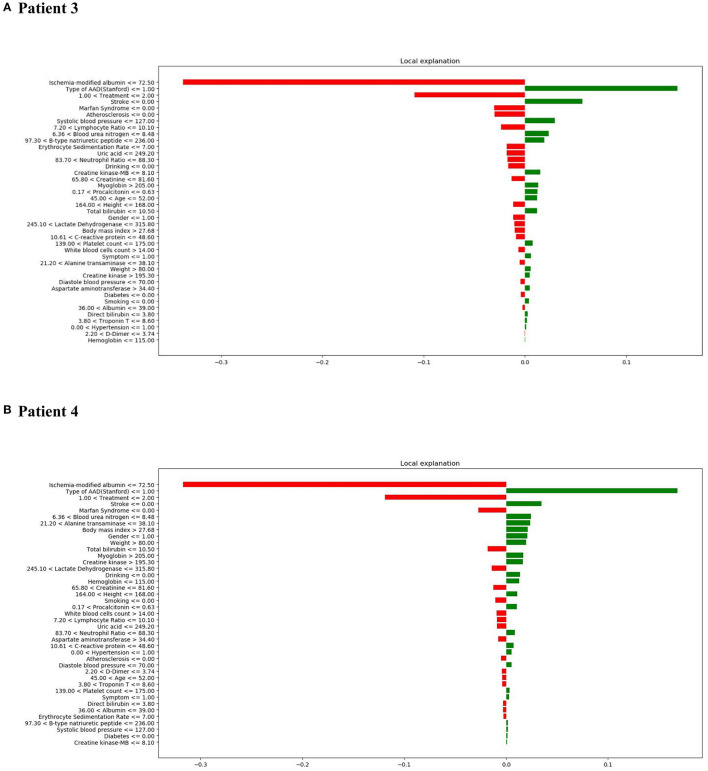
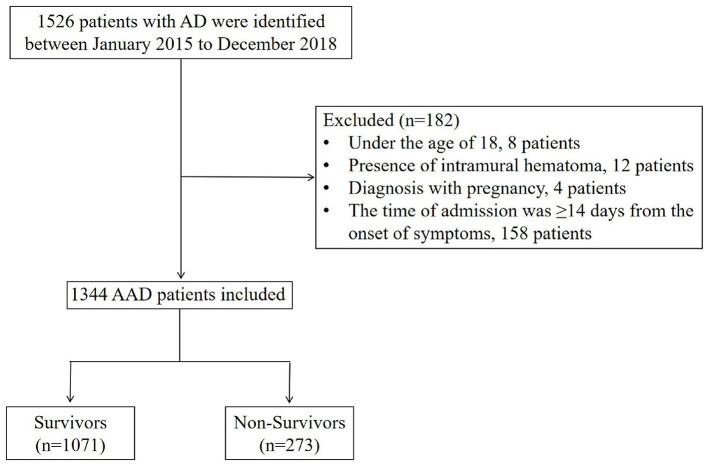
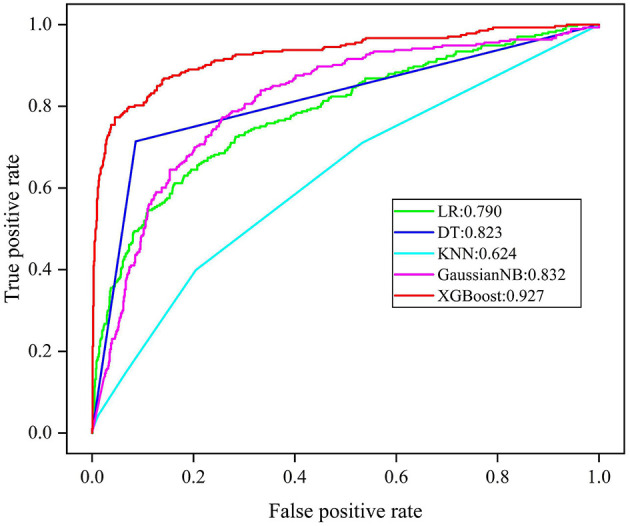
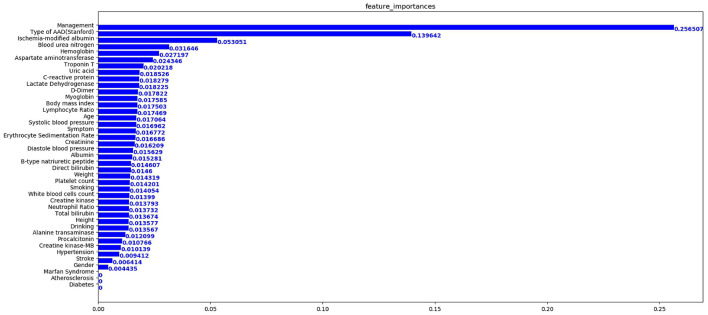
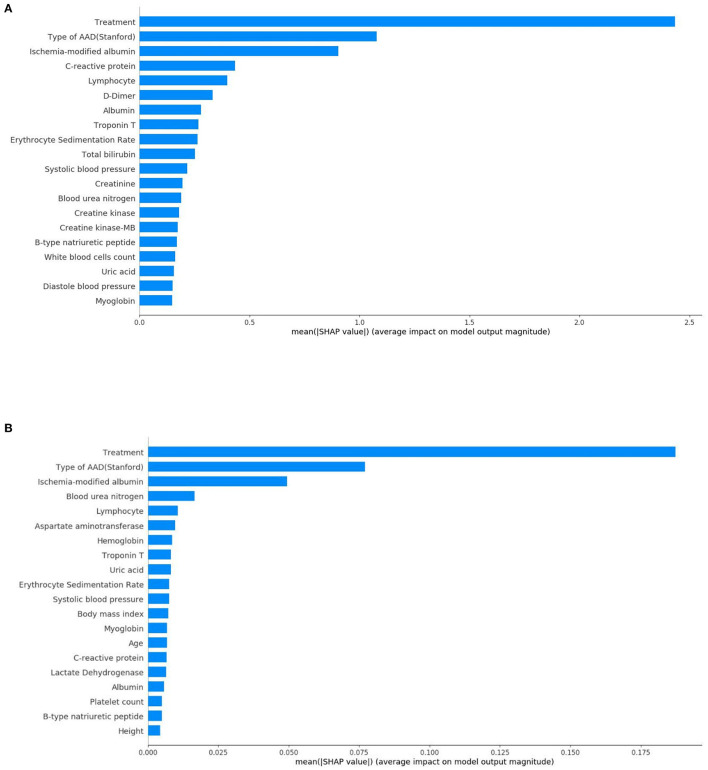
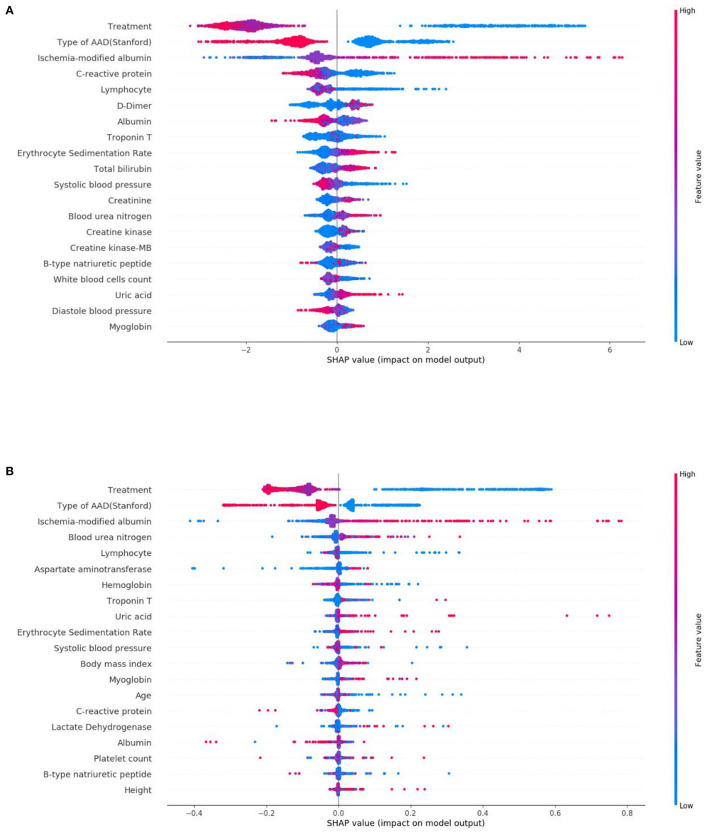
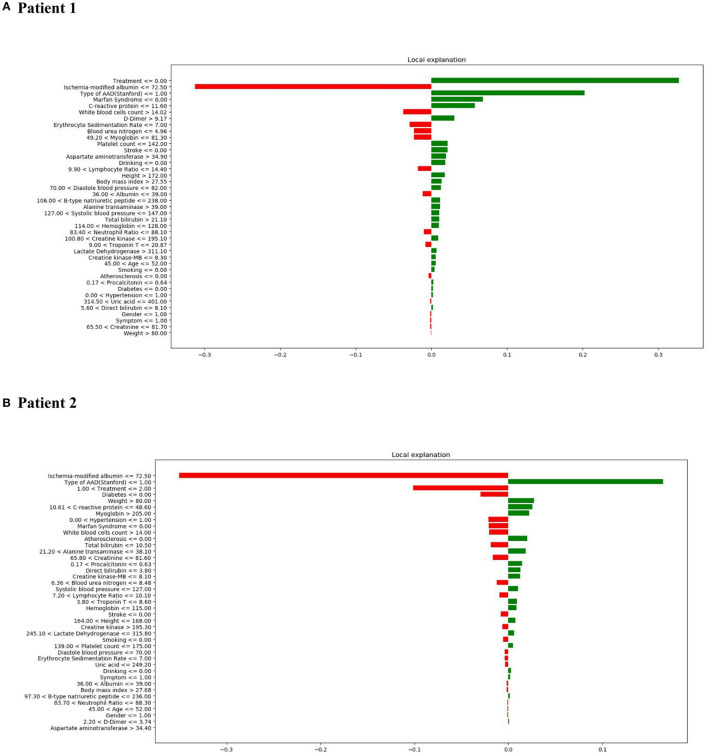
Acute aortic dissection is a potentially fatal cardiovascular disorder associated with high mortality. However, current predictive models show a limited ability to efficiently and flexibly detect this mortality risk, and have been unable to discover a relationship between the mortality rate and certain variables. Thus, this study takes an artificial intelligence approach, whereby clinical data-driven machine learning was utilized to predict the in-hospital mortality of acute aortic dissection. Patients diagnosed with acute aortic dissection between January 2015 to December 2018 were voluntarily enrolled from the Second Xiangya Hospital of Central South University in the study. The diagnosis was defined by magnetic resonance angiography or computed tomography angiography, with an onset time of the symptoms being within 14 days. The analytical variables included demographic characteristics, physical examination, symptoms, clinical condition, laboratory results, and treatment strategies. The machine learning algorithms included logistic regression, decision tree, K nearest neighbor, Gaussian naive bayes, and extreme gradient boost (XGBoost). Evaluation of the predictive performance of the models was mainly achieved using the area under the receiver operating characteristic curve. SHapley Additive exPlanation was also implemented to interpret the final prediction model. A total of 1,344 acute aortic dissection patients were recruited, including 1,071 (79.7%) patients in the survivor group and 273 (20.3%) patients in non-survivor group. The extreme gradient boost model was found to be the most effective model with the greatest area under the receiver operating characteristic curve (0.927, 95% CI: 0.860-0.968). The three most significant aspects of the extreme gradient boost importance matrix plot were treatment, type of acute aortic dissection, and ischemia-modified albumin levels. In the SHapley Additive exPlanation summary plot, medical treatment, type A acute aortic dissection, and higher ischemia-modified albumin level were shown to increase the risk of hospital-based mortality.
急性主动脉夹层是一种潜在致命的心血管疾病,死亡率很高。然而,目前的预测模型在有效且灵活地检测这种死亡风险方面能力有限,并且未能发现死亡率与某些变量之间的关系。因此,本研究采用人工智能方法,利用临床数据驱动的机器学习来预测急性主动脉夹层患者的院内死亡率。2015年1月至2018年12月期间在中南大学湘雅二医院自愿招募了被诊断为急性主动脉夹层的患者进行本研究。诊断通过磁共振血管造影或计算机断层扫描血管造影确定,症状发作时间在14天内。分析变量包括人口统计学特征、体格检查、症状、临床状况、实验室检查结果和治疗策略。机器学习算法包括逻辑回归、决策树、K近邻、高斯朴素贝叶斯和极端梯度提升(XGBoost)。主要使用受试者操作特征曲线下面积来评估模型的预测性能。还实施了SHapley加性解释来解释最终的预测模型。共招募了1344例急性主动脉夹层患者,其中存活组1071例(79.7%),非存活组273例(20.3%)。发现极端梯度提升模型是最有效的模型,受试者操作特征曲线下面积最大(0.927,95%CI:0.860-0.968)。极端梯度提升重要性矩阵图中最重要的三个方面是治疗、急性主动脉夹层类型和缺血修饰白蛋白水平。在SHapley加性解释汇总图中,药物治疗、A型急性主动脉夹层和较高的缺血修饰白蛋白水平显示会增加院内死亡风险。