Bolton Ruth N, Gustafsson Anders, Tarasi Crina O, Witell Lars
W. P. Carey School of Business, Arizona State University, Tempe, AZ 85287-4106 USA.
Department of Marketing, Norwegian Business School (BI), 0484 Oslo, Norway.
J Acad Mark Sci. 2022;50(1):85-107. doi: 10.1007/s11747-021-00808-9. Epub 2021 Sep 29.
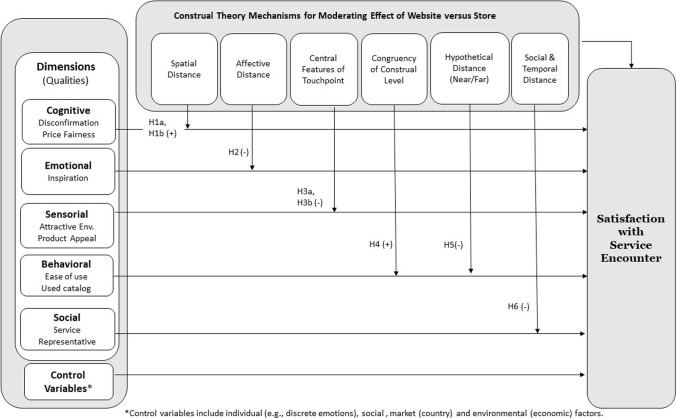
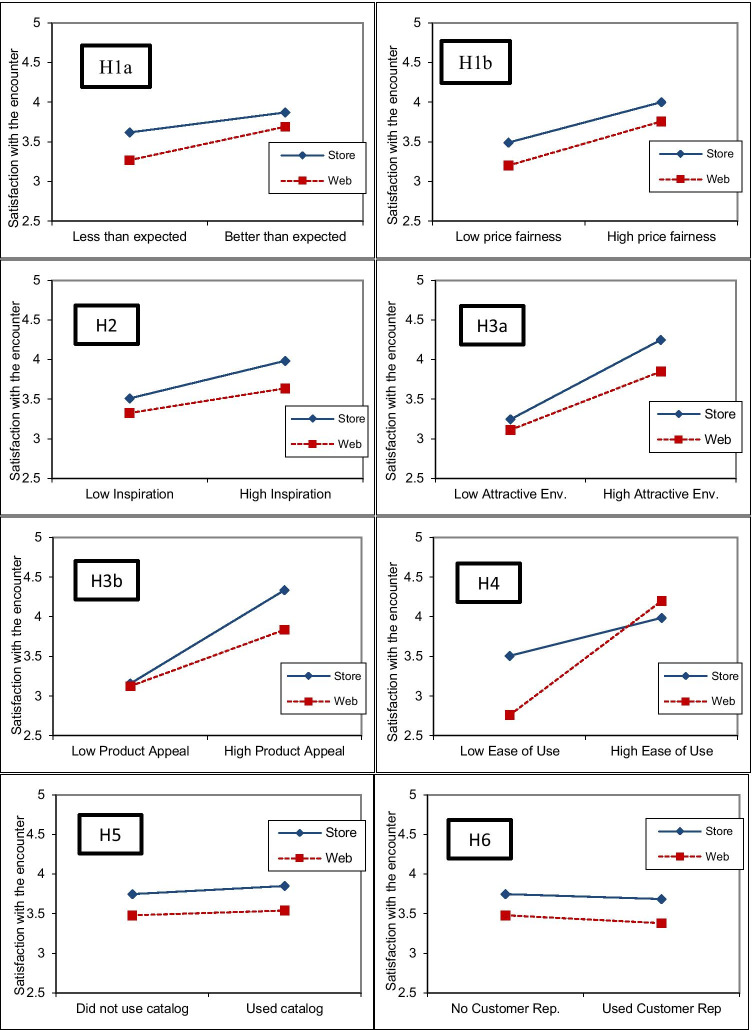
This study investigated how touchpoints moderate the antecedents of customer satisfaction with service encounters by comparing online and in-store encounters. Construal level theory was used within the Touchpoint, Context, Qualities (TCQ) Framework (De Keyser et al., 2020) to integrate a comprehensive model of how touchpoints-websites or stores-influence the magnitude of customer responses to qualities of service encounters. A hierarchical linear model (HLM) was estimated using survey data describing the service encounters of 2.4 million customers with a global retailer. Online customers weighed cognitive and behavioral qualities more heavily than in-store customers, whereas they weighed emotional and sensorial qualities less heavily. Moreover, random effects in the HLM model indicated that each country and store would have unique clientele effects for specific qualities. Since each firm has limited resources, this research offers guidance on key qualities in designing satisfying service encounters for each touchpoint and how qualities should be standardized and customized in global omnichannel environments.
The online version contains supplementary material available at 10.1007/s11747-021-00808-9.
本研究通过比较线上和线下服务体验,调查了接触点如何调节顾客对服务体验满意度的前因。在接触点、情境、质量(TCQ)框架(De Keyser等人,2020)中运用解释水平理论,以整合一个关于接触点(网站或商店)如何影响顾客对服务体验质量反应程度的综合模型。使用描述240万顾客与一家全球零售商服务体验的调查数据估计了分层线性模型(HLM)。线上顾客比线下顾客更看重认知和行为质量,而对情感和感官质量的看重程度较低。此外,HLM模型中的随机效应表明,每个国家和商店对于特定质量会有独特的顾客效应。由于每个公司资源有限,本研究为在为每个接触点设计令人满意的服务体验时的关键质量,以及在全球全渠道环境中质量应如何标准化和定制提供了指导。
在线版本包含可在10.1007/s11747-021-00808-9获取的补充材料。