Molecular and Integrative Physiology, University of Michigan, Ann Arbor, MI, USA.
Division of Nephrology, Department of Internal Medicine, University of Michigan, Ann Arbor, MI, USA.
Nat Rev Nephrol. 2022 Jan;18(1):38-55. doi: 10.1038/s41581-021-00488-2. Epub 2021 Oct 6.
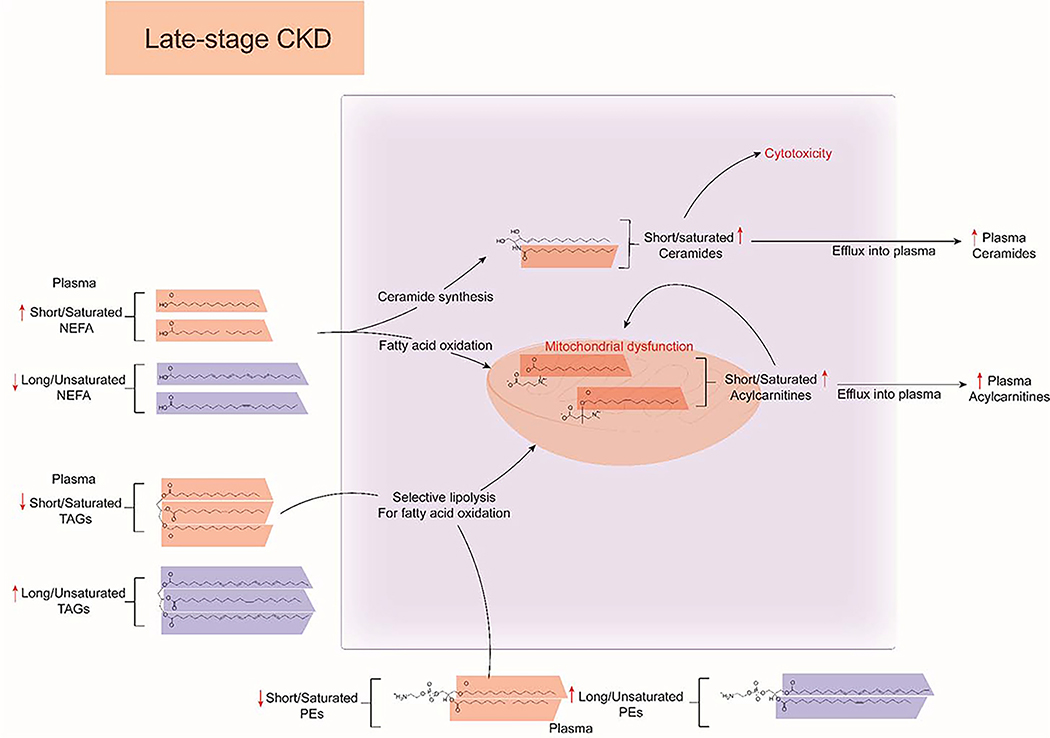
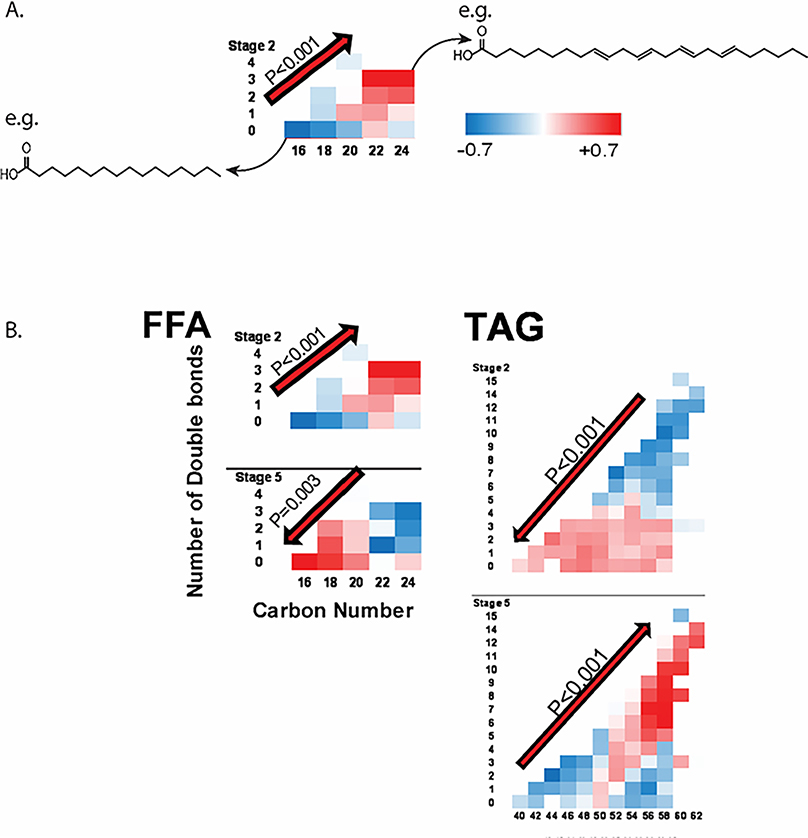
Dyslipidaemia is a hallmark of chronic kidney disease (CKD). The severity of dyslipidaemia not only correlates with CKD stage but is also associated with CKD-associated cardiovascular disease and mortality. Understanding how lipids are dysregulated in CKD is, however, challenging owing to the incredible diversity of lipid structures. CKD-associated dyslipidaemia occurs as a consequence of complex interactions between genetic, environmental and kidney-specific factors, which to understand, requires an appreciation of perturbations in the underlying network of genes, proteins and lipids. Modern lipidomic technologies attempt to systematically identify and quantify lipid species from biological systems. The rapid development of a variety of analytical platforms based on mass spectrometry has enabled the identification of complex lipids at great precision and depth. Insights from lipidomics studies to date suggest that the overall architecture of free fatty acid partitioning between fatty acid oxidation and complex lipid fatty acid composition is an important driver of CKD progression. Available evidence suggests that CKD progression is associated with metabolic inflexibility, reflecting a diminished capacity to utilize free fatty acids through β-oxidation, and resulting in the diversion of accumulating fatty acids to complex lipids such as triglycerides. This effect is reversed with interventions that improve kidney health, suggesting that targeting of lipid abnormalities could be beneficial in preventing CKD progression.
血脂异常是慢性肾脏病 (CKD) 的一个标志。血脂异常的严重程度不仅与 CKD 分期相关,而且还与 CKD 相关的心血管疾病和死亡率相关。然而,由于脂质结构的多样性令人难以置信,因此理解 CKD 中脂质是如何失调的具有挑战性。CKD 相关的血脂异常是遗传、环境和肾脏特异性因素之间复杂相互作用的结果,要理解这一点,需要了解潜在基因、蛋白质和脂质网络中的干扰。现代脂质组学技术试图从生物系统中系统地鉴定和定量脂质种类。基于质谱的各种分析平台的快速发展使我们能够以极高的精度和深度识别复杂的脂质。迄今为止,脂质组学研究的结果表明,脂肪酸氧化和复杂脂质脂肪酸组成之间游离脂肪酸分配的整体结构是 CKD 进展的重要驱动因素。现有证据表明,CKD 进展与代谢灵活性降低有关,这反映了通过β氧化利用游离脂肪酸的能力下降,导致积累的脂肪酸转向甘油三酯等复杂脂质。通过改善肾脏健康的干预措施可以逆转这种影响,这表明针对脂质异常可能有助于预防 CKD 进展。