Hillis Susan D, Blenkinsop Alexandra, Villaveces Andrés, Annor Francis B, Liburd Leandris, Massetti Greta M, Demissie Zewditu, Mercy James A, Nelson Iii Charles A, Cluver Lucie, Flaxman Seth, Sherr Lorraine, Donnelly Christl A, Ratmann Oliver, Unwin H Juliette T
Centers for Disease Control and Prevention, Atlanta, Georgia.
Department of Mathematics.
Pediatrics. 2021 Dec 1;148(6). doi: 10.1542/peds.2021-053760.
Most coronavirus disease 2019 (COVID-19) deaths occur among adults, not children, and attention has focused on mitigating COVID-19 burden among adults. However, a tragic consequence of adult deaths is that high numbers of children might lose their parents and caregivers to COVID-19-associated deaths.
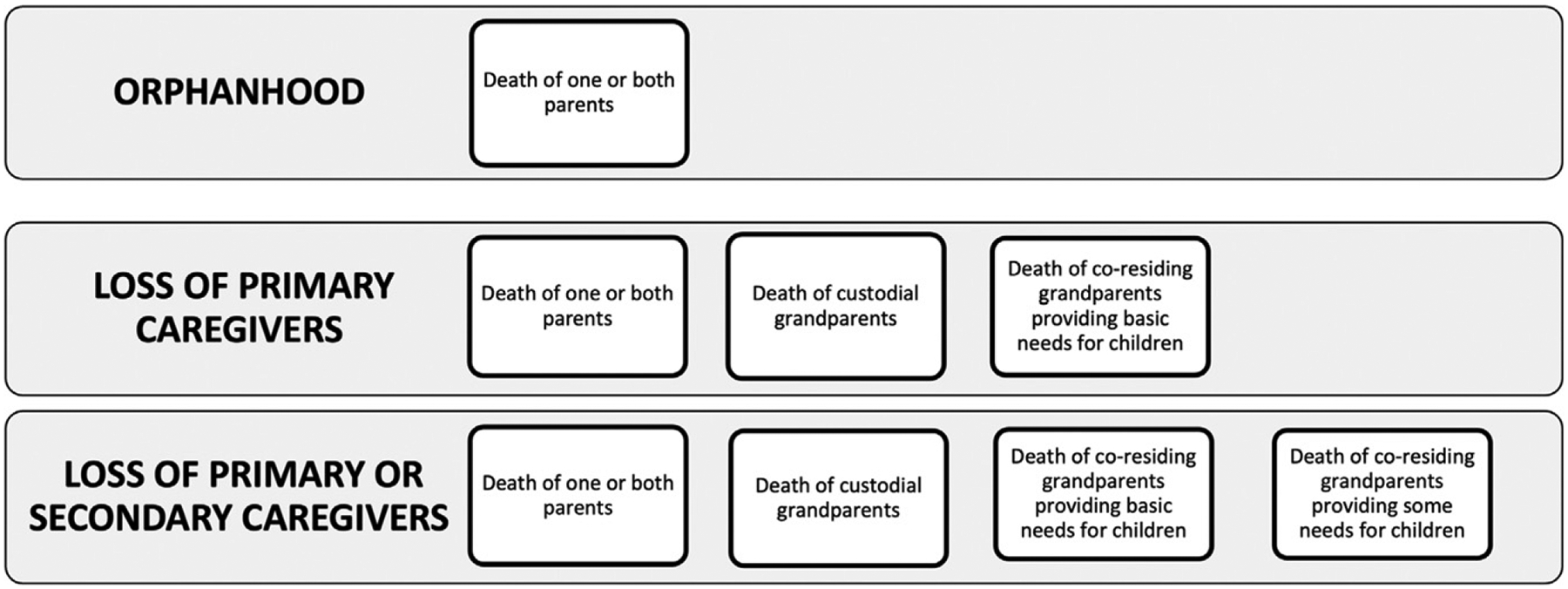
We quantified COVID-19-associated caregiver loss and orphanhood in the United States and for each state using fertility and excess and COVID-19 mortality data. We assessed burden and rates of COVID-19-associated orphanhood and deaths of custodial and coresiding grandparents, overall and by race and ethnicity. We further examined variations in COVID-19-associated orphanhood by race and ethnicity for each state.
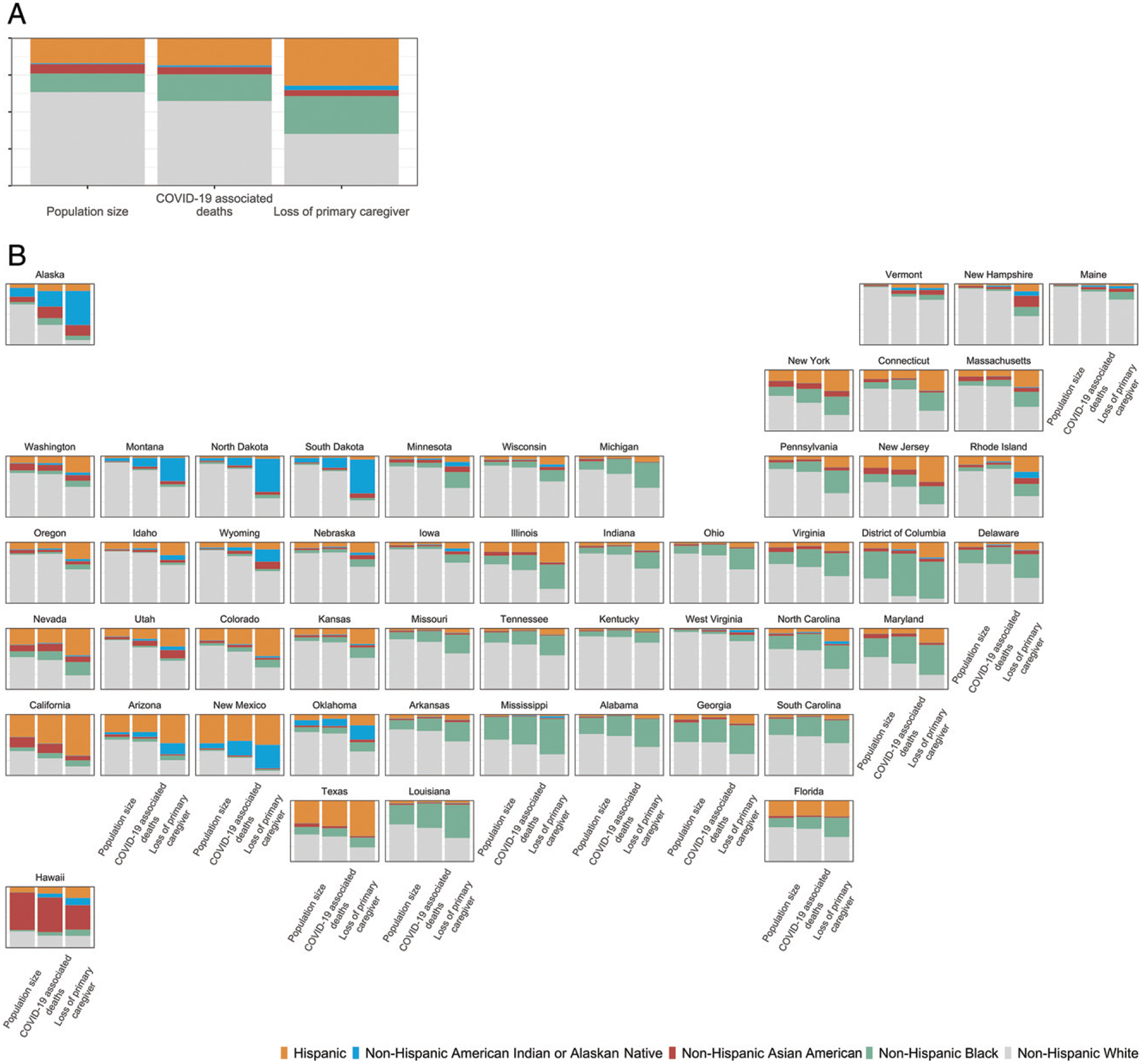
We found that from April 1, 2020, through June 30, 2021, >140 000 children in the United States experienced the death of a parent or grandparent caregiver. The risk of such loss was 1.1 to 4.5 times higher among children of racial and ethnic minority groups compared with non-Hispanic White children. The highest burden of COVID-19-associated death of parents and caregivers occurred in Southern border states for Hispanic children, in Southeastern states for Black children, and in states with tribal areas for American Indian and/or Alaska Native populations.
We found substantial disparities in distributions of COVID-19-associated death of parents and caregivers across racial and ethnic groups. Children losing caregivers to COVID-19 need care and safe, stable, and nurturing families with economic support, quality child care, and evidence-based parenting support programs. There is an urgent need to mount an evidence-based comprehensive response focused on those children at greatest risk in the states most affected.
2019冠状病毒病(COVID-19)导致的死亡大多发生在成年人而非儿童中,人们的注意力一直集中在减轻成年人的COVID-19负担上。然而,成年人死亡带来的一个悲惨后果是,大量儿童可能会因COVID-19相关死亡而失去父母和照料者。
我们利用生育率、过剩人口和COVID-19死亡率数据,对美国及每个州与COVID-19相关的照料者丧失和成为孤儿的情况进行了量化。我们评估了与COVID-19相关的孤儿身份以及监护和共同居住祖父母死亡的负担和比率,总体情况以及按种族和民族划分的情况。我们还进一步研究了每个州按种族和民族划分的与COVID-19相关的孤儿身份差异。
我们发现,从2020年4月1日至2021年6月30日,美国有超过140000名儿童经历了父母或祖父母照料者的死亡。与非西班牙裔白人儿童相比,种族和族裔少数群体的儿童遭受这种损失的风险高出1.1至4.5倍。与COVID-19相关的父母和照料者死亡负担最高的情况出现在西班牙裔儿童所在的南部边境州、黑人儿童所在的东南部州以及有部落地区的州中美洲印第安人和/或阿拉斯加原住民群体。
我们发现,不同种族和族裔群体中与COVID-19相关的父母和照料者死亡分布存在巨大差异。因COVID-19失去照料者的儿童需要照顾以及安全、稳定且充满关爱的家庭,这些家庭要提供经济支持、优质儿童保育以及循证育儿支持项目。迫切需要针对受影响最严重州中风险最高的那些儿童,开展基于证据的全面应对措施。