Graduate School of Environmental Science, Hokkaido University, N10W5, Sapporo, Hokkaido, 060-0810, Japan.
Laboratory of Parasitology, Graduate School of Infectious Diseases, Faculty of Veterinary Medicine, Hokkaido University, Kita-18, Nishi-9, Sapporo, Hokkaido, 060-0818, Japan.
Sci Rep. 2021 Oct 7;11(1):19929. doi: 10.1038/s41598-021-99379-6.
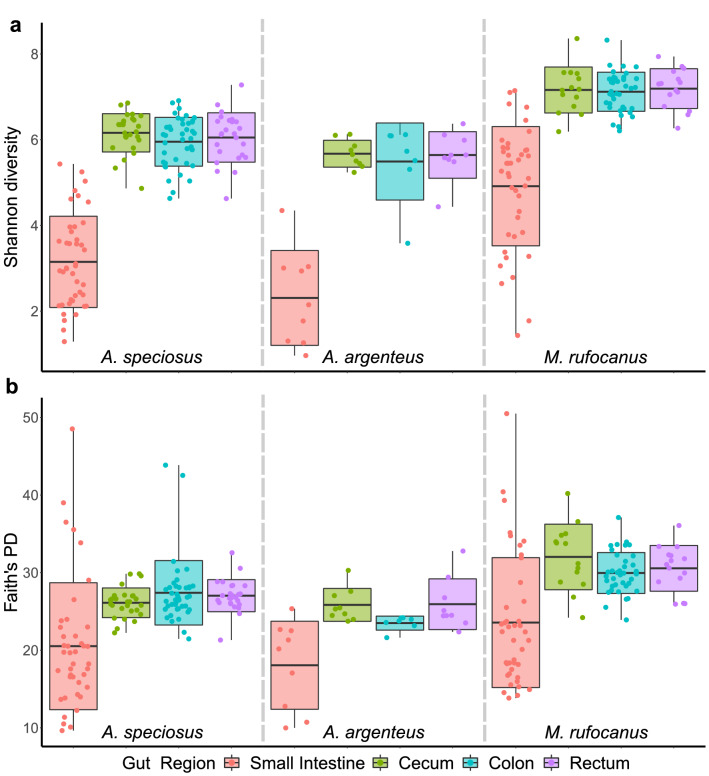
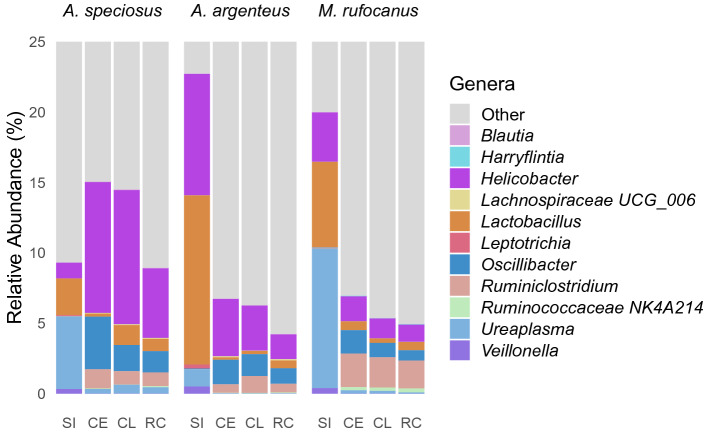
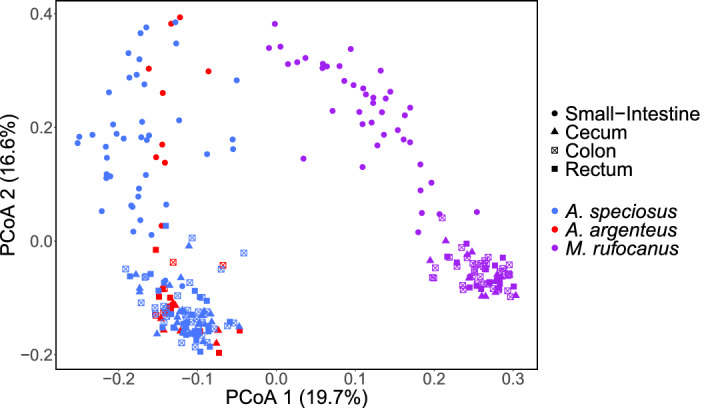
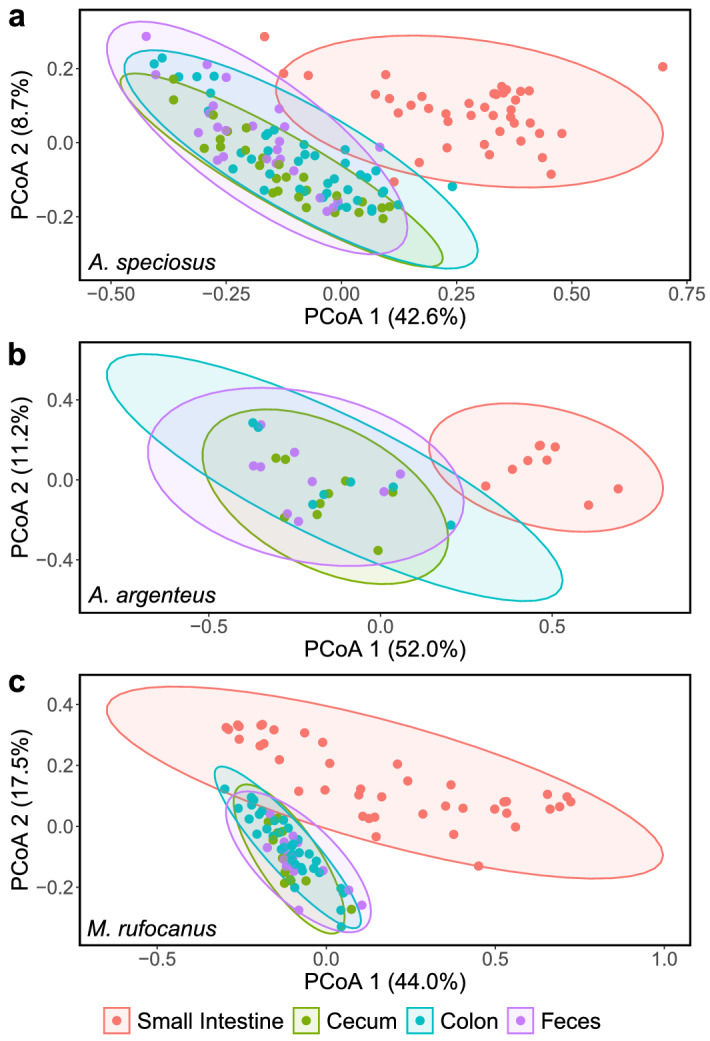
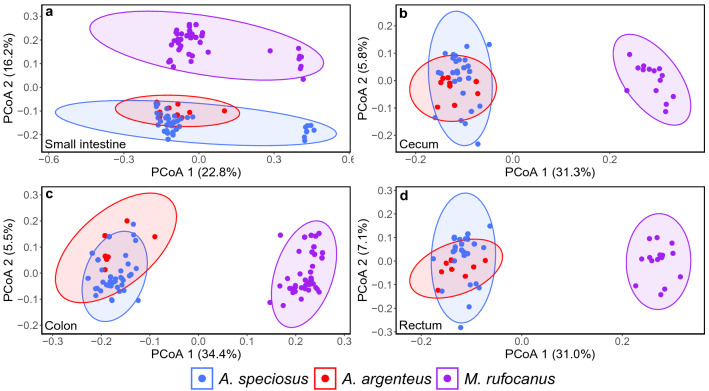
Host-microbe interactions within the gastrointestinal tract (GIT) play a pivotal role in shaping host physiology, ecology, and life history. However, these interactions vary across gut regions due to changes in the physical environment or host immune system activity, thereby altering the microbial community. Each animal species may harbor their own unique microbial community due to host species-specific ecological traits such as dietary habits, micro-habitat preferences, and mating behavior as well as physiological traits. While the gut microbiota in wild animals has received much attention over the last decade, most studies comparing closely related species only utilized fecal or colon samples. In this study, we first compared the gut microbial community from the small intestine, cecum, colon, and rectum within three sympatric species of wild rodents (i.e. Apodemus speciosus, A. argenteus, and Myodes rufocanus). We then compared each gut region among host species to determine the effect of both gut region and host species on the gut microbiota. We found that the small intestine harbored a unique microbiome as compared to the lower GIT in all three host species, with the genus Lactobacillus in particular having higher abundance in the small intestine of all three host species. There were clear interspecific differences in the microbiome within all gut regions, although some similarity in alpha diversity and community structure within the small intestine was found. Finally, fecal samples may be appropriate for studying the lower GIT in these species, but not the small intestine.
肠道(GIT)内的宿主-微生物相互作用对于塑造宿主生理学、生态学和生活史起着关键作用。然而,由于物理环境或宿主免疫系统活动的变化,这些相互作用在肠道区域之间发生变化,从而改变了微生物群落。由于宿主特有的生态特征,如饮食习惯、微生境偏好和交配行为以及生理特征,每个动物物种可能拥有自己独特的微生物群落。尽管过去十年中人们对野生动物的肠道微生物群关注度很高,但大多数比较密切相关物种的研究仅利用粪便或结肠样本。在这项研究中,我们首先比较了三种共生野生啮齿动物(即中华姬鼠、黑线姬鼠和东北鼢鼠)的小肠、盲肠、结肠和直肠中的肠道微生物群落。然后,我们比较了宿主物种之间的每个肠道区域,以确定肠道区域和宿主物种对肠道微生物群的影响。我们发现,与所有三种宿主物种的下 GIT 相比,小肠具有独特的微生物组,特别是在所有三种宿主的小肠中,乳杆菌属的丰度更高。尽管在小肠内发现了 alpha 多样性和群落结构的一些相似性,但所有肠道区域内都存在明显的种间差异。最后,粪便样本可能适合研究这些物种的下 GIT,但不适合研究小肠。