Yang Bo-Yi, Zhao Tianyu, Hu Li-Xin, Browning Matthew H E M, Heinrich Joachim, Dharmage Shyamali C, Jalaludin Bin, Knibbs Luke D, Liu Xiao-Xuan, Luo Ya-Na, James Peter, Li Shanshan, Huang Wen-Zhong, Chen Gongbo, Zeng Xiao-Wen, Hu Li-Wen, Yu Yunjiang, Dong Guang-Hui
Guangdong Provincial Engineering Technology Research Center of Environmental and Health risk Assessment, Department of Occupational and Environmental Health, School of Public Health, Sun Yat-sen University, Guangzhou 510080, China.
Institute and Clinic for Occupational, Social and Environmental Medicine, LMU University Hospital Munich, Comprehensive Pneumology Center (CPC) Munich, member, German Center for Lung Research (DZL), Munich 80036, Germany; Institute of Epidemiology, Helmholtz Zentrum München - German Research Center for Environmental Health, 85764 Neuherberg, Germany.
Innovation (Camb). 2021 Sep 24;2(4):100164. doi: 10.1016/j.xinn.2021.100164. eCollection 2021 Nov 28.
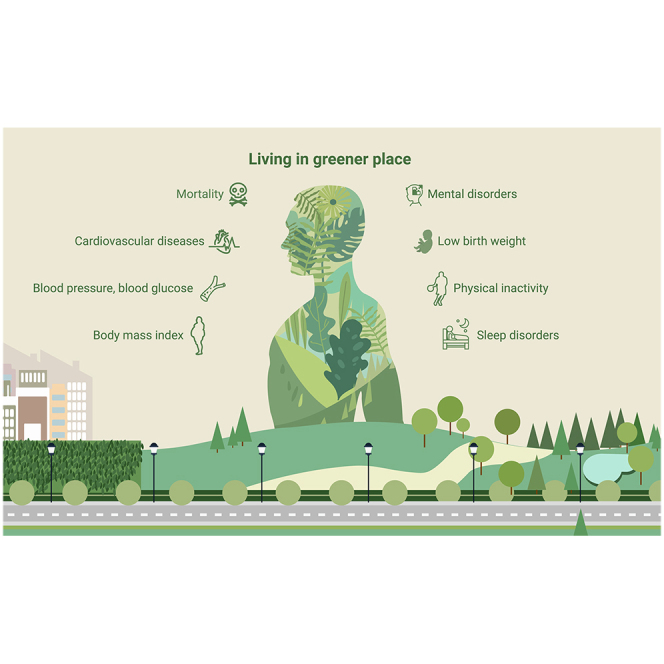
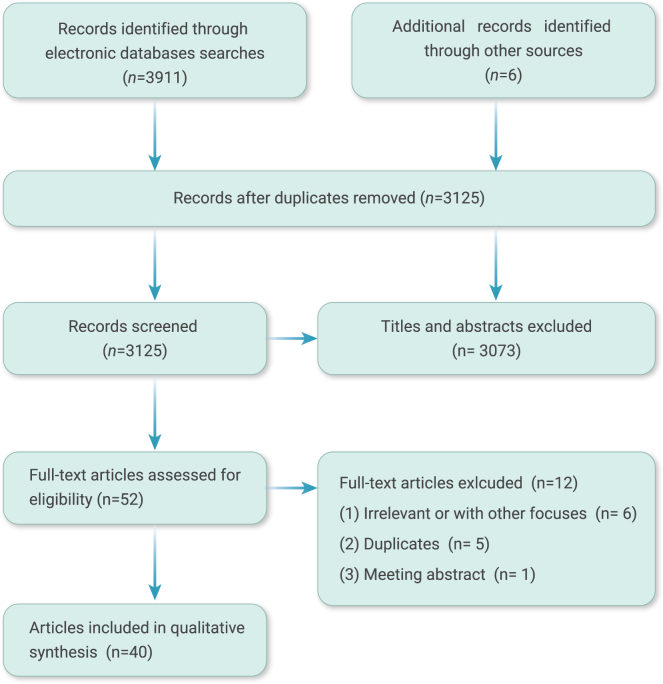
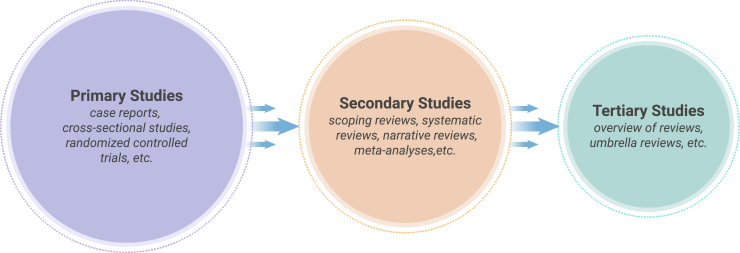
Multiple systematic reviews on greenspace and health outcomes exist, but the overall evidence base remains unclear. Therefore, we performed an umbrella review to collect and appraise all relevant systematic reviews of epidemiological studies on greenness exposure and health. We searched PubMed, Embase, and Web of Science from inception to June 28, 2021, and screened references of relevant articles. Systematic reviews with or without meta-analyses of epidemiological studies that examined the associations of greenness with any health outcome were included. Two independent investigators performed study selection and data extraction. We also evaluated the methodological quality of the included systematic reviews using the "Assessing the Methodological Quality of Systematic Reviews 2" checklist. A total of 40 systematic reviews and meta-analyses were included, of which most were cross-sectional studies conducted in high-income countries. Greenspace exposure was estimated with various objective and subjective parameters. Beneficial associations of greenspace with all-cause and stroke-specific mortality, CVD morbidity, cardiometabolic factors, mental health, low birth weight, physical activity, sleep quality, and urban crime were observed. No consistent associations between greenspace and other health outcomes (e.g., cancers) were observed. Most of the included systematic reviews and meta-analyses had one or more limitations in methodology. Our findings provide supportive evidence regarding the beneficial effects of greenspace exposure on some aspects of human health. However, the credibility of such evidence was compromised by methodological limitations. Better performed systematic reviews and meta-analyses as well as longitudinal designed primary studies are needed to validate this conclusion.
关于绿地与健康结果的多项系统评价已经存在,但总体证据基础仍不明确。因此,我们进行了一项综合性综述,以收集和评估所有关于绿色环境暴露与健康的流行病学研究的相关系统评价。我们检索了从数据库建立到2021年6月28日的PubMed、Embase和科学网,并筛选了相关文章的参考文献。纳入了对绿色环境与任何健康结果之间关联进行研究的流行病学研究的系统评价,无论是否进行了荟萃分析。两名独立的研究人员进行了研究筛选和数据提取。我们还使用“评估系统评价的方法学质量2”清单评估了纳入的系统评价的方法学质量。共纳入了40项系统评价和荟萃分析,其中大多数是在高收入国家进行的横断面研究。使用各种客观和主观参数来估计绿地暴露情况。观察到绿地与全因死亡率、中风特异性死亡率、心血管疾病发病率、心脏代谢因素、心理健康、低出生体重、身体活动、睡眠质量和城市犯罪之间存在有益关联。未观察到绿地与其他健康结果(如癌症)之间存在一致的关联。纳入的大多数系统评价和荟萃分析在方法学上存在一个或多个局限性。我们的研究结果为绿地暴露对人类健康某些方面的有益影响提供了支持性证据。然而,这些证据的可信度受到方法学局限性的影响。需要进行更好的系统评价和荟萃分析以及纵向设计的原始研究来验证这一结论。