Broćić Miloš, Miles Andrew
University of Toronto.
Am Sociol Rev. 2021 Oct;86(5):856-895. doi: 10.1177/00031224211041094. Epub 2021 Sep 18.
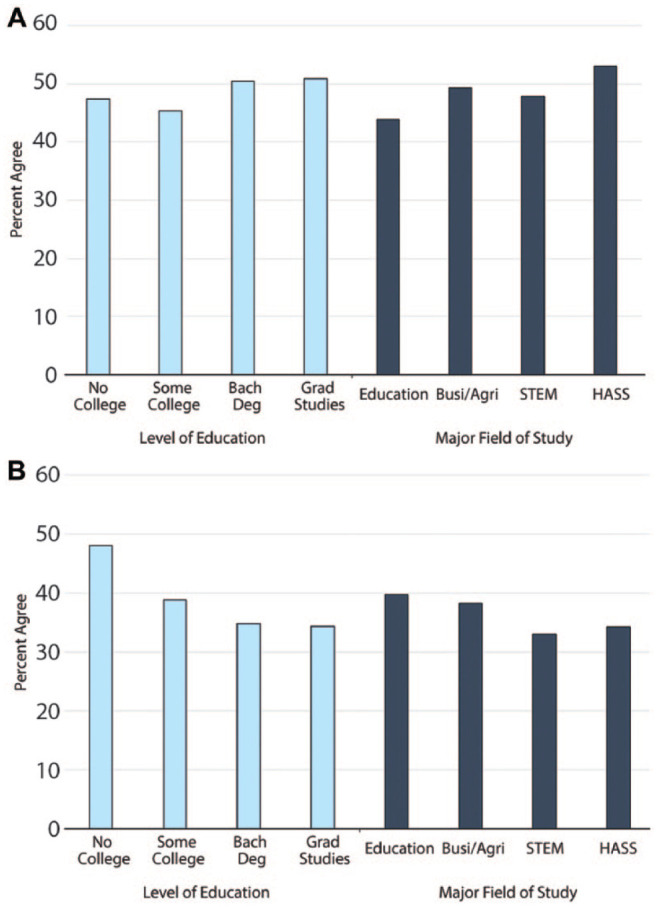
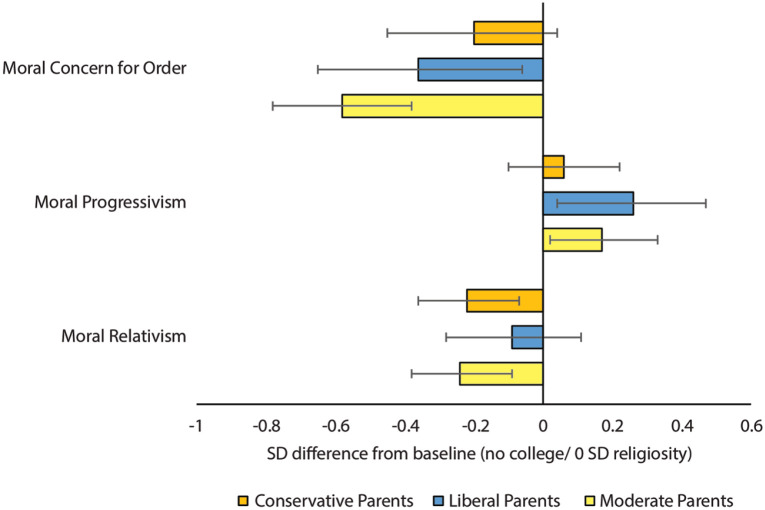
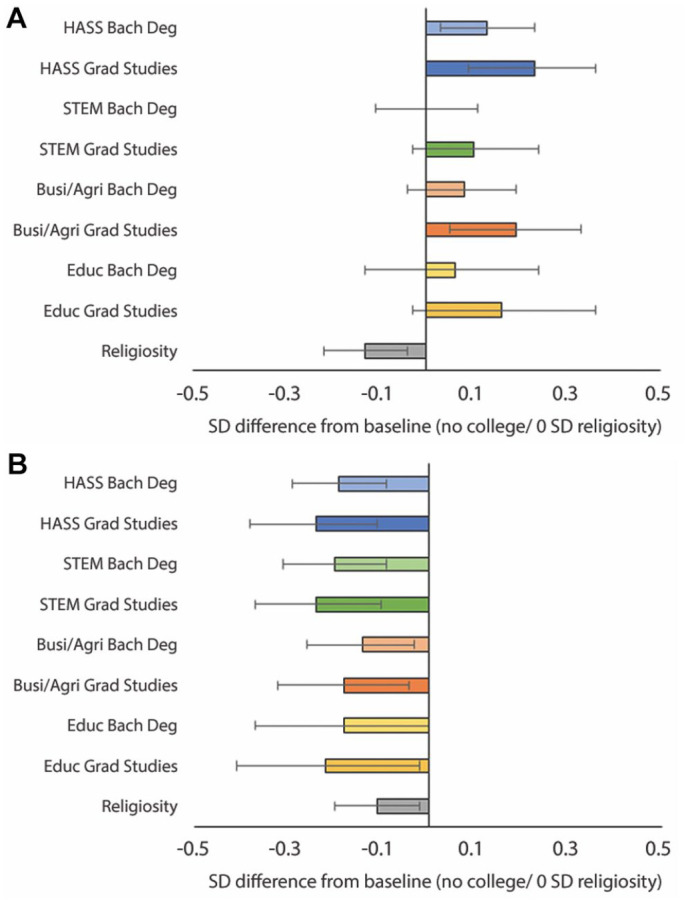
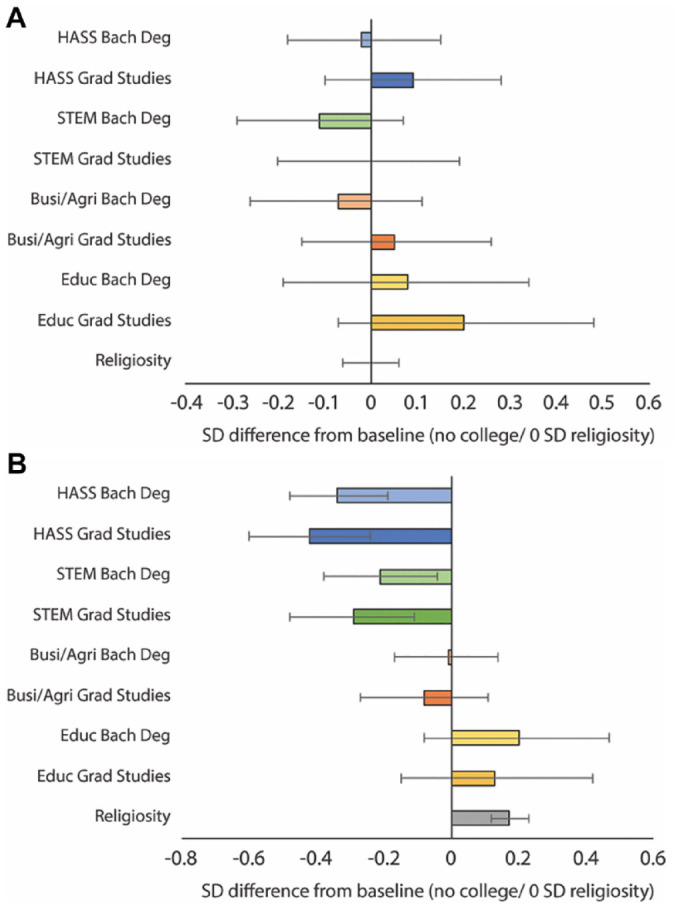
Moral differences contribute to social and political conflicts. Against this backdrop, colleges and universities have been criticized for promoting liberal moral attitudes. However, direct evidence for these claims is sparse, and suggestive evidence from studies of political attitudes is inconclusive. Using four waves of data from the National Study of Youth and Religion, we examine the effects of higher education on attitudes related to three dimensions of morality that have been identified as central to conflict: moral relativism, concern for others, and concern for social order. Our results indicate that higher education liberalizes moral concerns for most students, but it also departs from the standard liberal profile by promoting moral absolutism rather than relativism. These effects are strongest for individuals majoring in the humanities, arts, or social sciences, and for students pursuing graduate studies. We conclude with a discussion of the implications of our results for work on political conflict and moral socialization.
道德差异会引发社会和政治冲突。在此背景下,高校因宣扬自由主义道德观念而受到批评。然而,这些说法的直接证据稀少,且来自政治态度研究的暗示性证据也尚无定论。我们利用《全国青少年与宗教研究》的四轮数据,考察高等教育对与冲突核心的三个道德维度相关态度的影响:道德相对主义、对他人的关心以及对社会秩序的关心。我们的研究结果表明,高等教育使大多数学生的道德观念更加自由化,但它也偏离了标准的自由主义模式,因为它宣扬的是道德绝对主义而非相对主义。这些影响在人文、艺术或社会科学专业的学生以及攻读研究生的学生中最为显著。最后,我们讨论了研究结果对政治冲突和道德社会化研究的启示。