• 文献检索
  • 文档翻译
  • 深度研究
  • 学术资讯
  • Suppr Zotero 插件Zotero 插件
  • 邀请有礼
  • 套餐&价格
  • 历史记录
应用&插件
Suppr Zotero 插件Zotero 插件浏览器插件Mac 客户端Windows 客户端微信小程序
定价
高级版会员购买积分包购买API积分包
服务
文献检索文档翻译深度研究API 文档MCP 服务
关于我们
关于 Suppr公司介绍联系我们用户协议隐私条款
关注我们

Suppr 超能文献

核心技术专利:CN118964589B侵权必究
粤ICP备2023148730 号-1Suppr @ 2026

文献检索

告别复杂PubMed语法,用中文像聊天一样搜索,搜遍4000万医学文献。AI智能推荐,让科研检索更轻松。

立即免费搜索

文件翻译

保留排版,准确专业,支持PDF/Word/PPT等文件格式,支持 12+语言互译。

免费翻译文档

深度研究

AI帮你快速写综述,25分钟生成高质量综述,智能提取关键信息,辅助科研写作。

立即免费体验

人类三维肝脏模型:细胞类型多样性及相应应用

Human Three-Dimensional Hepatic Models: Cell Type Variety and Corresponding Applications.

作者信息

Xu Qianqian

机构信息

School of Chinese Medicine, and Centre for Cancer and Inflammation Research, Hong Kong Baptist University, Hong Kong, China.

出版信息

Front Bioeng Biotechnol. 2021 Sep 24;9:730008. doi: 10.3389/fbioe.2021.730008. eCollection 2021.

DOI:10.3389/fbioe.2021.730008
PMID:34631680
原文链接:https://pmc.ncbi.nlm.nih.gov/articles/PMC8497968/
Abstract

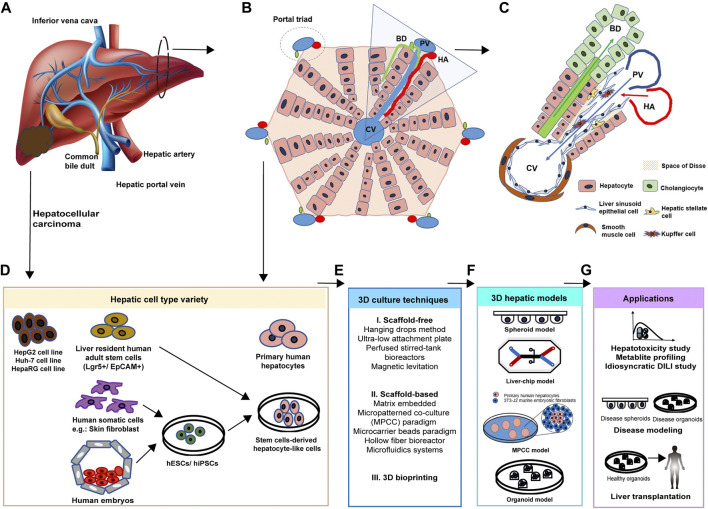
Owing to retained hepatic phenotypes and functions, human three-dimensional (3D) hepatic models established with diverse hepatic cell types are thought to recoup the gaps in drug development and disease modeling limited by a conventional two-dimensional (2D) cell culture system and species-specific variability in drug metabolizing enzymes and transporters. Primary human hepatocytes, human hepatic cancer cell lines, and human stem cell-derived hepatocyte-like cells are three main hepatic cell types used in current models and exhibit divergent hepatic phenotypes. Primary human hepatocytes derived from healthy hepatic parenchyma resemble -like genetic and metabolic profiling. Human hepatic cancer cell lines are unlimitedly reproducible and tumorigenic. Stem cell-derived hepatocyte-like cells derived from patients are promising to retain the donor's genetic background. It has been suggested in some studies that unique properties of cell types endue them with benefits in different research fields of 3D modeling paradigm. For instance, the primary human hepatocyte was thought to be the gold standard for hepatotoxicity study, and stem cell-derived hepatocyte-like cells have taken a main role in personalized medicine and regenerative medicine. However, the comprehensive review focuses on the hepatic cell type variety, and corresponding applications in 3D models are sparse. Therefore, this review summarizes the characteristics of different cell types and discusses opportunities of different cell types in drug development, liver disease modeling, and liver transplantation.

摘要

由于保留了肝脏表型和功能,用多种肝细胞类型建立的人类三维(3D)肝脏模型被认为能够弥补药物开发和疾病建模方面的差距,这些差距受限于传统的二维(2D)细胞培养系统以及药物代谢酶和转运蛋白的物种特异性差异。原代人肝细胞、人肝癌细胞系和人干细胞衍生的类肝细胞是当前模型中使用的三种主要肝细胞类型,它们表现出不同的肝脏表型。源自健康肝实质的原代人肝细胞具有相似的基因和代谢谱。人肝癌细胞系具有无限的可重复性且具有致瘤性。源自患者的干细胞衍生的类肝细胞有望保留供体的遗传背景。一些研究表明,细胞类型的独特特性使其在3D建模范式的不同研究领域中具有优势。例如,原代人肝细胞被认为是肝毒性研究的金标准,而干细胞衍生的类肝细胞在个性化医学和再生医学中发挥了主要作用。然而,全面的综述侧重于肝细胞类型的多样性,而在3D模型中的相应应用却很少。因此,本综述总结了不同细胞类型的特征,并讨论了不同细胞类型在药物开发、肝病建模和肝移植中的机会。
https://cdn.ncbi.nlm.nih.gov/pmc/blobs/bd96/8497968/8da0dec23d74/fbioe-09-730008-g004.jpg
https://cdn.ncbi.nlm.nih.gov/pmc/blobs/bd96/8497968/b6c60cde1f99/fbioe-09-730008-g001.jpg
https://cdn.ncbi.nlm.nih.gov/pmc/blobs/bd96/8497968/fb799401417c/fbioe-09-730008-g002.jpg
https://cdn.ncbi.nlm.nih.gov/pmc/blobs/bd96/8497968/6dffb5cb791d/fbioe-09-730008-g003.jpg
https://cdn.ncbi.nlm.nih.gov/pmc/blobs/bd96/8497968/8da0dec23d74/fbioe-09-730008-g004.jpg
https://cdn.ncbi.nlm.nih.gov/pmc/blobs/bd96/8497968/b6c60cde1f99/fbioe-09-730008-g001.jpg
https://cdn.ncbi.nlm.nih.gov/pmc/blobs/bd96/8497968/fb799401417c/fbioe-09-730008-g002.jpg
https://cdn.ncbi.nlm.nih.gov/pmc/blobs/bd96/8497968/6dffb5cb791d/fbioe-09-730008-g003.jpg
https://cdn.ncbi.nlm.nih.gov/pmc/blobs/bd96/8497968/8da0dec23d74/fbioe-09-730008-g004.jpg

相似文献

1
Human Three-Dimensional Hepatic Models: Cell Type Variety and Corresponding Applications.人类三维肝脏模型:细胞类型多样性及相应应用
Front Bioeng Biotechnol. 2021 Sep 24;9:730008. doi: 10.3389/fbioe.2021.730008. eCollection 2021.
2
Availability, Functionality, and Safety as well as Quality Control of Hepatocytes as Seeding Cells in Liver Regenerative Medicine: State of the Art and Challenges.作为肝再生医学中种子细胞的肝细胞的可用性、功能和安全性以及质量控制:现状和挑战。
Curr Stem Cell Res Ther. 2023;18(8):1090-1105. doi: 10.2174/1574888X18666230125113254.
3
Generation of expandable human pluripotent stem cell-derived hepatocyte-like liver organoids.扩增型人多能干细胞来源的肝样类器官的生成。
J Hepatol. 2019 Nov;71(5):970-985. doi: 10.1016/j.jhep.2019.06.030. Epub 2019 Jul 9.
4
Enhanced Metabolizing Activity of Human ES Cell-Derived Hepatocytes Using a 3D Culture System with Repeated Exposures to Xenobiotics.使用三维培养系统并反复暴露于异生物质来增强人胚胎干细胞衍生肝细胞的代谢活性
Toxicol Sci. 2015 Sep;147(1):190-206. doi: 10.1093/toxsci/kfv121. Epub 2015 Jun 17.
5
Three-Dimensional Liver Culture Systems to Maintain Primary Hepatic Properties for Toxicological Analysis In Vitro.三维肝脏培养系统,用于维持体外毒理学分析中的原发性肝脏特性。
Int J Mol Sci. 2021 Sep 23;22(19):10214. doi: 10.3390/ijms221910214.
6
Pluripotent stem cell-derived hepatocyte-like cells.多能干细胞来源的肝细胞样细胞。
Biotechnol Adv. 2014 Mar-Apr;32(2):504-13. doi: 10.1016/j.biotechadv.2014.01.003. Epub 2014 Jan 16.
7
Hepatic esterase activity is increased in hepatocyte-like cells derived from human embryonic stem cells using a 3D culture system.使用三维培养系统时,源自人类胚胎干细胞的类肝细胞中的肝酯酶活性会增加。
Biotechnol Lett. 2018 May;40(5):755-763. doi: 10.1007/s10529-018-2528-1. Epub 2018 Feb 20.
8
Advancements in stem cell-derived hepatocyte-like cell models for hepatotoxicity testing.基于干细胞的肝细胞样细胞模型在肝毒性测试中的进展。
Stem Cell Res Ther. 2021 Jan 25;12(1):84. doi: 10.1186/s13287-021-02152-9.
9
Construction of bioengineered hepatic tissue derived from human umbilical cord mesenchymal stem cells via aggregation culture in porcine decellularized liver scaffolds.通过在猪去细胞肝脏支架中进行聚集培养构建源自人脐带间充质干细胞的生物工程肝组织。
Xenotransplantation. 2017 Jan;24(1). doi: 10.1111/xen.12285. Epub 2017 Jan 26.
10
Generation of human liver organoids from pluripotent stem cell-derived hepatic endoderms.从多能干细胞衍生的肝内胚层生成人肝脏类器官。
PeerJ. 2020 Oct 19;8:e9968. doi: 10.7717/peerj.9968. eCollection 2020.

引用本文的文献

1
Mapping the knowledge domains of literature on hepatocellular carcinoma and liver failure: a bibliometric approach.绘制肝细胞癌与肝衰竭文献的知识领域:一种文献计量学方法。
Front Oncol. 2025 Apr 16;15:1529297. doi: 10.3389/fonc.2025.1529297. eCollection 2025.
2
Insulin receptor responsiveness governs TGFβ-induced hepatic stellate cell activation: Insulin resistance instigates liver fibrosis.胰岛素受体反应性调控转化生长因子β诱导的肝星状细胞活化:胰岛素抵抗引发肝纤维化。
FASEB J. 2025 Mar 15;39(5):e70427. doi: 10.1096/fj.202402169R.
3
Macrophages clear out necrotic liver lesions: a new magic trick revealed.

本文引用的文献

1
Current Perspective: 3D Spheroid Models Utilizing Human-Based Cells for Investigating Metabolism-Dependent Drug-Induced Liver Injury.当前视角:利用人源细胞的3D球体模型研究代谢依赖性药物性肝损伤
Front Med Technol. 2020 Nov 30;2:611913. doi: 10.3389/fmedt.2020.611913. eCollection 2020.
2
Immune-Mediated Drug-Induced Liver Injury: Immunogenetics and Experimental Models.免疫介导的药物性肝损伤:免疫遗传学和实验模型。
Int J Mol Sci. 2021 Apr 27;22(9):4557. doi: 10.3390/ijms22094557.
3
Metabolic Imaging in Non-Alcoholic Fatty Liver Disease: Applications of Magnetic Resonance Spectroscopy.
巨噬细胞清除坏死性肝损伤:一项新的神奇作用被揭示。
eGastroenterology. 2023 Sep 22;1(2):e100024. doi: 10.1136/egastro-2023-100024. eCollection 2023 Sep.
4
A DIY Bioreactor for in Situ Metabolic Tracking in 3D Cell Models via Hyperpolarized C NMR Spectroscopy.一种用于通过超极化碳核磁共振光谱对三维细胞模型进行原位代谢追踪的自制生物反应器。
Anal Chem. 2025 Jan 28;97(3):1594-1602. doi: 10.1021/acs.analchem.4c04183. Epub 2025 Jan 15.
5
Energy Metabolism Behavior and Response to Microenvironmental Factors of the Experimental Cancer Cell Models Differ from that of Actual Human Tumors.实验性癌细胞模型的能量代谢行为及对微环境因素的反应与实际人类肿瘤不同。
Mini Rev Med Chem. 2025;25(4):319-339. doi: 10.2174/0113895575322436240924101642.
6
Scaffold-mediated liver regeneration: A comprehensive exploration of current advances.支架介导的肝脏再生:当前进展的全面探索
J Tissue Eng. 2024 Oct 13;15:20417314241286092. doi: 10.1177/20417314241286092. eCollection 2024 Jan-Dec.
7
Human Multi-Lineage Liver Organoid Model Reveals Impairment of CYP3A4 Expression upon Repeated Exposure to Graphene Oxide.人多谱系肝类器官模型揭示了反复暴露于氧化石墨烯后 CYP3A4 表达的损伤。
Cells. 2024 Sep 13;13(18):1542. doi: 10.3390/cells13181542.
8
Intraocular liver spheroids for non-invasive high-resolution in vivo monitoring of liver cell function.用于非侵入性高分辨率体内监测肝细胞功能的眼内肝球体。
Nat Commun. 2024 Jan 26;15(1):767. doi: 10.1038/s41467-024-45122-4.
9
Drug Metabolism of Hepatocyte-like Organoids and Their Applicability in In Vitro Toxicity Testing.类肝细胞器官的药物代谢及其在体外毒性测试中的适用性。
Molecules. 2023 Jan 7;28(2):621. doi: 10.3390/molecules28020621.
10
NOX as a Therapeutic Target in Liver Disease.NOX作为肝脏疾病的治疗靶点
Antioxidants (Basel). 2022 Oct 16;11(10):2038. doi: 10.3390/antiox11102038.
非酒精性脂肪性肝病的代谢成像:磁共振波谱的应用
J Clin Med. 2021 Feb 7;10(4):632. doi: 10.3390/jcm10040632.
4
High-Content Screening for the Detection of Drug-Induced Oxidative Stress in Liver Cells.用于检测肝细胞中药物诱导的氧化应激的高内涵筛选
Antioxidants (Basel). 2021 Jan 13;10(1):106. doi: 10.3390/antiox10010106.
5
Immunomodulatory Role of the Extracellular Matrix Within the Liver Disease Microenvironment.细胞外基质在肝脏疾病微环境中的免疫调节作用。
Front Immunol. 2020 Nov 11;11:574276. doi: 10.3389/fimmu.2020.574276. eCollection 2020.
6
Organoids to model liver disease.用于模拟肝脏疾病的类器官。
JHEP Rep. 2020 Oct 22;3(1):100198. doi: 10.1016/j.jhepr.2020.100198. eCollection 2021 Feb.
7
High-Fidelity Drug-Induced Liver Injury Screen Using Human Pluripotent Stem Cell-Derived Organoids.使用人多能干细胞衍生类器官进行高逼真度药物性肝损伤筛选。
Gastroenterology. 2021 Feb;160(3):831-846.e10. doi: 10.1053/j.gastro.2020.10.002. Epub 2020 Oct 8.
8
Controversies Surrounding the Origin of Hepatocytes in Adult Livers and the in Vitro Generation or Propagation of Hepatocytes.关于成年肝脏中肝细胞的起源以及肝细胞的体外生成或增殖的争议。
Cell Mol Gastroenterol Hepatol. 2021;11(1):273-290. doi: 10.1016/j.jcmgh.2020.09.016. Epub 2020 Sep 28.
9
Utility of Three-Dimensional Cultures of Primary Human Hepatocytes (Spheroids) as Pharmacokinetic Models.原代人肝细胞(球体)三维培养作为药代动力学模型的效用。
Biomedicines. 2020 Sep 23;8(10):374. doi: 10.3390/biomedicines8100374.
10
Polygenic architecture informs potential vulnerability to drug-induced liver injury.多基因结构提示药物性肝损伤的潜在易感性。
Nat Med. 2020 Oct;26(10):1541-1548. doi: 10.1038/s41591-020-1023-0. Epub 2020 Sep 7.