Department of Neurology, University Medical Centre Groningen, University of Groningen, Groningen, The Netherlands
Expertise Centre Movement Disorders Groningen, University Medical Center Groningen, Groningen, The Netherlands.
BMJ Open. 2021 Oct 11;11(10):e055068. doi: 10.1136/bmjopen-2021-055068.
Our aim is to develop a novel approach to hyperkinetic movement disorder classification, that combines clinical information, electromyography, accelerometry and video in a computer-aided classification tool. We see this as the next step towards rapid and accurate phenotype classification, the cornerstone of both the diagnostic and treatment process.
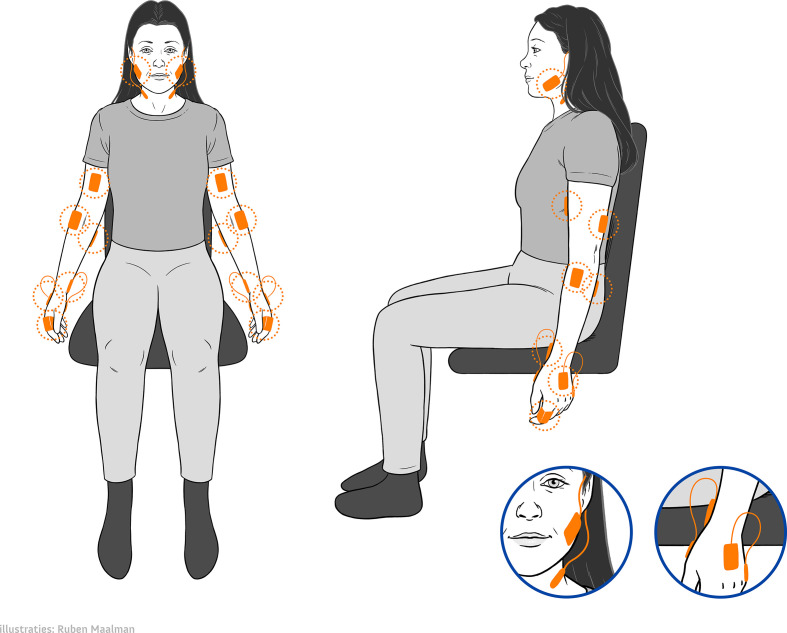
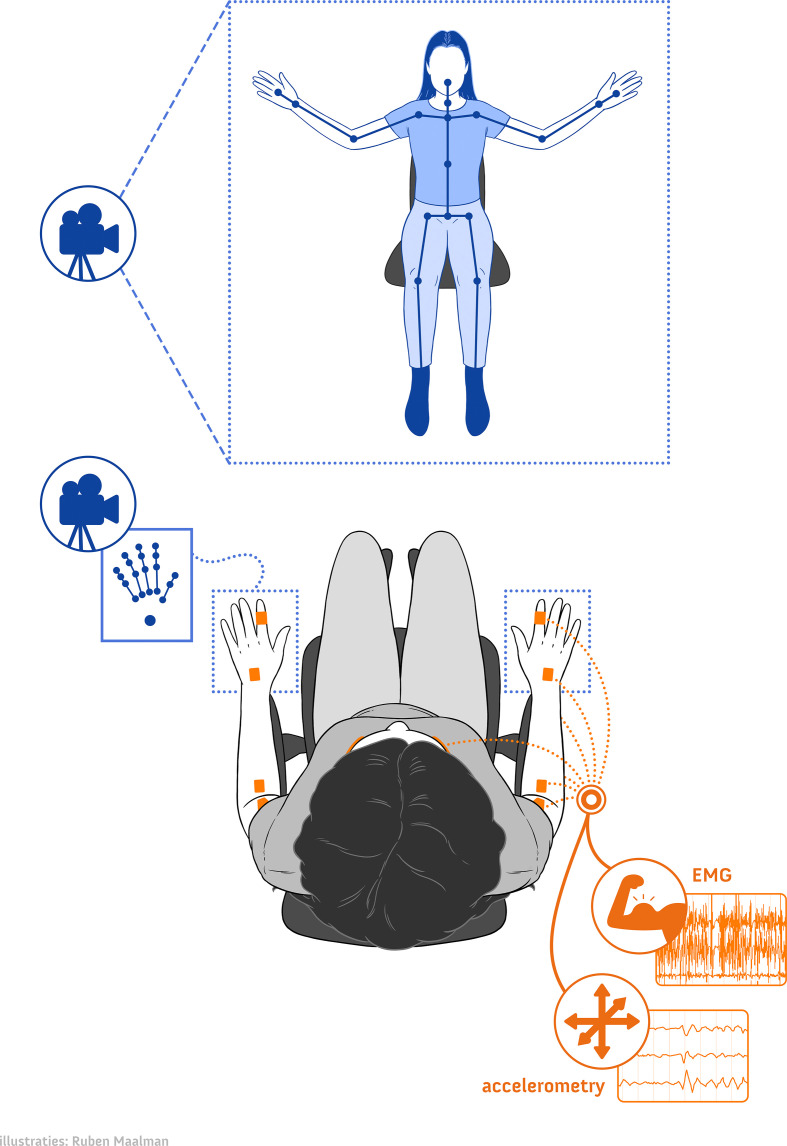
The Next Move in Movement Disorders (NEMO) study is a cross-sectional study at Expertise Centre Movement Disorders Groningen, University Medical Centre Groningen. It comprises patients with single and mixed phenotype movement disorders. Single phenotype groups will first include dystonia, myoclonus and tremor, and then chorea, tics, ataxia and spasticity. Mixed phenotypes are myoclonus-dystonia, dystonic tremor, myoclonus ataxia and jerky/tremulous functional movement disorders. Groups will contain 20 patients, or 40 healthy participants. The gold standard for inclusion consists of interobserver agreement on the phenotype among three independent clinical experts. Electromyography, accelerometry and three-dimensional video data will be recorded during performance of a set of movement tasks, chosen by a team of specialists to elicit movement disorders. These data will serve as input for the machine learning algorithm. Labels for supervised learning are provided by the expert-based classification, allowing the algorithm to learn to predict what the output label should be when given new input data. Methods using manually engineered features based on existing clinical knowledge will be used, as well as deep learning methods which can detect relevant and possibly new features. Finally, we will employ visual analytics to visualise how the classification algorithm arrives at its decision.
Ethical approval has been obtained from the relevant local ethics committee. The NEMO study is designed to pioneer the application of machine learning of movement disorders. We expect to publish articles in multiple related fields of research and patients will be informed of important results via patient associations and press releases.
我们的目标是开发一种新的方法来对运动障碍进行分类,该方法将临床信息、肌电图、加速度计和视频结合到一个计算机辅助分类工具中。我们认为这是迈向快速准确表型分类的下一步,这是诊断和治疗过程的基石。
运动障碍中的下一个动作(NEMO)研究是格罗宁根运动障碍专业中心、格罗宁根大学医学中心的一项横断面研究。它包括具有单一和混合表型运动障碍的患者。单一表型组将首先包括肌张力障碍、肌阵挛和震颤,然后是舞蹈症、抽动症、共济失调和痉挛性瘫痪。混合表型包括肌阵挛-肌张力障碍、肌张力障碍性震颤、肌阵挛性共济失调和急促/震颤性功能性运动障碍。每个组将包含 20 名患者或 40 名健康参与者。纳入的金标准是三位独立临床专家对表型的一致性意见。肌电图、加速度计和三维视频数据将在执行一组由专家选择的运动任务期间记录,这些任务旨在引发运动障碍。这些数据将作为机器学习算法的输入。监督学习的标签由基于专家的分类提供,允许算法学习在给定新输入数据时应该预测输出标签是什么。将使用基于现有临床知识的手动设计特征的方法以及可以检测相关和可能新特征的深度学习方法。最后,我们将采用可视化分析来可视化分类算法是如何做出决策的。
已获得相关地方伦理委员会的批准。NEMO 研究旨在开创运动障碍机器学习的应用。我们预计将在多个相关研究领域发表文章,并通过患者协会和新闻稿向患者通报重要结果。