Libera Laura, Ottini Giorgia, Sahnane Nora, Pettenon Fabiana, Turri-Zanoni Mario, Lambertoni Alessia, Chiaravalli Anna Maria, Leone Federico, Battaglia Paolo, Castelnuovo Paolo, Uccella Silvia, Furlan Daniela, Facco Carla, Sessa Fausto
Unit of Pathology, Department of Medicine and Surgery, ASST Sette-Laghi, University of Insubria, 21100 Varese, Italy.
Division of Otorhinolaryngology, Department of Biotechnology and Life Sciences, ASST Sette-Laghi, University of Insubria, 21100 Varese, Italy.
Cancers (Basel). 2021 Oct 8;13(19):5030. doi: 10.3390/cancers13195030.
Poorly differentiated sinonasal carcinomas (PDSNCs) are rare and aggressive malignancies, which include squamous cell carcinoma (SCC), sinonasal undifferentiated carcinoma (SNUC), and neuroendocrine carcinomas (NEC). Several epigenetic markers have been suggested to support the histopathological classification, predict prognosis, and guide therapeutic decision. Indeed, molecularly distinct subtypes of sinonasal carcinomas, including SMARCB1-INI1 or SMARCA4 deficient sinonasal carcinoma, isocitrate dehydrogenase (IDH)-mutant SNUC, ARID1A mutant PDSNCs, and NUT carcinomas, have recently been proposed as separate entities. Identification of aberrant DNA methylation levels associated with these specific epigenetic driver genes could be useful for prognostic and therapeutic purpose.
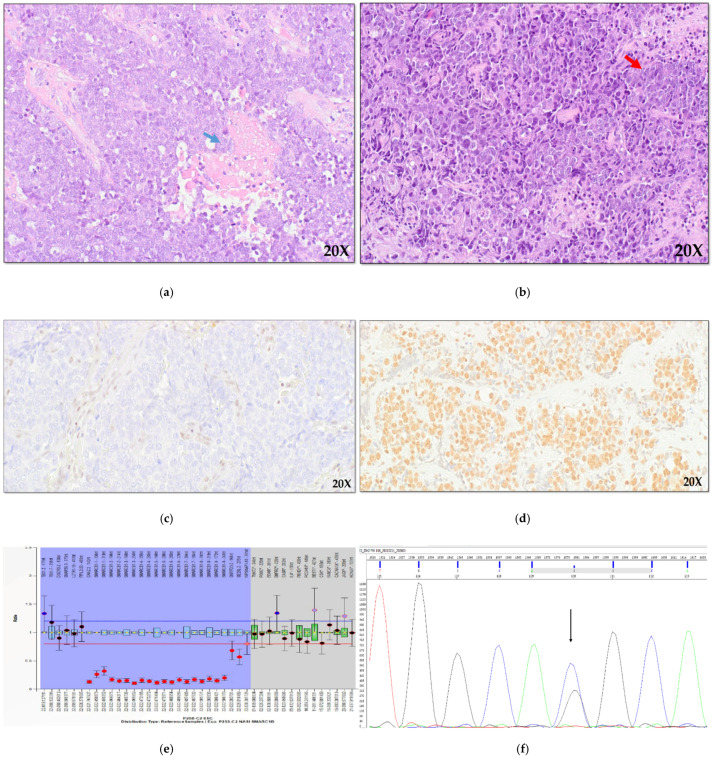
Histopathological review and immunohistochemical study was performed on 53 PDSNCs. Molecular analysis included mutational profile by NGS, Sanger sequencing, and MLPA analyses, and global DNA methylation profile using LINE-1 bisulfite-PCR and pyrosequencing analysis.
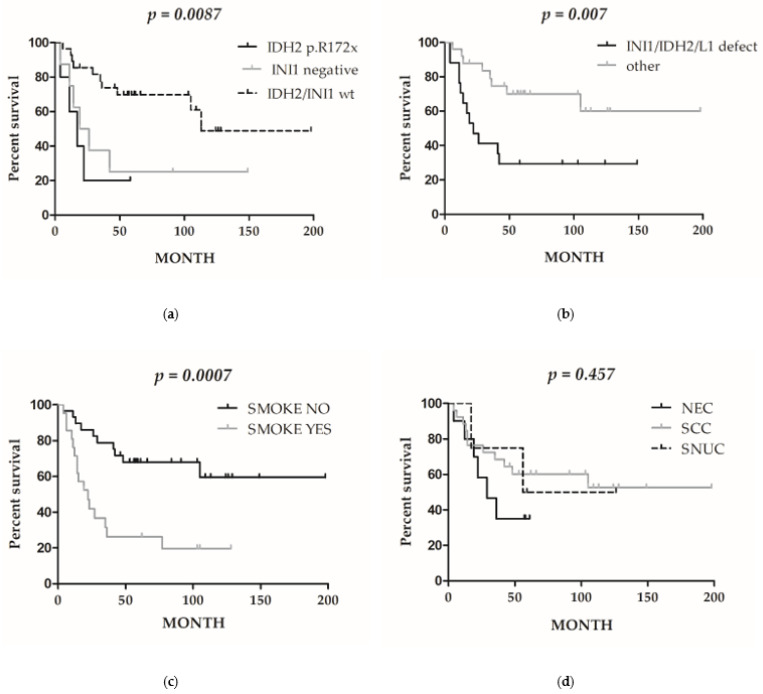
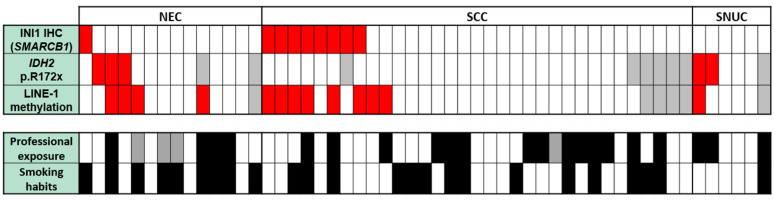
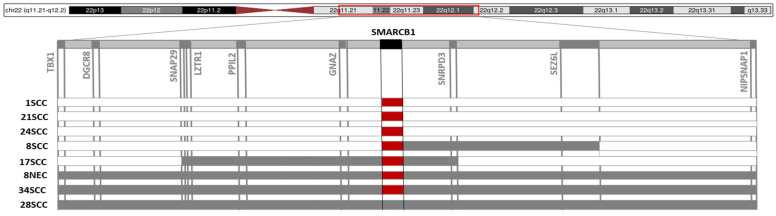
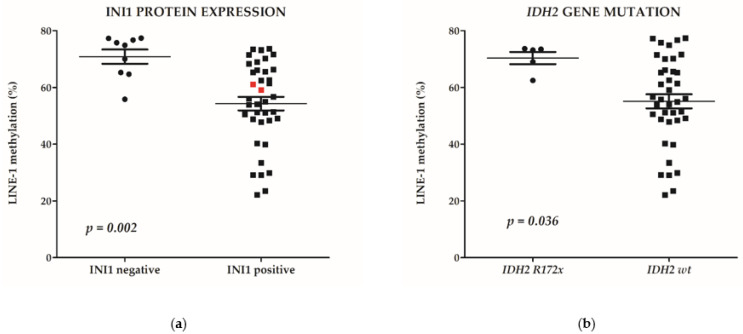
Nine SWI/SNF complex defective cases and five p.Arg172x cases were identified. A significant correlation between INI-1 or defects and LINE-1 hypermethylation was observed ( = 0.002 and = 0.032, respectively), which were associated with a worse prognosis ( = 0.007).
Genetic and epigenetic characterization of PDSNCs should be performed to identify distinct prognostic entities, which deserved a tailored clinical treatment.
低分化鼻窦癌(PDSNCs)是罕见的侵袭性恶性肿瘤,包括鳞状细胞癌(SCC)、鼻窦未分化癌(SNUC)和神经内分泌癌(NEC)。已有多种表观遗传标记物被提出用于支持组织病理学分类、预测预后及指导治疗决策。事实上,鼻窦癌的分子特征性亚型,包括SMARCB1 - INI1或SMARCA4缺陷型鼻窦癌、异柠檬酸脱氢酶(IDH)突变型SNUC、ARID1A突变型PDSNCs及NUT癌,最近已被视为独立的实体。鉴定与这些特定表观遗传驱动基因相关的异常DNA甲基化水平可能对预后和治疗具有重要意义。
对53例PDSNCs进行组织病理学检查和免疫组化研究。分子分析包括通过二代测序(NGS)、桑格测序和多重连接探针扩增(MLPA)分析突变谱,以及使用LINE - 1亚硫酸氢盐PCR和焦磷酸测序分析整体DNA甲基化谱。
鉴定出9例SWI/SNF复合体缺陷病例和5例p.Arg172x病例。观察到INI - 1缺失或缺陷与LINE - 1高甲基化之间存在显著相关性(分别为P = 0.002和P = 0.032),这与较差的预后相关(P = 0.0