KBR, NASA Ames Research Center, Space Biosciences Division, Moffett Field, CA 94035, USA.
Stanley Center for Psychiatric Research, Broad Institute of MIT and Harvard, Cambridge, MA 02142, USA.
Int J Mol Sci. 2021 Sep 29;22(19):10507. doi: 10.3390/ijms221910507.
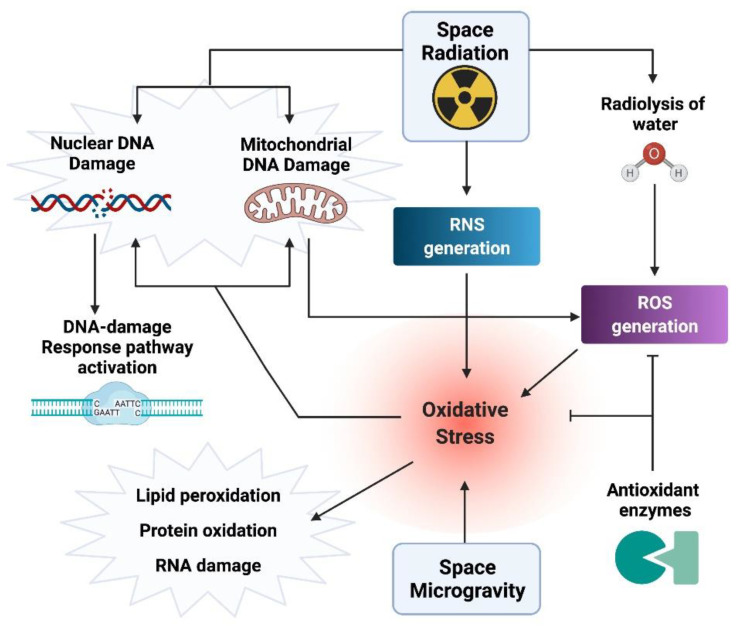
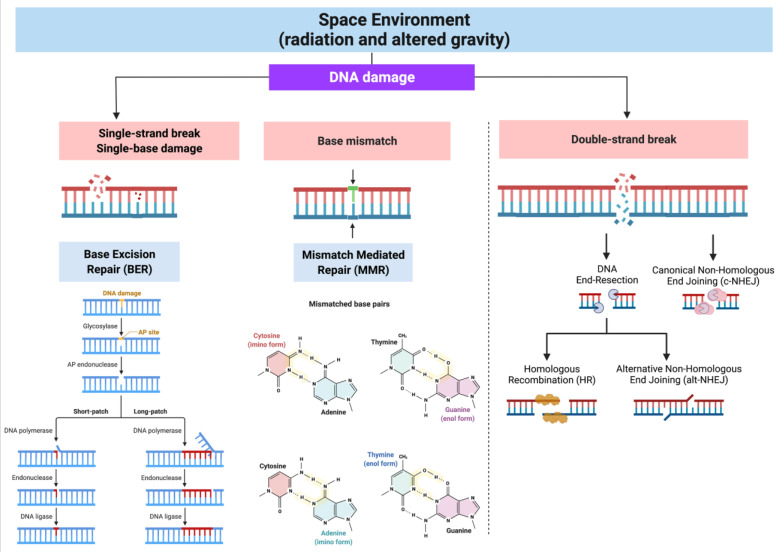
The space environment consists of a complex mixture of different types of ionizing radiation and altered gravity that represents a threat to humans during space missions. In particular, individual radiation sensitivity is strictly related to the risk of space radiation carcinogenesis. Therefore, in view of future missions to the Moon and Mars, there is an urgent need to estimate as accurately as possible the individual risk from space exposure to improve the safety of space exploration. In this review, we survey the combined effects from the two main physical components of the space environment, ionizing radiation and microgravity, to alter the genetics and epigenetics of human cells, considering both real and simulated space conditions. Data collected from studies on human cells are discussed for their potential use to estimate individual radiation carcinogenesis risk from space exposure.
太空环境由不同类型的电离辐射和改变的重力组成,这对人类在太空任务中构成了威胁。特别是,个体辐射敏感性与太空辐射致癌的风险密切相关。因此,考虑到未来的月球和火星任务,迫切需要尽可能准确地估计个体从太空辐射暴露的风险,以提高太空探索的安全性。在这篇综述中,我们调查了太空环境的两个主要物理成分,即电离辐射和微重力,对人类细胞的遗传学和表观遗传学的综合影响,同时考虑了真实和模拟的太空条件。讨论了从人类细胞研究中收集的数据,以评估个体从太空辐射暴露致癌的风险。