Department of Electrical and Computer Engineering, Iowa State University, Ames, IA 50011, USA.
Sensors (Basel). 2021 Oct 1;21(19):6581. doi: 10.3390/s21196581.
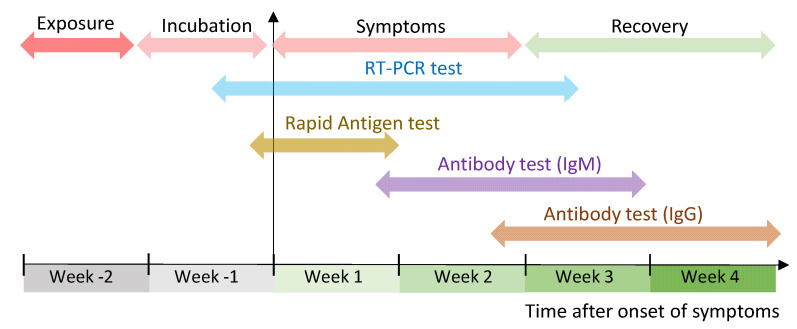
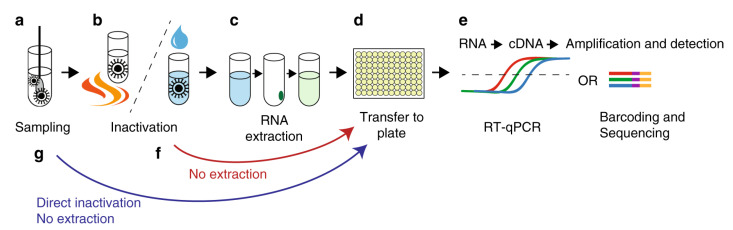
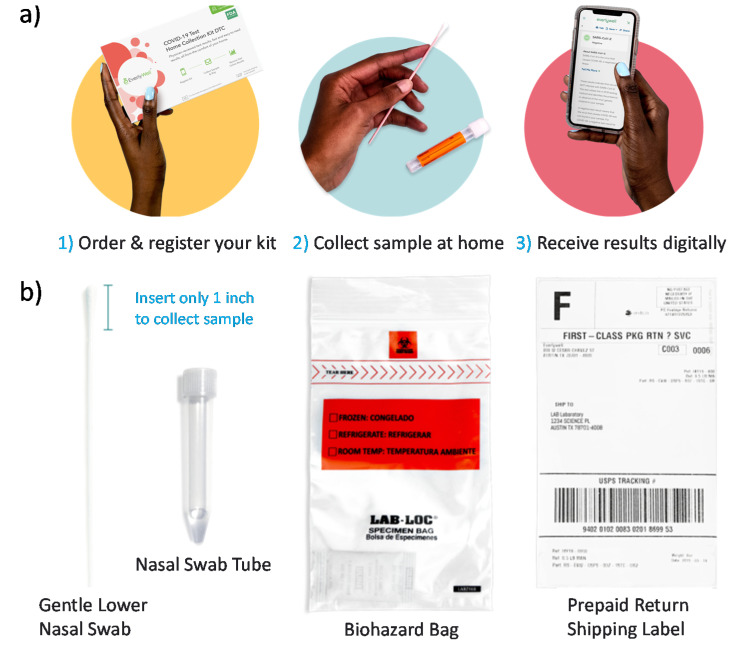
Population-scale and rapid testing for SARS-CoV-2 continues to be a priority for several parts of the world. We revisit the in vitro technology platforms for COVID-19 testing and diagnostics-molecular tests and rapid antigen tests, serology or antibody tests, and tests for the management of COVID-19 patients. Within each category of tests, we review the commercialized testing platforms, their analyzing systems, specimen collection protocols, testing methodologies, supply chain logistics, and related attributes. Our discussion is essentially focused on test products that have been granted emergency use authorization by the FDA to detect and diagnose COVID-19 infections. Different strategies for scaled-up and faster screening are covered here, such as pooled testing, screening programs, and surveillance testing. The near-term challenges lie in detecting subtle infectivity profiles, mapping the transmission dynamics of new variants, lowering the cost for testing, training a large healthcare workforce, and providing test kits for the masses. Through this review, we try to understand the feasibility of universal access to COVID-19 testing and diagnostics in the near future while being cognizant of the implicit tradeoffs during the development and distribution cycles of new testing platforms.
人口规模和快速的 SARS-CoV-2 检测仍然是世界上几个地区的优先事项。我们重新审视了用于 COVID-19 检测和诊断的体外技术平台,包括分子检测和快速抗原检测、血清学或抗体检测,以及 COVID-19 患者管理的检测。在每一类检测中,我们回顾了商业化的检测平台、分析系统、标本采集方案、检测方法、供应链物流以及相关属性。我们的讨论主要集中在已经获得 FDA 紧急使用授权(EUA)的用于检测和诊断 COVID-19 感染的检测产品。这里涵盖了扩大和更快筛查的不同策略,例如混合检测、筛查计划和监测检测。近期的挑战在于检测细微的传染性特征,绘制新变体的传播动态,降低检测成本,培训大量医疗保健人员,并为大众提供检测试剂盒。通过这次审查,我们试图了解在不久的将来实现 COVID-19 检测和诊断普遍可及的可行性,同时意识到在新检测平台的开发和分发周期中存在的隐含权衡。