Davey M P, Bongiovanni K F, Kaulfersch W, Quertermous T, Seidman J G, Hershfield M S, Kurtzberg J, Haynes B F, Davis M M, Waldmann T A
Proc Natl Acad Sci U S A. 1986 Nov;83(22):8759-63. doi: 10.1073/pnas.83.22.8759.
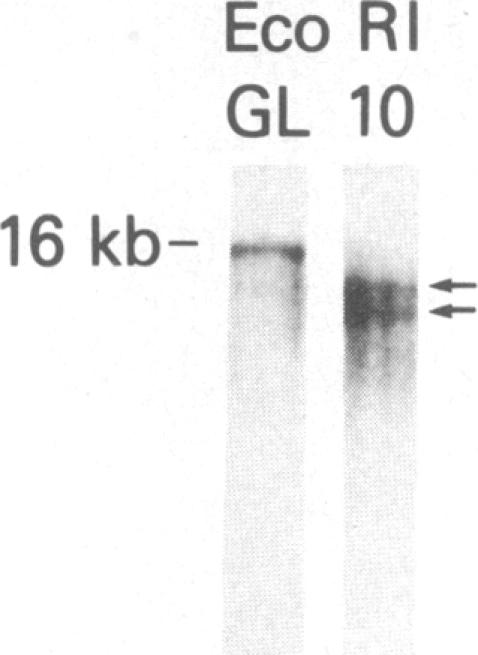
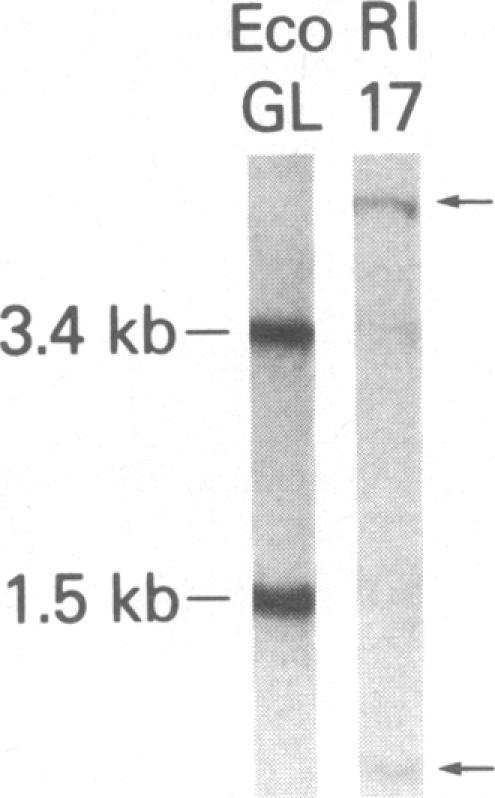
The use of probes to genes (IG and TCRB) encoding immunoglobulins (IG) and the beta chain of the T-cell antigen receptor (TCRB), respectively, have become a sensitive means to assess clonality and lineage in lymphoid malignancies. It has become apparent that some individual cases show rearrangements of both IG and TCRB genes. In an attempt to more accurately define cell lineage we have analyzed cells from patients with B- or T-cell leukemia (n = 26) at various stages of maturation with probes to two additional TCR genes, TCRG and TCRA (encoding the TCR gamma and alpha chains, respectively), as well as the IG heavy chain joining region (IGHJ) and TCRB genes. On Southern blot analysis, the mature T-cell leukemia cells studied had rearranged TCRG and TCRB while IGHJ remained as in the germ line. The mature B-cell leukemia cells studied had rearranged IGHJ with germ-line TCRG and TCRB. These data suggest that, in the majority of more mature leukemias, cells have rearranged IG or TCR genes but not both. In contrast, cells from five of nine precursor B-cell leukemia patients and cell lines from one of four precursor T-cell leukemia patients had rearranged both IGHJ and TCR genes. TCRG and TCRB mRNAs were expressed in the cells of precursor T- but not B-cell leukemia patients studied. The spectrum of leukemia cells studied within the T-cell series permitted an assessment of the order of TCR gene rearrangements. Two of 13 patients had cells with germ-line TCRG and TCRB, 2 patients had cells with rearranged TCRG alone, and the remainder had cells with rearranged TCRG and TCRB. TCRG and TCRB mRNAs were expressed in precursor T-cell leukemia cells, whereas TCRB and TCRA were expressed in mature T-cell leukemia cells. These results parallel observations from mouse studies on gene expression and support the view of a hierarchy of TCR gene rearrangements in T-lymphocyte ontogeny. TCRG genes are rearranged first, subsequently TCRB genes are rearranged, followed by TCRA gene activation.
分别用于编码免疫球蛋白(IG)的基因(IG)和T细胞抗原受体β链(TCRB)的探针,已成为评估淋巴系统恶性肿瘤中克隆性和谱系的敏感手段。显然,一些个体病例显示IG和TCRB基因均发生重排。为了更准确地定义细胞谱系,我们使用针对另外两个TCR基因TCRG和TCRA(分别编码TCRγ链和α链)以及IG重链连接区(IGHJ)和TCRB基因的探针,分析了处于不同成熟阶段的B或T细胞白血病患者(n = 26)的细胞。在Southern印迹分析中,所研究的成熟T细胞白血病细胞中TCRG和TCRB发生了重排,而IGHJ仍保持种系状态。所研究的成熟B细胞白血病细胞中IGHJ发生了重排,而TCRG和TCRB保持种系状态。这些数据表明,在大多数更成熟的白血病中,细胞发生了IG或TCR基因重排,但并非两者都发生。相比之下,9例前体B细胞白血病患者中的5例以及4例前体T细胞白血病患者中的1例的细胞系,其IGHJ和TCR基因均发生了重排。在所研究的前体T细胞白血病患者而非B细胞白血病患者的细胞中表达了TCRG和TCRB mRNA。对T细胞系列中所研究的白血病细胞谱进行分析,有助于评估TCR基因重排的顺序。13例患者中有2例的细胞中TCRG和TCRB为种系状态,2例患者的细胞中仅TCRG发生了重排,其余患者的细胞中TCRG和TCRB均发生了重排。TCRG和TCRB mRNA在前体T细胞白血病细胞中表达,而TCRB和TCRA在成熟T细胞白血病细胞中表达。这些结果与小鼠基因表达研究的观察结果一致,并支持T淋巴细胞个体发育中TCR基因重排具有层次结构的观点。TCRG基因首先发生重排,随后TCRB基因重排,接着是TCRA基因激活。