Drozdov Ignat, Szubert Benjamin, Reda Elaina, Makary Peter, Forbes Daniel, Chang Sau Lee, Ezhil Abinaya, Puttagunta Srikanth, Hall Mark, Carlin Chris, Lowe David J
Bering Limited, London, UK.
NHS Greater Glasgow and Clyde, Glasgow, UK.
Sci Rep. 2021 Oct 14;11(1):20384. doi: 10.1038/s41598-021-99986-3.
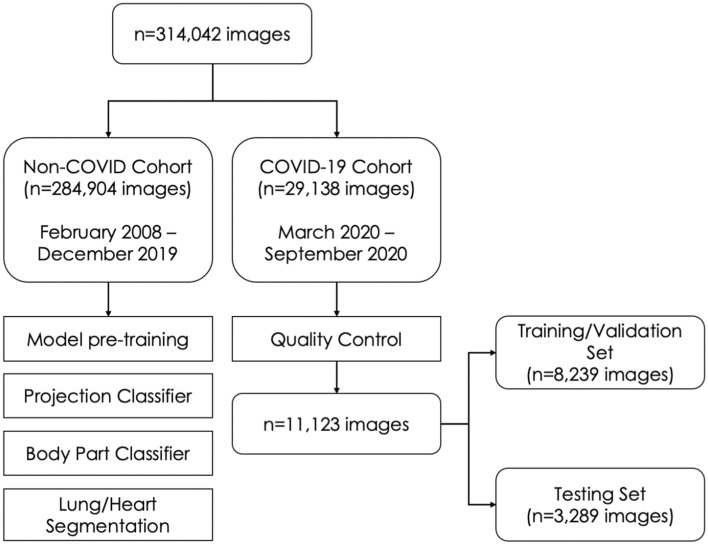
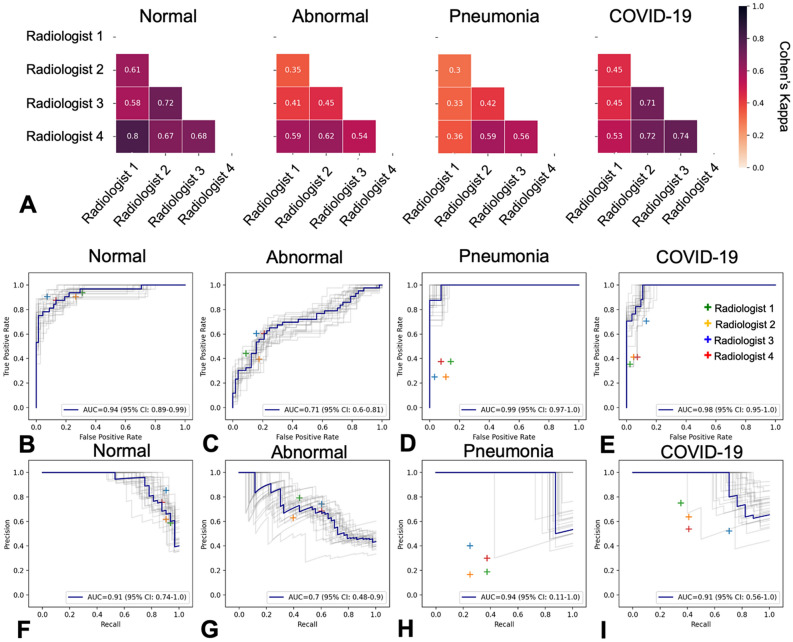
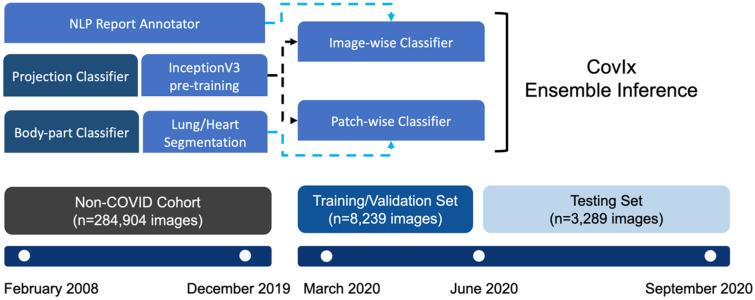
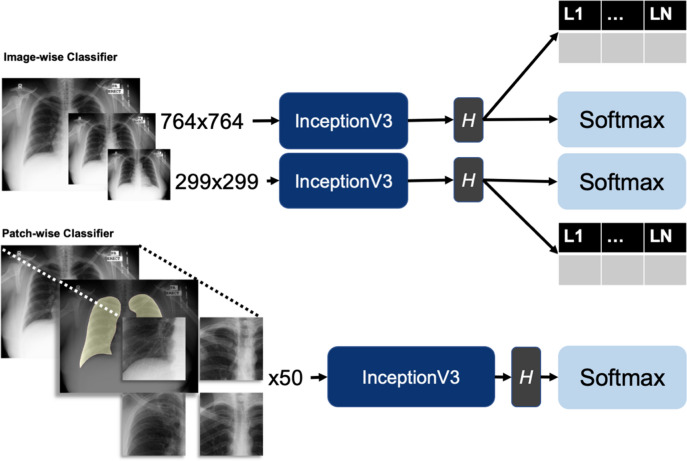
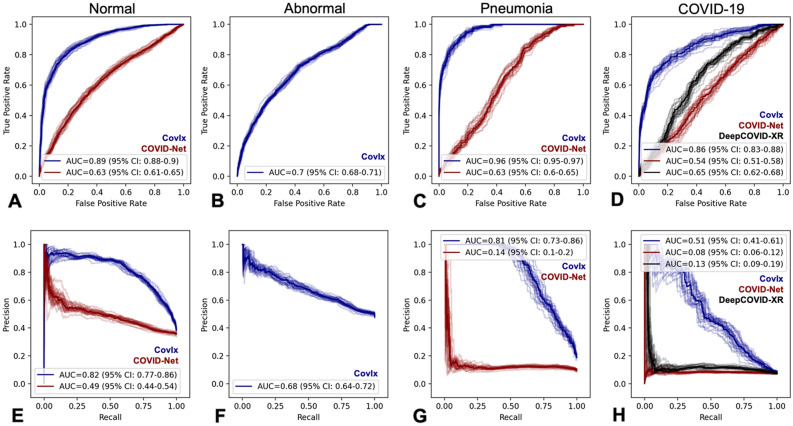
Chest X-rays (CXRs) are the first-line investigation in patients presenting to emergency departments (EDs) with dyspnoea and are a valuable adjunct to clinical management of COVID-19 associated lung disease. Artificial intelligence (AI) has the potential to facilitate rapid triage of CXRs for further patient testing and/or isolation. In this work we develop an AI algorithm, CovIx, to differentiate normal, abnormal, non-COVID-19 pneumonia, and COVID-19 CXRs using a multicentre cohort of 293,143 CXRs. The algorithm is prospectively validated in 3289 CXRs acquired from patients presenting to ED with symptoms of COVID-19 across four sites in NHS Greater Glasgow and Clyde. CovIx achieves area under receiver operating characteristic curve for COVID-19 of 0.86, with sensitivity and F1-score up to 0.83 and 0.71 respectively, and performs on-par with four board-certified radiologists. AI-based algorithms can identify CXRs with COVID-19 associated pneumonia, as well as distinguish non-COVID pneumonias in symptomatic patients presenting to ED. Pre-trained models and inference scripts are freely available at https://github.com/beringresearch/bravecx-covid .
胸部X光检查(CXR)是对因呼吸困难前往急诊科(ED)就诊患者的一线检查手段,也是新型冠状病毒肺炎(COVID-19)相关肺部疾病临床管理的重要辅助手段。人工智能(AI)有潜力促进对胸部X光检查结果进行快速分类,以便对患者进行进一步检测和/或隔离。在这项研究中,我们开发了一种人工智能算法CovIx,利用一个包含293,143份胸部X光检查影像的多中心队列,来区分正常、异常、非COVID-19肺炎和COVID-19胸部X光影像。该算法在从英国国家医疗服务体系大格拉斯哥和克莱德地区四个地点因COVID-19症状前往急诊科就诊患者所获取的3289份胸部X光检查影像中进行了前瞻性验证。CovIx对COVID-19检测的受试者工作特征曲线下面积为0.86,灵敏度和F1分数分别高达0.83和0.71,其表现与四位获得委员会认证的放射科医生相当。基于人工智能的算法能够识别与COVID-19相关肺炎的胸部X光影像,还能在因症状前往急诊科就诊的患者中区分非COVID肺炎。预训练模型和推理脚本可在https://github.com/beringresearch/bravecx-covid上免费获取。