Hoberück Sebastian, Löck Steffen, Borkowetz Angelika, Sommer Ulrich, Winzer Robert, Zöphel Klaus, Fedders Dieter, Michler Enrico, Kotzerke Jörg, Kopka Klaus, Hölscher Tobias, Braune Anja
Department of Nuclear Medicine, Faculty of Medicine and University Hospital Carl Gustav Carus, TU Dresden, Fetscherstr. 74, 01307, Dresden, Germany.
Department of Nuclear Medicine, Helios Klinikum Erfurt, Erfurt, Germany.
EJNMMI Res. 2021 Oct 19;11(1):109. doi: 10.1186/s13550-021-00845-z.
The analysis aimed to compare the radiotracers [Ga]-Ga-PSMA-11 and [F]-F-PSMA-1007 intraindividually in terms of malignant lesions, mi(molecular-imaging)TNM staging and presumable unspecific lesions retrospectively as used in routine clinical practice.
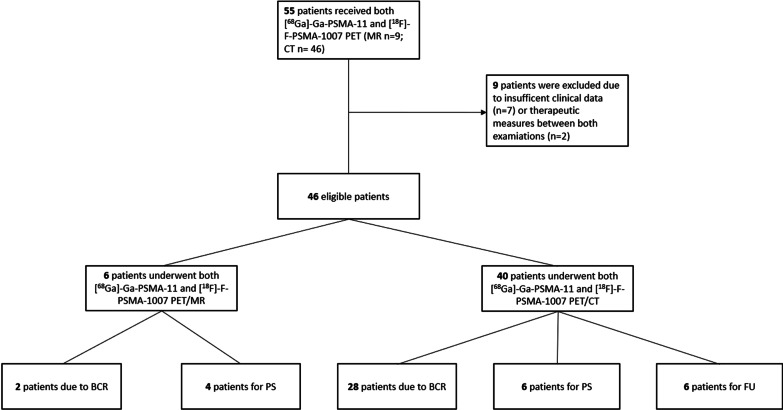
A retrospective analysis of 46 prostate cancer patients (median age: 71 years) who underwent consecutive [Ga]-Ga-PSMA-11- and [F]-F-PSMA-1007-PET/CT or PET/MRI within a mean of 12 ± 8.0 days was performed. MiTNM staging was performed in both studies by two nuclear medicine physicians who were blinded to the results of the other tracer. After intradisciplinary and interdisciplinary consensus with two radiologists was reached, differences in both malignant and presumable nonspecific tracer accumulation were analyzed.
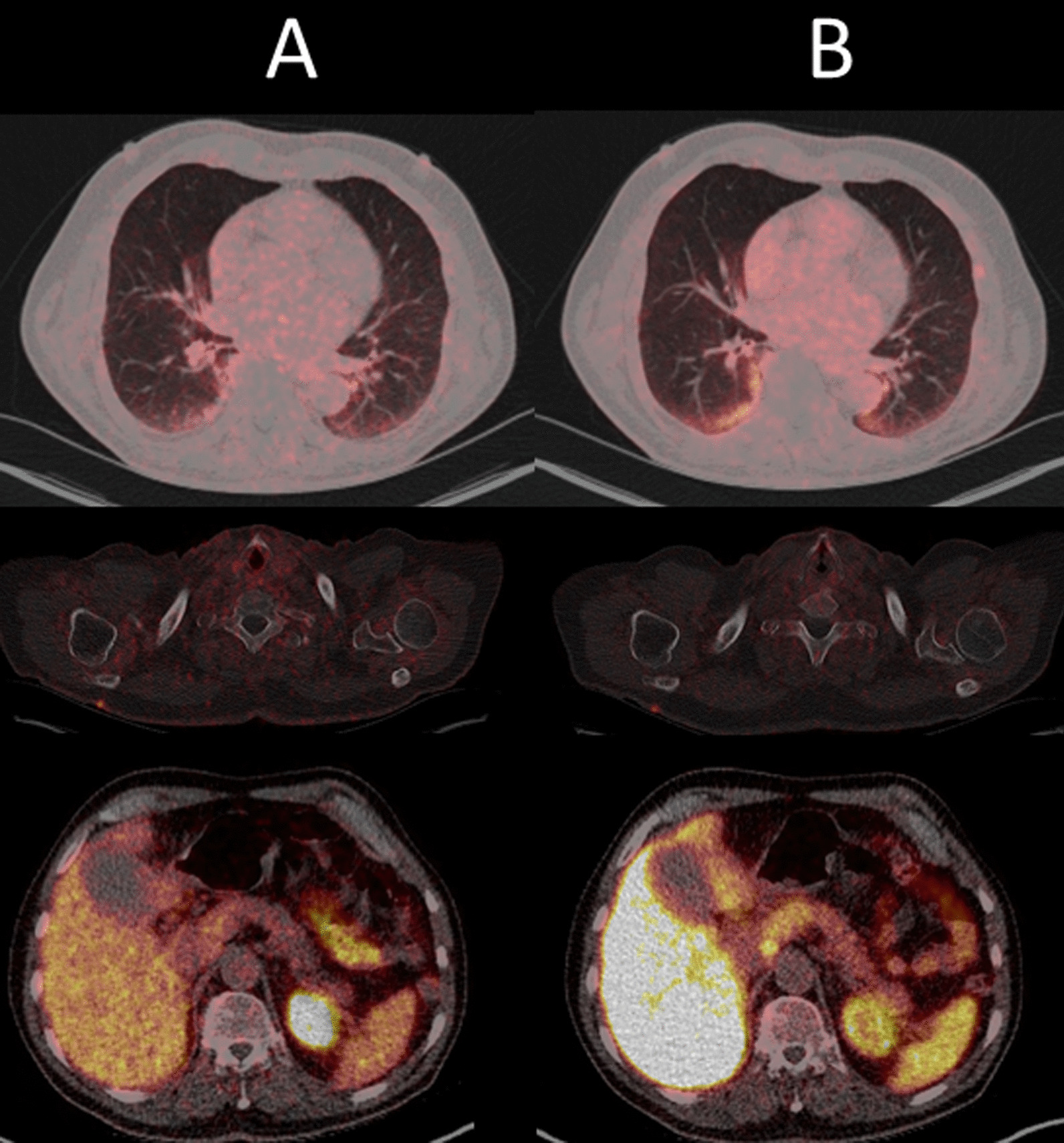
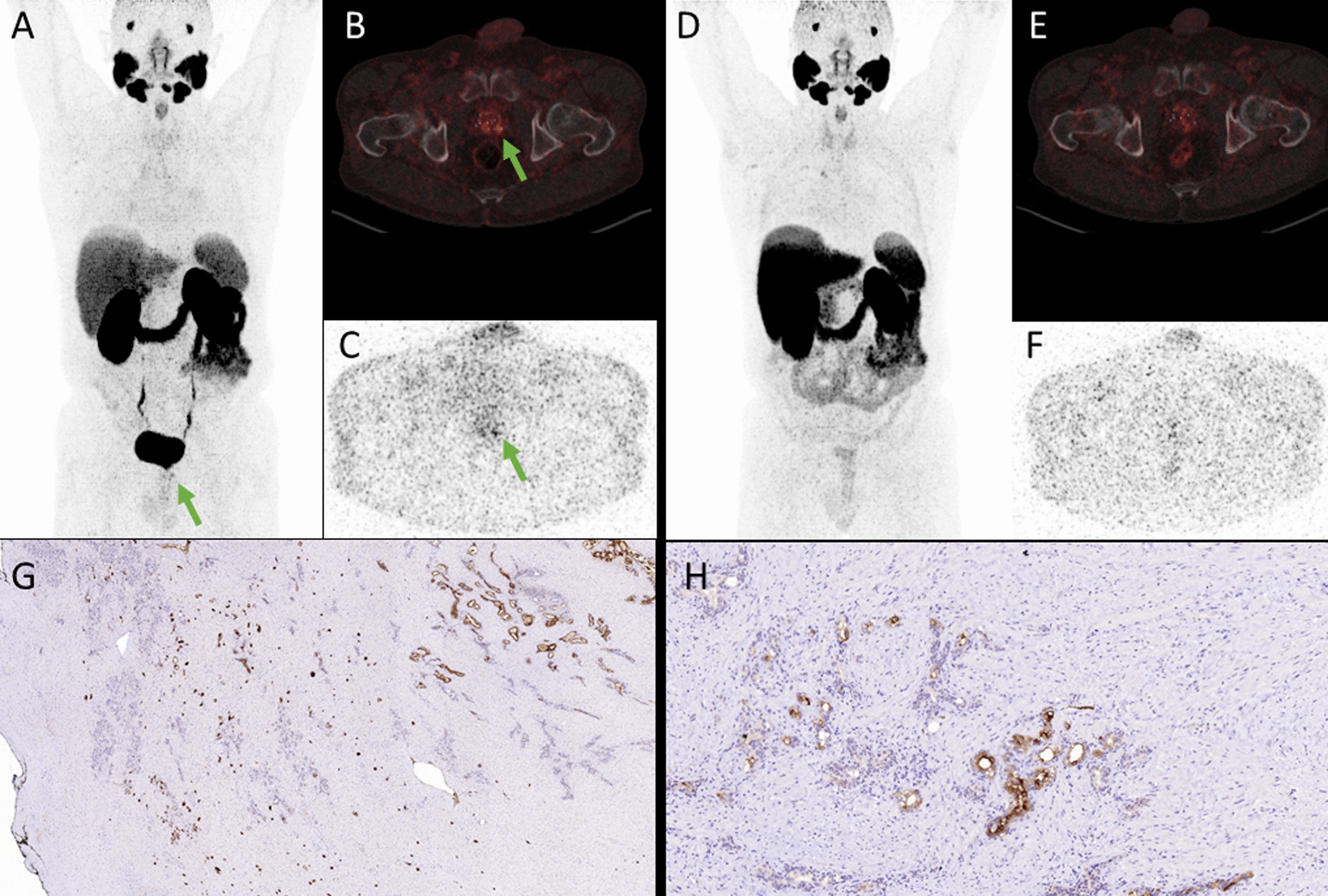
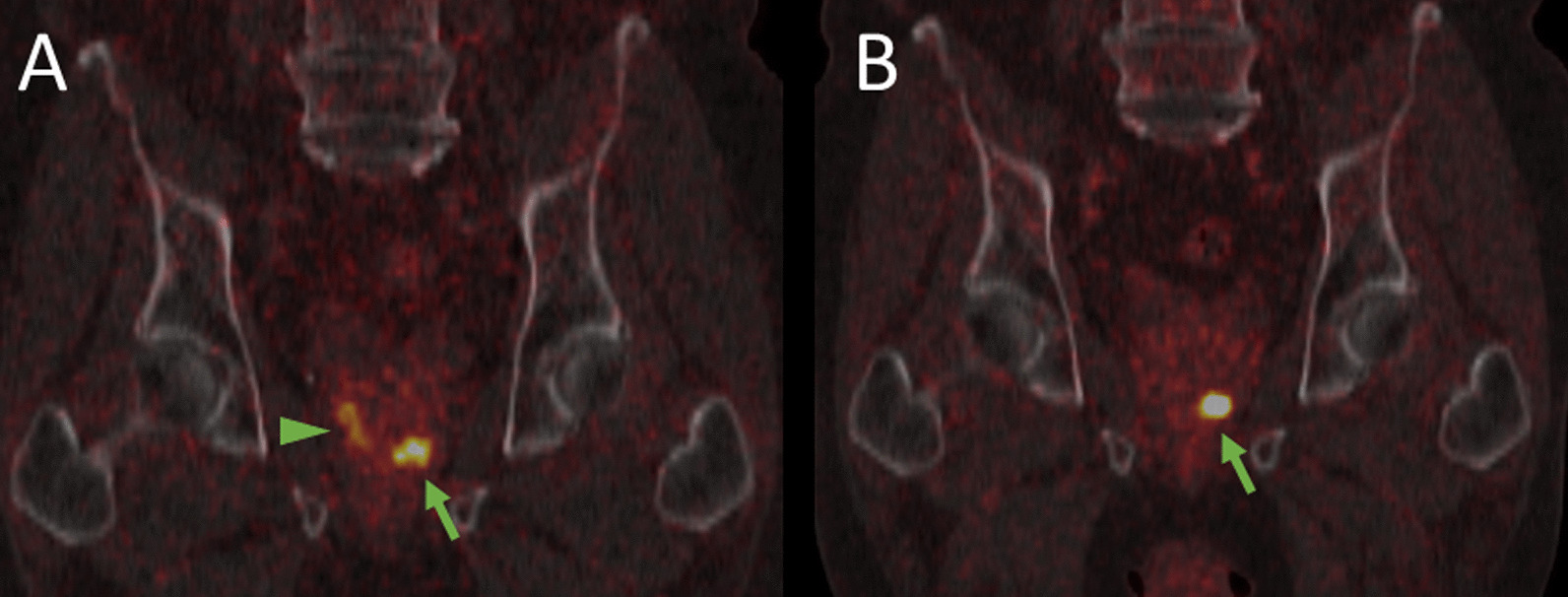
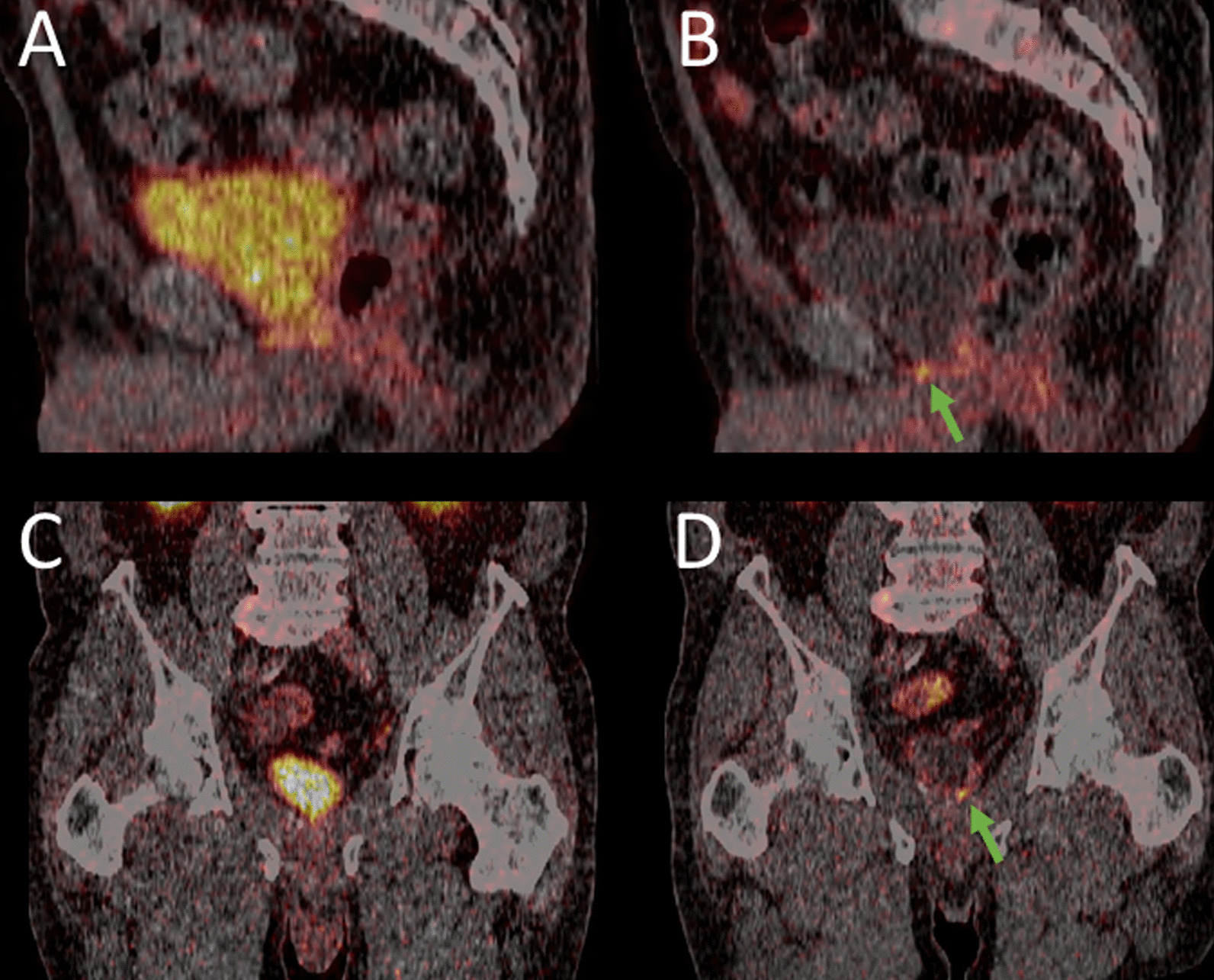
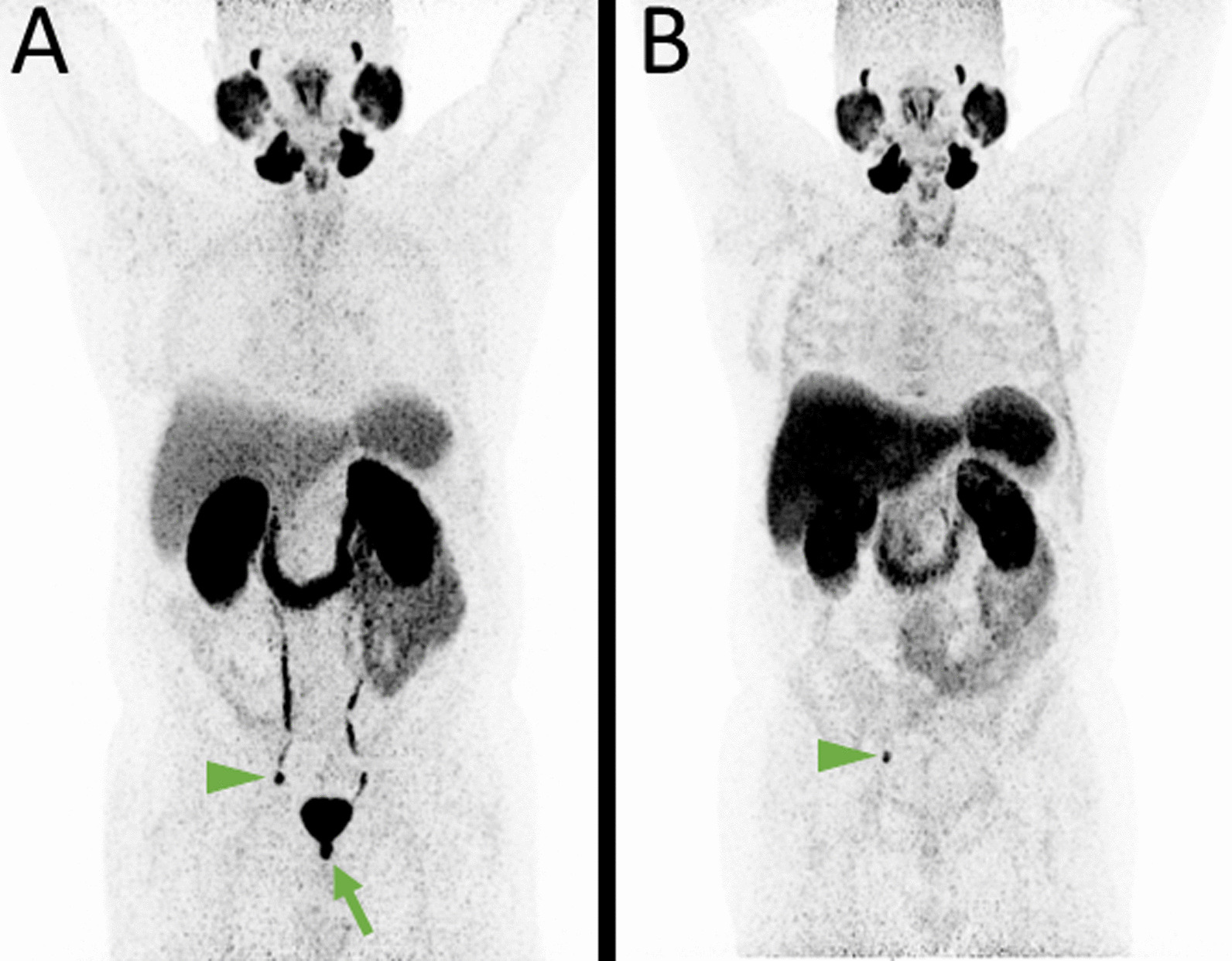
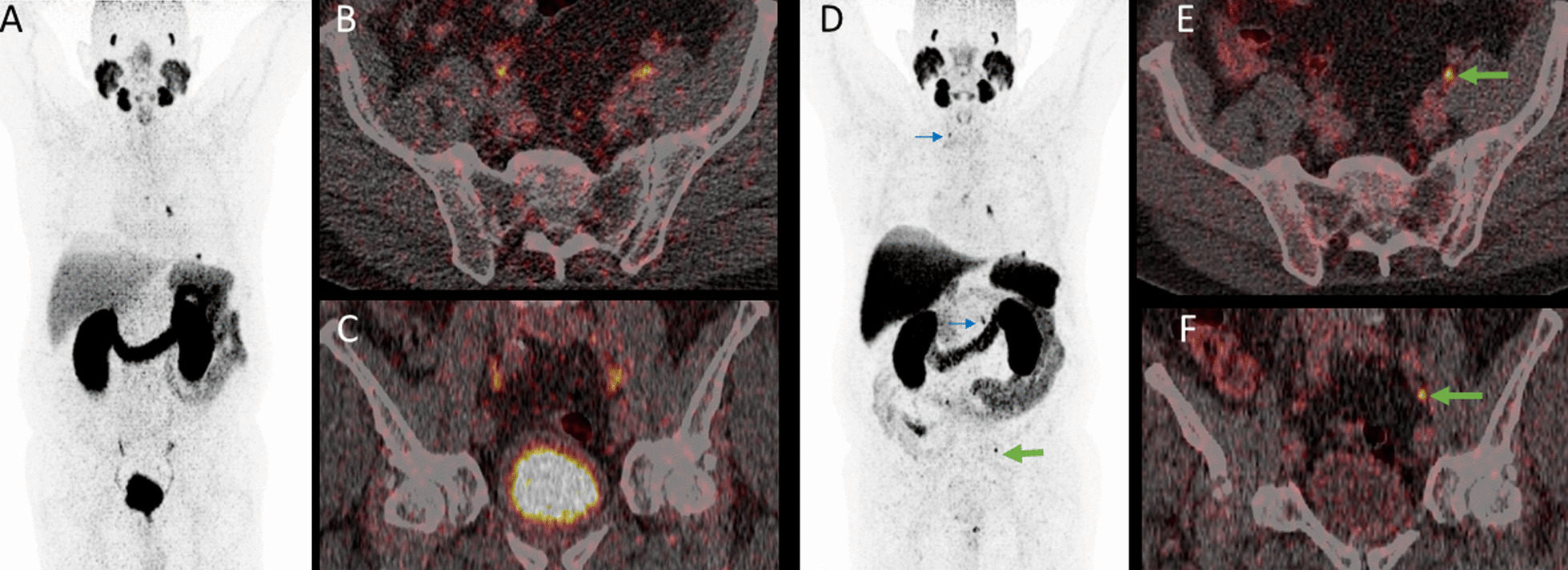
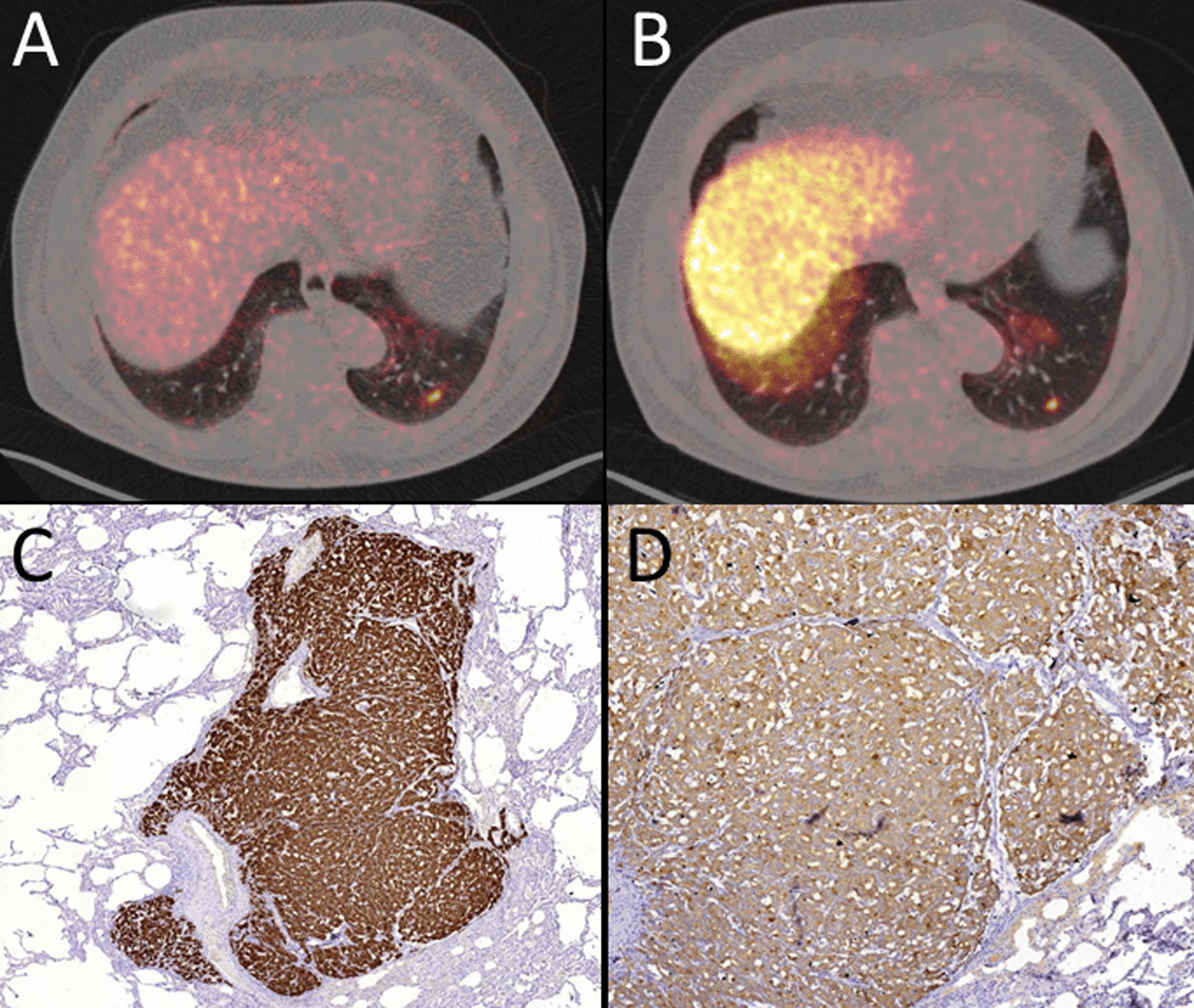
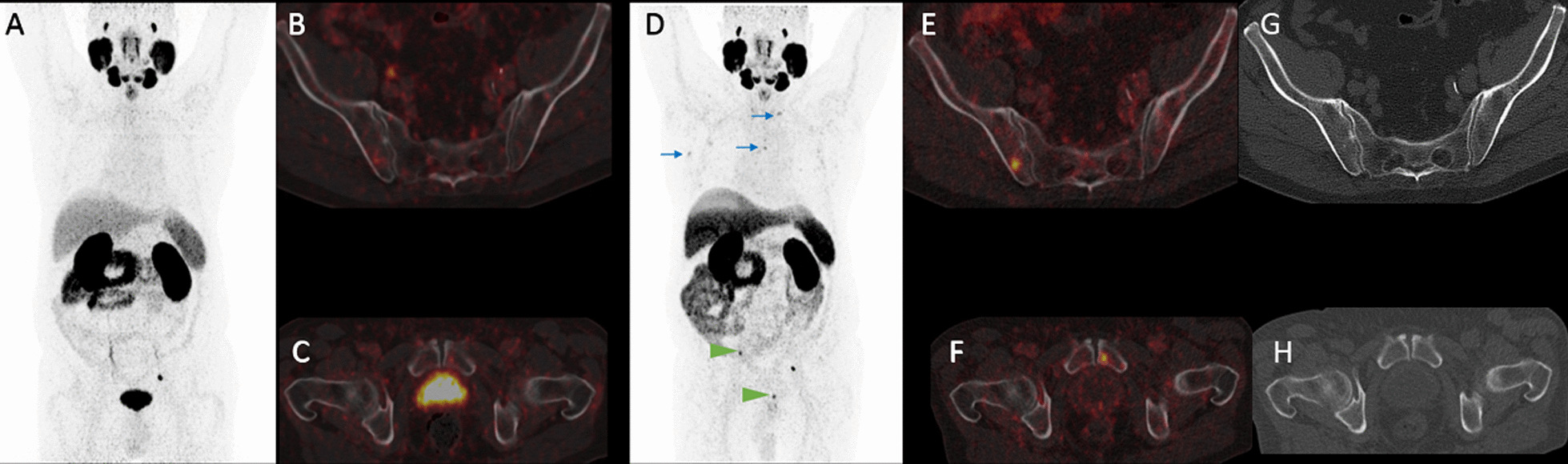
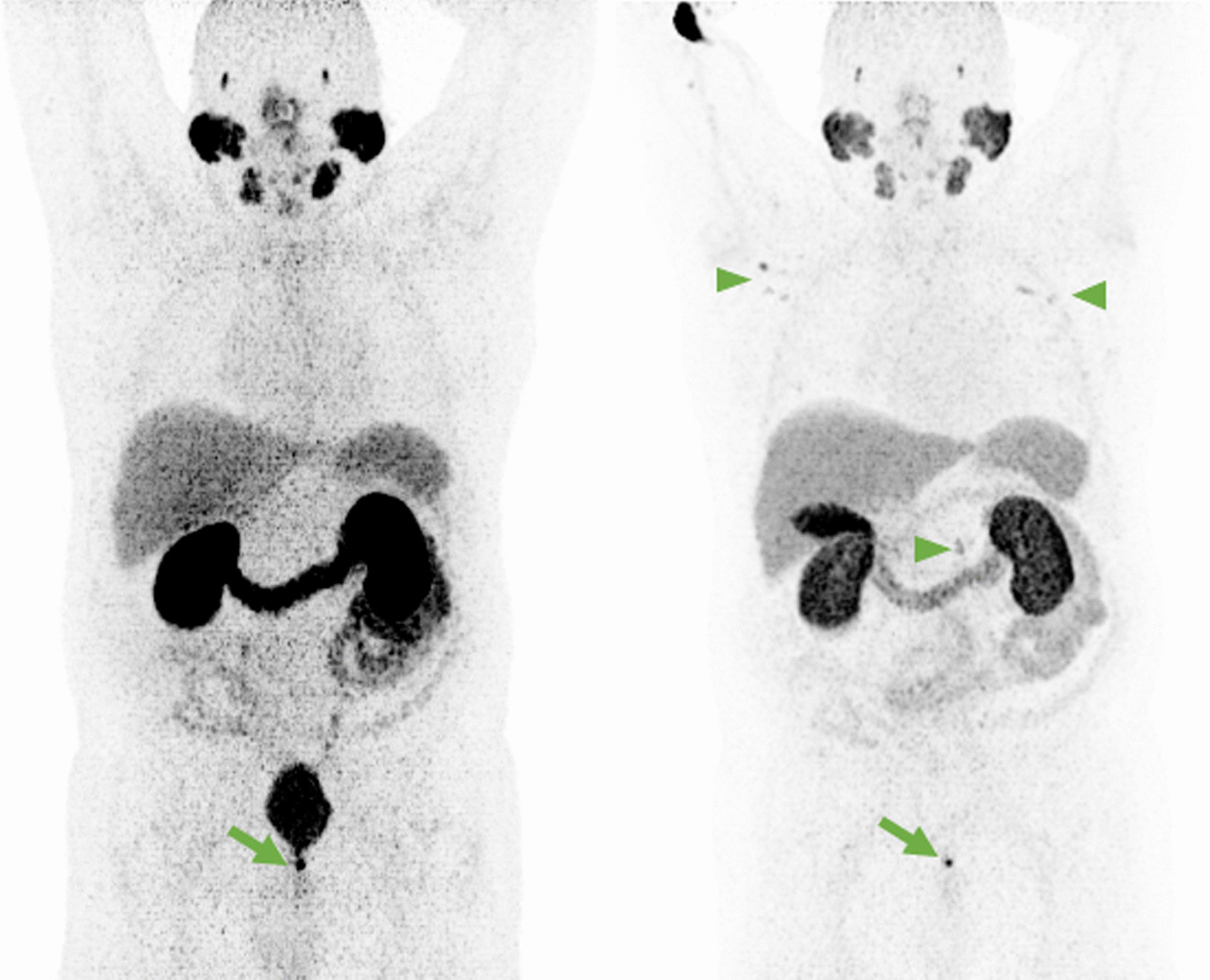
Differences in terms of miTNM stages in both studies occurred in nine of the 46 patients (19.6%). The miT stages differed in five patients (10.9%), the miN stages differed in three patients (6.5%), and different miM stages occurred only in one patient who was upstaged in [F]-F-PSMA-1007 PET. Concordant miTNM stages were obtained in 37 patients (80.4%). There was no significant difference between [F]-F-PSMA-1007 and [Ga]-Ga-PSMA-11 in the SUV locally (31.5 vs. 32.7; p = 0.658), in lymph node metastases (28.9 vs. 24.9; p = 0.30) or in bone metastases (22.9 vs. 27.6; p = 0.286). In [F]-F-PSMA-1007 PET, more patients featured presumable unspecific uptake in the lymph nodes (52.2% vs. 28.3%; p: < 0.001), bones (71.7% vs. 23.9%; p < 0.001) and ganglia (71.7% vs. 43.5%; p < 0.001). Probable unspecific, exclusively [F]-F-PSMA-1007-positive lesions mainly occurred in the ribs (58.7%), axillary lymph nodes (39.1%) and cervical ganglia (28.3%).
In terms of miTNM staging, both tracers appeared widely exchangeable, as no tracer relevantly outperformed the other. The differences between the two tracers were far more common in presumable unspecific lesions than in malignant spots. A routinely performed two-tracer study could not be shown to be superior. Since it seems at least challenging for most nuclear medicine departments to provide both [F]-F-PSMA-1007 and [Ga]-Ga-PSMA-11, it appears reasonable to choose the PSMA radiotracer depending on local availability with attention to the greater occurrence of nonspecific bone findings with [F]-F-PSMA-1007.
本分析旨在回顾性比较放射性示踪剂[镓]-镓-PSMA-11和[氟]-氟-PSMA-1007在常规临床实践中用于恶性病变、分子影像(mi)TNM分期以及可能的非特异性病变方面的个体差异。
对46例前列腺癌患者(中位年龄:71岁)进行回顾性分析,这些患者在平均12±8.0天内连续接受了[镓]-镓-PSMA-11和[氟]-氟-PSMA-1007-PET/CT或PET/MRI检查。两项研究中的miTNM分期均由两名对另一种示踪剂结果不知情的核医学医师进行。在与两名放射科医师达成学科内和跨学科共识后,分析了恶性和可能的非特异性示踪剂摄取差异。
46例患者中有9例(19.6%)在两项研究的miTNM分期方面存在差异。5例患者(10.9%)的miT分期不同,3例患者(6.5%)的miN分期不同,仅1例患者的miM分期不同,该患者在[氟]-氟-PSMA-1007 PET检查中分期上调。37例患者(80.4%)获得了一致的miTNM分期。[氟]-氟-PSMA-1007和[镓]-镓-PSMA-11在局部SUV(31.5对32.7;p = 0.658)、淋巴结转移(28.9对24.9;p = 0.30)或骨转移(22.9对27.6;p = 0.286)方面无显著差异。在[氟]-氟-PSMA-1007 PET检查中,更多患者在淋巴结(52.2%对28.3%;p:<0.001)、骨骼(71.7%对23.9%;p<0.001)和神经节(71.7%对43.5%;p<0.001)出现可能的非特异性摄取。可能的非特异性、仅[氟]-氟-PSMA-1007阳性病变主要发生在肋骨(58.7%)、腋窝淋巴结(39.1%)和颈神经节(28.3%)。
就miTNM分期而言,两种示踪剂似乎具有广泛的互换性,因为没有一种示踪剂明显优于另一种。两种示踪剂之间的差异在可能的非特异性病变中比在恶性病灶中更为常见。未显示常规进行的双示踪剂研究具有优势。由于大多数核医学科室提供[氟]-氟-PSMA-1007和[镓]-镓-PSMA-11似乎至少具有挑战性,根据当地可用性选择PSMA放射性示踪剂并注意[氟]-氟-PSMA-1007非特异性骨表现的发生率更高似乎是合理的。