Department of Gastroenterology, Toranomon Hospital, Japan.
Department of Gastroenterology, Tokyo Metropolitan Cancer and Infectious Diseases Center Komagome Hopital, Japan.
Intern Med. 2022 May 1;61(9):1319-1327. doi: 10.2169/internalmedicine.8241-21. Epub 2021 Oct 19.
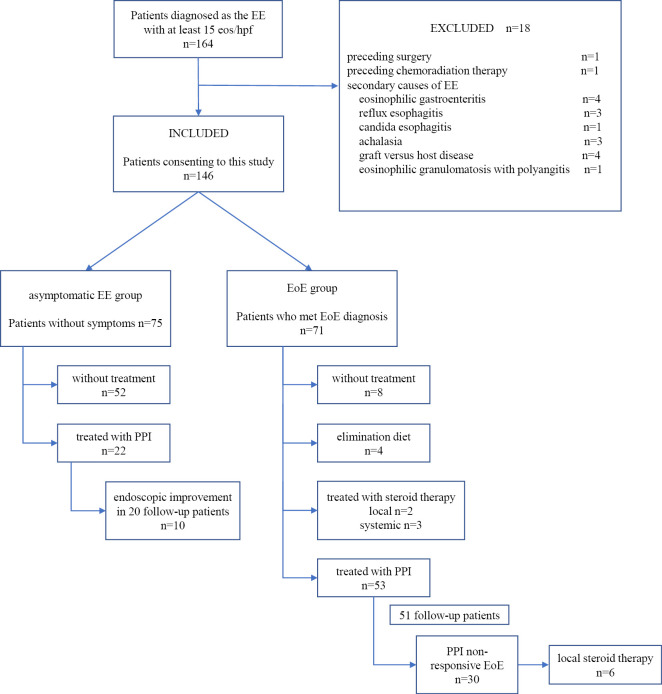
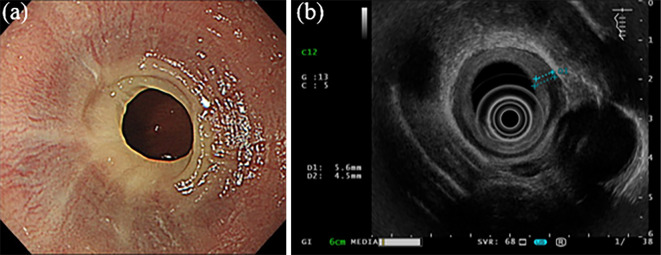
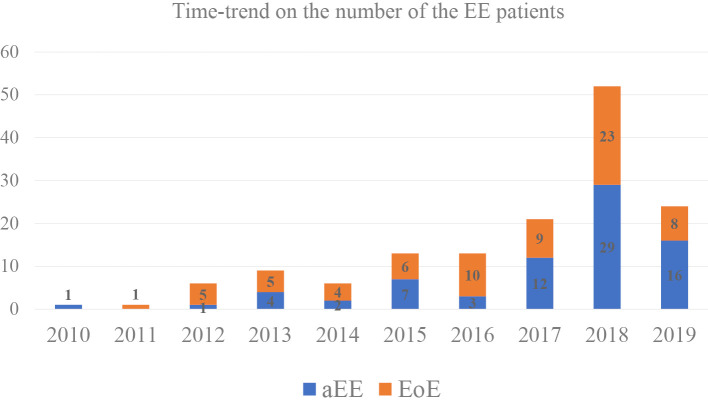
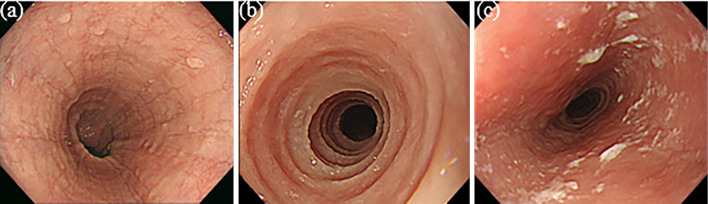
Objective According to consensus guidelines, eosinophilic esophagitis (EoE) is defined as a clinicopathological entity whose symptoms and histology must always be considered together. However, endoscopic findings typical of EoE are often seen in asymptomatic esophageal eosinophilia (aEE). We aimed to clarify the clinicopathological features of aEE. Methods We retrospectively compared cases of aEE and those of symptomatic EoE. Materials We reviewed 146 patients who underwent upper gastrointestinal endoscopy and were confirmed histopathologically to have esophageal eosinophil infiltration of at least 15 eosinophils per high-power field. They were divided into the aEE group (n=75) and the EoE group (n=71). Patients' clinicopathological findings were then collected and examined. Results The EoE group experienced dysphagia (47.9%), heartburn (40.8%), food impaction (40.8%), chest pain (16.9%), and other symptoms (8.5%). There was no significant difference between the two groups with regard to age, sex, current smoking status, or alcohol consumption. The aEE group had a significantly higher body mass index (p<0.01) and significantly lower frequency of concurrent allergic diseases (p<0.01) than the EoE group. No significant differences were found between the two groups with regard to the mean peripheral blood eosinophil count, non-specific immunoglobulin E concentration, peak eosinophil infiltration in the biopsy specimens, EoE histology scoring system, phenotype and location of typical endoscopic findings of EoE, or thickness of the esophagus wall or the mucosal and submucosal layer as measured by endoscopic ultrasonography. Two patients in the aEE group who were followed up without treatment subsequently developed esophageal symptoms. Conclusion aEE and EoE may have the same clinicopathological features.
目的 根据共识指南,嗜酸性食管炎(EoE)被定义为一种临床病理实体,其症状和组织学必须始终一起考虑。然而,在无症状性食管嗜酸性粒细胞增多症(aEE)中,经常可以看到典型的 EoE 内镜表现。我们旨在阐明 aEE 的临床病理特征。
方法 我们回顾性比较了 aEE 病例和有症状的 EoE 病例。
材料 我们回顾性分析了 146 例接受上消化道内镜检查并经组织病理学证实食管嗜酸性粒细胞浸润至少 15 个/高倍视野的患者。他们被分为 aEE 组(n=75)和 EoE 组(n=71)。然后收集并检查了患者的临床病理资料。
结果 EoE 组出现吞咽困难(47.9%)、烧心(40.8%)、食物嵌塞(40.8%)、胸痛(16.9%)和其他症状(8.5%)。两组在年龄、性别、当前吸烟状况或饮酒方面无显著差异。aEE 组的体质指数(BMI)显著高于 EoE 组(p<0.01),同时并发过敏性疾病的频率显著低于 EoE 组(p<0.01)。两组间外周血嗜酸性粒细胞计数、非特异性免疫球蛋白 E 浓度、活检标本中嗜酸性粒细胞浸润峰值、EoE 组织学评分系统、EoE 典型内镜表现的表型和部位、内镜超声测量的食管壁厚度或黏膜和黏膜下层厚度均无显著差异。在未经治疗的情况下进行随访的 aEE 组的 2 例患者随后出现食管症状。
结论 aEE 和 EoE 可能具有相同的临床病理特征。