Akopyan Gevorg B, Berdalin Alexander B, Gubskiy Ilya L, Lelyuk Vladimir G
Radiology and Clinical Physiology Research Center, Federal State Budgetary Institution Federal Center of Brain Research and Neurotechnologies of the Federal Medical Biological Agency, 117513 Moscow, Russia.
Diagnostics (Basel). 2021 Oct 19;11(10):1937. doi: 10.3390/diagnostics11101937.
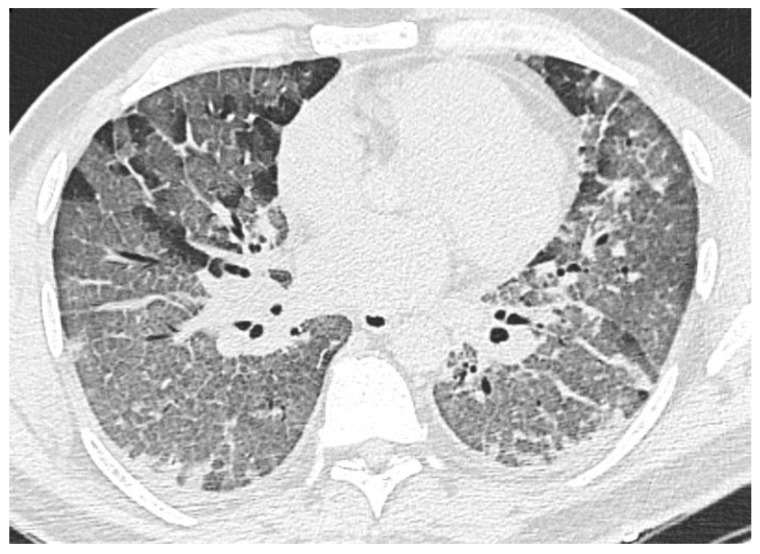
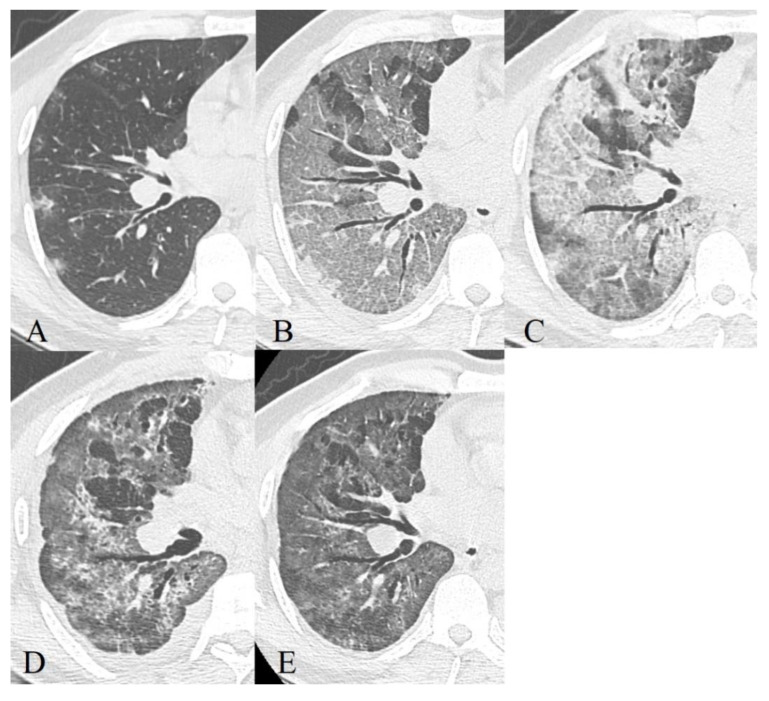
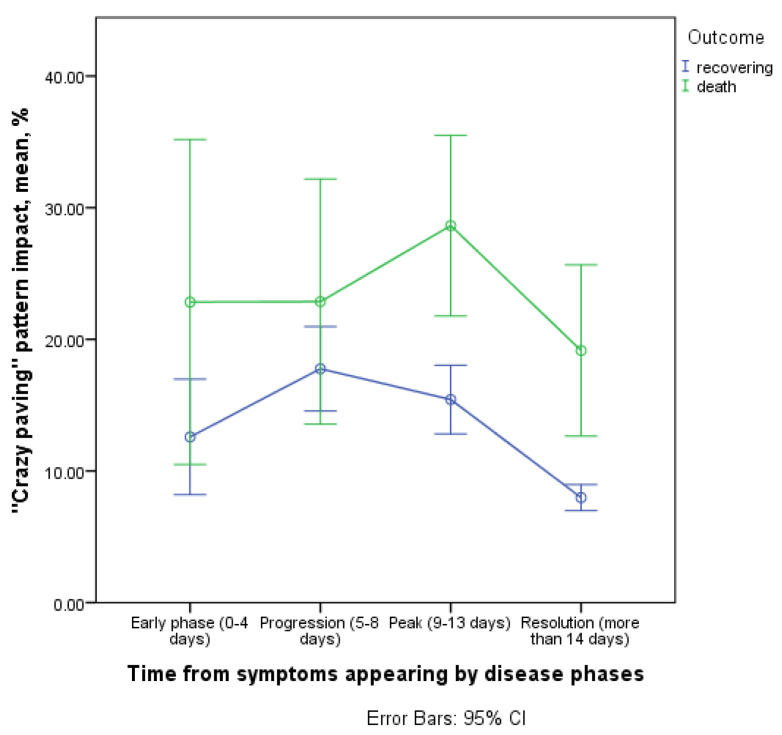
This study's aim was to investigate CT (computed tomography) pattern dynamics differences within surviving and deceased adult patients with COVID-19, revealing new prognostic factors and reproducing already known data with our patients' cohort: 635 hospitalized patients (55.3% of them were men, 44.7%-women), of which 87.3% had a positive result of RT-PCR (reverse transcription-polymerase chain reaction) at admission. The number of deaths was 53 people (69.8% of them were men and 30.2% were women). In total, more than 1500 CT examinations were performed on patients, using a GE Optima CT 660 computed tomography (General Electric Healthcare, Chicago, IL, USA). The study was performed at hospital admission, the frequency of repetitive scans further varied based on clinical need. The interpretation of the imaging data was carried out by 11 radiologists with filling in individual registration cards that take into account the scale of the lesion, the location, contours, and shape of the foci, the dominating types of changes, as well as the presence of additional findings and the dynamics of the process-a total of 45 parameters. Statistical analysis was performed using the software packages SPSS Statistics version 23.0 (IBM, Armonk, NY, USA) and R software version 3.3.2. For comparisons in pattern dynamics across hospitalization we used repeated measures general linear model with outcome and disease phase as factors. The crazy paving pattern, which is more common and has a greater contribution to the overall CT picture in different phases of the disease in deceased patients, has isolated prognostic significance and is probably a reflection of faster dynamics of the process with a long phase of progression of pulmonary parenchyma damage with an identical trend of changes in the scale of the lesion (as recovered) in this group of patients. Already known data on typical pulmonological CT manifestations of infection, frequency of occurrence, and the prognostic significance of the scale of the lesion were reproduced, new differences in the dynamics of the process between recovered and deceased adult patients were also found that may have prognostic significance and can be reflected in clinical practice.
本研究旨在调查新型冠状病毒肺炎(COVID-19)成年存活患者与死亡患者的CT(计算机断层扫描)影像动态差异,揭示新的预后因素,并通过我们的患者队列重现已知数据:635例住院患者(其中55.3%为男性,44.7%为女性),其中87.3%在入院时逆转录聚合酶链反应(RT-PCR)结果呈阳性。死亡人数为53人(其中69.8%为男性,30.2%为女性)。总共对患者进行了1500多次CT检查,使用的是GE Optima CT 660计算机断层扫描仪(美国伊利诺伊州芝加哥市通用电气医疗集团)。该研究在患者入院时进行,重复扫描的频率根据临床需要进一步变化。11名放射科医生对影像数据进行解读,并填写个人登记卡,登记卡考虑了病变范围、病灶位置、轮廓和形状、主要变化类型,以及是否存在其他发现和病情动态变化——总共45个参数。使用SPSS Statistics 23.0软件包(美国纽约州阿蒙克市IBM公司)和R软件3.3.2版本进行统计分析。为了比较住院期间的影像动态变化,我们使用了以结果和疾病阶段为因素的重复测量一般线性模型。碎石路征在死亡患者疾病的不同阶段更常见,对整体CT影像的贡献更大,具有独立的预后意义,可能反映了该组患者病程进展更快,肺实质损伤进展期较长,病变范围(恢复时)变化趋势相同。重现了关于感染典型肺部CT表现、发生率以及病变范围预后意义的已知数据,还发现了康复成年患者与死亡成年患者病程动态变化的新差异,这些差异可能具有预后意义,并可在临床实践中得到体现。