Sharma Niti, Tan Mario A, An Seong Soo A
Department of Bionano Technology, Gachon University, 1342 Seongnam-daero, Sujeong-Gu, Seongnam 461-701, Korea.
College of Science and Research Center for the Natural and Applied Sciences, University of Santo Tomas, Manila 1015, Philippines.
Antioxidants (Basel). 2021 Oct 2;10(10):1571. doi: 10.3390/antiox10101571.
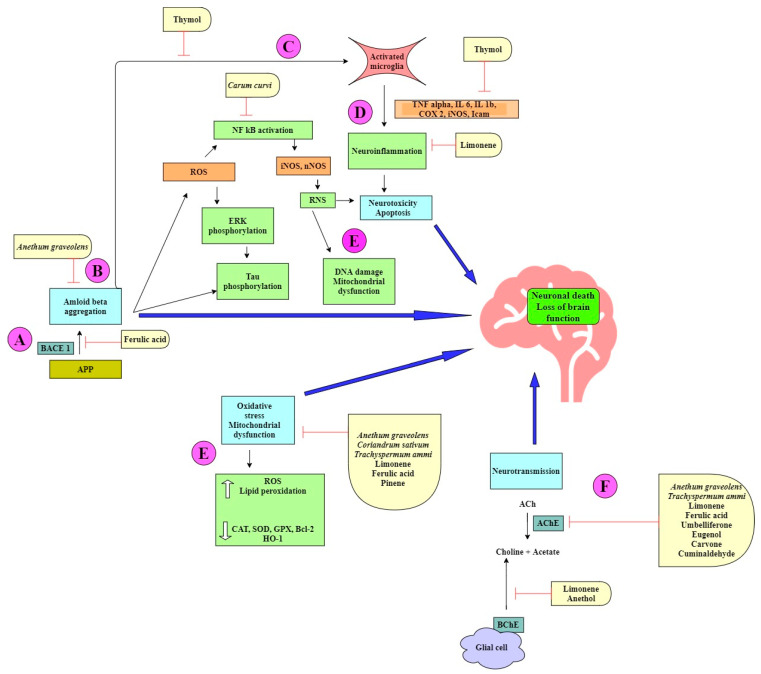
Alzheimer's disease (AD) is one of the most prevalent neurodegenerative diseases worldwide. In an effort to search for new strategies for treating AD, natural products have become candidates of choice. Plants are a rich source of bioactive and effective compounds used in treating numerous diseases. Various plant extracts are known to display neuroprotective activities by targeting different pathophysiological pathways in association with the diseases, such as inhibiting enzymes responsible for degrading neurotransmitters, reducing oxidative stress, neuroprotection, inhibiting amyloid plaque formation, and replenishing mitochondrial function. This review presented a comprehensive evaluation of the available scientific literature (in vivo, in vitro, and in silico) on the neuroprotective mechanisms displayed by the extracts/bioactive compounds from spices belonging to the Apiaceae family in ameliorating AD.
阿尔茨海默病(AD)是全球最常见的神经退行性疾病之一。为了寻找治疗AD的新策略,天然产物已成为首选候选物。植物是用于治疗多种疾病的生物活性和有效化合物的丰富来源。已知各种植物提取物通过针对与疾病相关的不同病理生理途径表现出神经保护活性,例如抑制负责降解神经递质的酶、减少氧化应激、神经保护、抑制淀粉样斑块形成以及恢复线粒体功能。本综述对伞形科香料提取物/生物活性化合物在改善AD方面所表现出的神经保护机制的现有科学文献(体内、体外和计算机模拟)进行了全面评估。