Department of Pharmacology and Clinical Pharmacy, School of Pharmacy, Bandung Institute of Technology, Bandung 40132, Indonesia.
Department of Pharmacy, Comsats University Islamabad Abbottabad Campus, Abbottabad 22060, Pakistan.
Biomolecules. 2021 Oct 5;11(10):1464. doi: 10.3390/biom11101464.
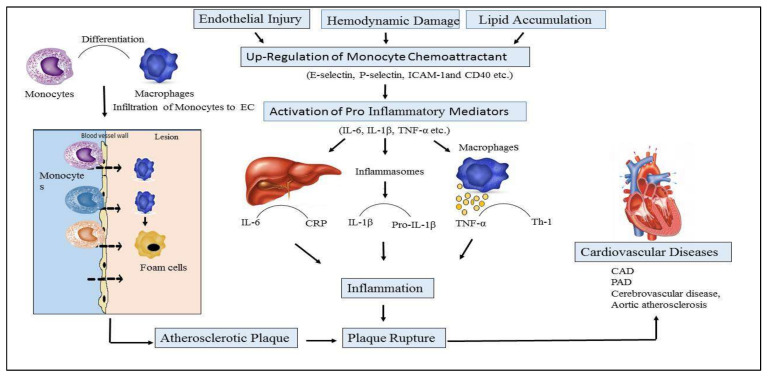
Proinflammatory biomarkers have been increasingly used in epidemiologic and intervention studies over the past decades to evaluate and identify an association of systemic inflammation with cardiovascular diseases. Although there is a strong correlation between the elevated level of inflammatory biomarkers and the pathology of various cardiovascular diseases, the mechanisms of the underlying cause are unclear. Identification of pro-inflammatory biomarkers such as cytokines, chemokines, acute phase proteins, and other soluble immune factors can help in the early diagnosis of disease. The presence of certain confounding factors such as variations in age, sex, socio-economic status, body mass index, medication and other substance use, and medical illness, as well as inconsistencies in methodological practices such as sample collection, assaying, and data cleaning and transformation, may contribute to variations in results. The purpose of the review is to identify and summarize the effect of demographic factors, epidemiological factors, medication use, and analytical and pre-analytical factors with a panel of inflammatory biomarkers CRP, IL-1b, IL-6, TNFa, and the soluble TNF receptors on the concentration of these inflammatory biomarkers in serum.
在过去几十年中,促炎生物标志物越来越多地被用于流行病学和干预研究,以评估和确定全身炎症与心血管疾病之间的关联。虽然炎症生物标志物水平升高与各种心血管疾病的病理学之间存在很强的相关性,但潜在原因的机制尚不清楚。鉴定促炎生物标志物,如细胞因子、趋化因子、急性期蛋白和其他可溶性免疫因子,有助于疾病的早期诊断。某些混杂因素的存在,如年龄、性别、社会经济地位、体重指数、药物和其他物质使用的变化以及医疗疾病,以及在样本收集、检测和数据清理和转换等方法学实践方面的不一致,可能导致结果存在差异。本综述的目的是确定并总结炎症生物标志物 CRP、IL-1b、IL-6、TNFa 和可溶性 TNF 受体的面板中,人口统计学因素、流行病学因素、药物使用以及分析和分析前因素对这些炎症生物标志物在血清中浓度的影响。