
野猪肉及肉类制品中[具体物质未给出]的存在情况及生存能力评估。
Evaluation of the Presence and Viability of in Wild Boar Meat and Meat-Based Preparations.
作者信息
Clausi Maria T, Ciambrone Lucia, Zanoni Mariagrazia, Costanzo Nicola, Pacciarini Maria, Casalinuovo Francesco
机构信息
Catanzaro Section, Experimental Zooprophylactic Institute of Southern Italy (IZSM), 88100 Catanzaro, Italy.
National Reference Centre for Bovine Tuberculosis by Mycobacterium bovis, Experimental Zooprophylactic Institute of Lombardia and Emilia Romagna (IZSLER), 25124 Brescia, Italy.
出版信息
Foods. 2021 Oct 12;10(10):2410. doi: 10.3390/foods10102410.
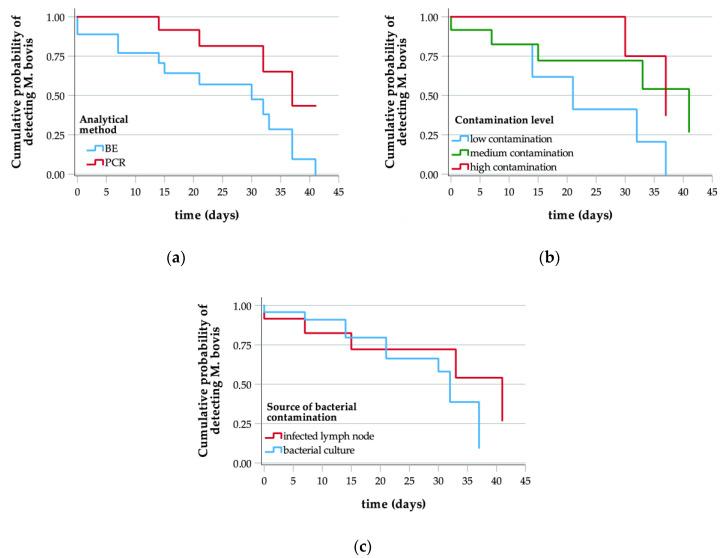
The aim of the present study is to provide information about the ability of to survive within wild boar () meat and meat-based preparations and the duration of this survival, and to consider the preservation of its infectious potential toward humans and animals. Meat samples were artificially contaminated with an field strain and then stored at -20 °C, while two sausages batches were contaminated with the same field strain at two different concentrations, 10 CFU/g and 10 CFU/g, before storing them in proper conditions to allow for their ripening. A third sausage batch was contaminated by adding 2 g of wild boar lymph nodal tissue with active tuberculous lesions to the meat mixture. Bacteriological and biomolecular (PCR) methods were used to test the meat and sausage samples every 60 days and every 7-10 days, respectively. was detected as still alive and viable on the frozen meat for the last test on the 342nd day, while from the sausage samples, was isolated until 23 days after contamination. Our results indicate that can stay alive and be viable for 23 days within sausages prepared with contaminated meat from infected wild boars. These products are usually eaten as fresh food after grilling, often cooking at a temperature that does not ensure complete inactivation of the pathogenic microorganisms present, which can pose a risk for humans to develop zoonotic tuberculosis.
本研究的目的是提供有关[具体病原体名称未给出]在野猪([具体品种未给出])肉及肉类制品中存活能力及其存活持续时间的信息,并考虑其对人和动物的感染潜力的保存情况。将肉样用[具体病原体名称未给出]的一株野外菌株进行人工污染,然后储存在-20℃,而两批香肠在两种不同浓度(10 CFU/g和10 CFU/g)下用同一野外菌株污染,之后在适当条件下储存以使其成熟。第三批香肠通过向肉混合物中添加2克带有活动性结核病变的野猪淋巴结组织进行污染。分别每60天和每7 - 10天使用细菌学和生物分子(PCR)方法对肉和香肠样品进行检测。在第342天的最后一次检测中,在冷冻肉上仍检测到[具体病原体名称未给出]存活且有活力,而从香肠样品中,直到污染后23天仍能分离出[具体病原体名称未给出]。我们的结果表明,[具体病原体名称未给出]在用感染野猪的受污染肉制备的香肠中可存活23天。这些产品通常在烤制后作为新鲜食品食用,烤制温度往往不能确保存在的致病微生物完全失活,这可能会给人类带来患人畜共患结核病的风险。
 Zotero 插件