Baeza Nicolás, Delgado Lidia, Comas Jaume, Mercade Elena
Secció de Microbiologia, Departament de Biologia, Sanitat i Medi Ambient, Universitat de Barcelona, Barcelona, Spain.
Crio-Microscòpia Electrònica, Centres Científics i Tecnològics, Universitat de Barcelona (CCiTUB), Barcelona, Spain.
Front Microbiol. 2021 Oct 8;12:713669. doi: 10.3389/fmicb.2021.713669. eCollection 2021.
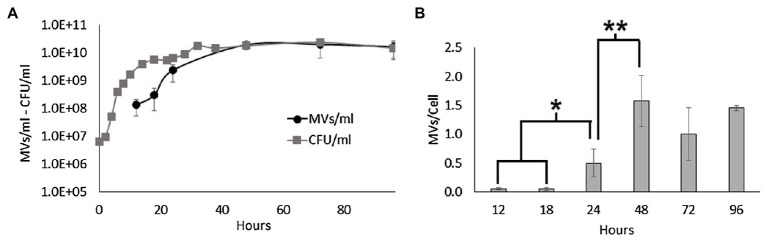
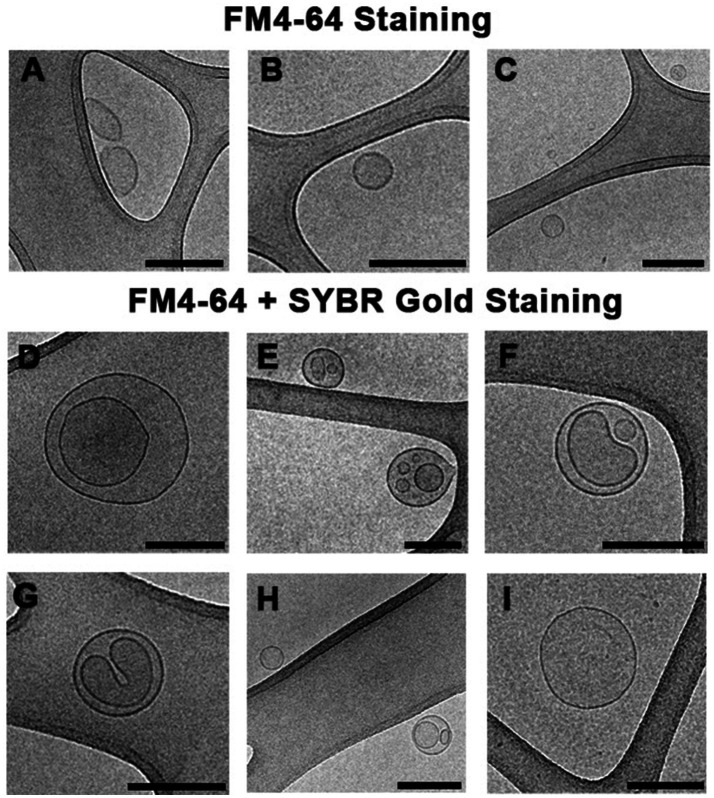
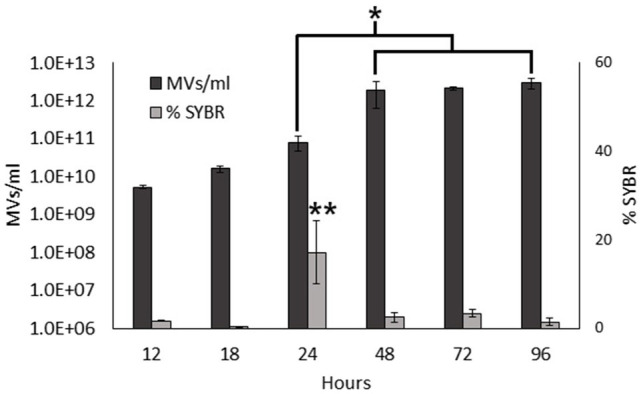
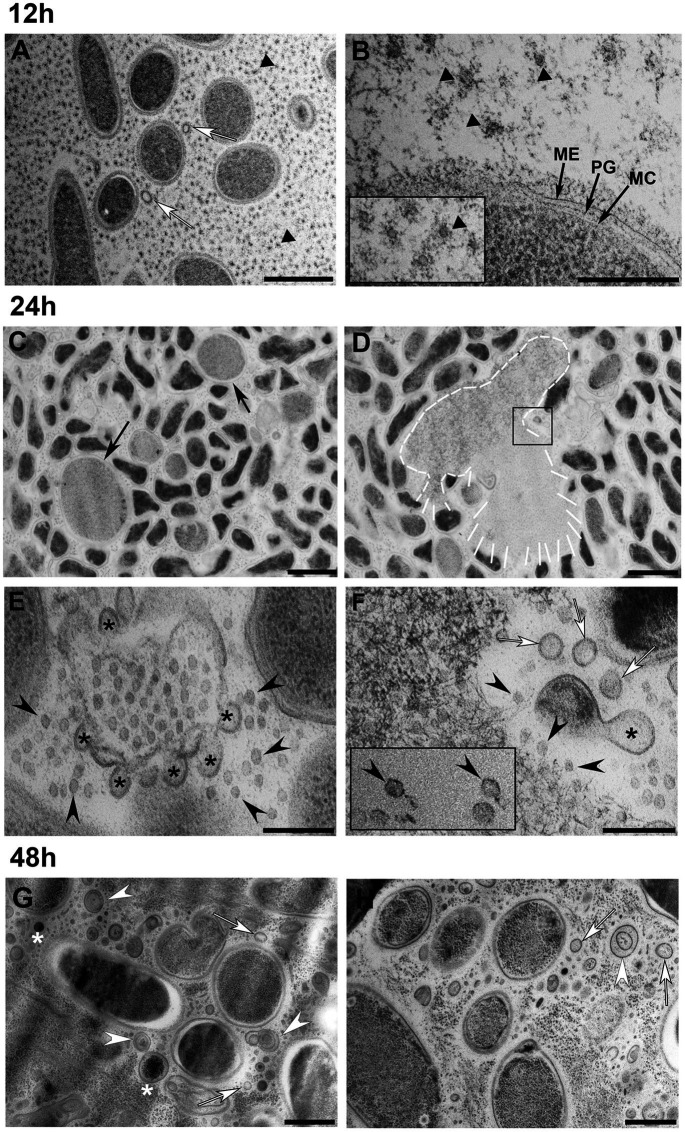
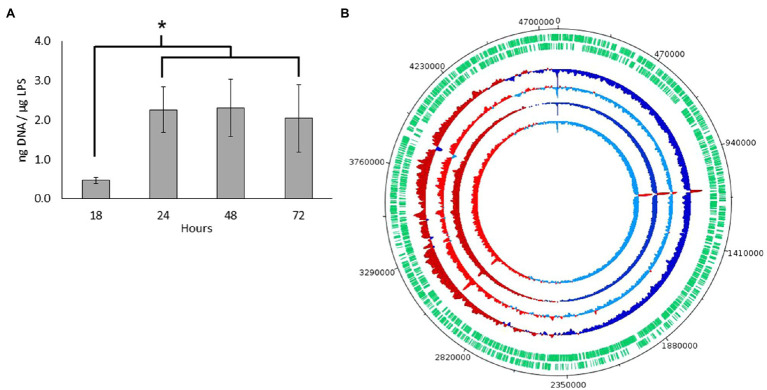
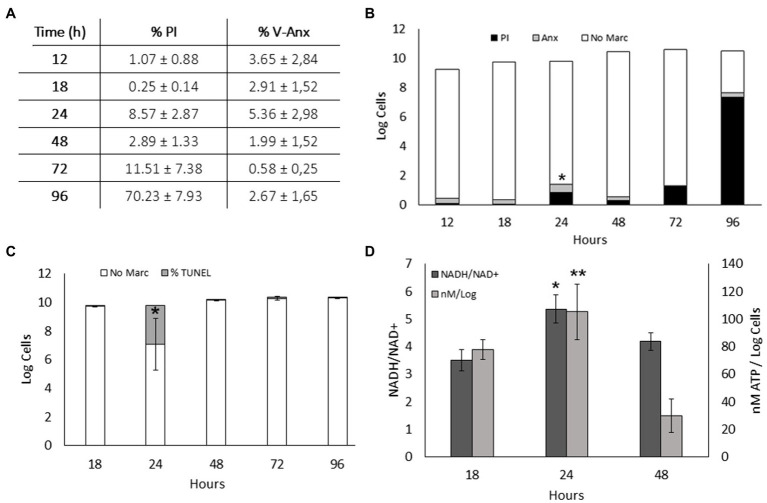
M7 is a cold-adapted Antarctic bacterium that has a great capacity to secrete membrane vesicles (MVs), making it a potentially excellent model for studying the vesiculation process. M7 undergoes a blebbing mechanism to produce different types of MVs, including outer membrane vesicles and outer-inner membrane vesicles (O-IMVs). More recently, other mechanisms have been considered that could lead to the formation of O-IMVs derived from prophage-mediated explosive cell lysis in other bacteria, but it is not clear if they are of the same type. The bacterial growth phase could also have a great impact on the type of MVs, although there are few studies on the subject. In this study, we used high-resolution flow cytometry, transmission electron microscopy, and cryo-electron microscopy (Cryo-EM) analysis to determine the amount and types of MVs M7 secreted during different growth phases. We show that MV secretion increases during the transition from the late exponential to the stationary phase. Moreover, prophage-mediated explosive cell lysis is activated in M7, increasing the heterogeneity of both single- and double-layer MVs. The sequenced DNA fragments from the MVs covered the entire genome, confirming this explosive cell lysis mechanism. A different structure and biogenesis mechanisms for the explosive cell lysis-derived double-layered MVs was observed, and we propose to name them explosive O-IMVs, distinguishing them from the blebbing O-IMVs; their separation is a first step to elucidate their different functions. In our study, we used for the first time sorting by flow cytometry and Cryo-EM analyses to isolate bacterial MVs based on their nucleic acid content. Further improvements and implementation of bacterial MV separation techniques is essential to develop more in-depth knowledge of MVs.
M7是一种适应寒冷的南极细菌,具有很强的分泌膜泡(MVs)的能力,使其成为研究膜泡形成过程的潜在优秀模型。M7通过出泡机制产生不同类型的MVs,包括外膜泡和外-内膜泡(O-IMVs)。最近,人们还考虑了其他机制,这些机制可能导致其他细菌中由原噬菌体介导的爆炸性细胞裂解形成O-IMVs,但尚不清楚它们是否属于同一类型。细菌生长阶段也可能对MVs的类型产生很大影响,尽管关于这一主题的研究很少。在本研究中,我们使用高分辨率流式细胞术、透射电子显微镜和冷冻电子显微镜(Cryo-EM)分析来确定M7在不同生长阶段分泌的MVs的数量和类型。我们发现,在从指数后期到稳定期的转变过程中,MV分泌增加。此外,M7中由原噬菌体介导的爆炸性细胞裂解被激活,增加了单层和双层MVs的异质性。从MVs中测序的DNA片段覆盖了整个基因组,证实了这种爆炸性细胞裂解机制。观察到了由爆炸性细胞裂解产生的双层MVs的不同结构和生物发生机制,我们建议将它们命名为爆炸性O-IMVs,以区别于出泡产生的O-IMVs;将它们区分开来是阐明其不同功能的第一步。在我们的研究中,我们首次使用流式细胞术分选和Cryo-EM分析,根据核酸含量分离细菌MVs。进一步改进和实施细菌MV分离技术对于更深入了解MVs至关重要。