Institute of Tropical Medicine, University Hospital Tübingen, Tübingen, Germany.
German Center for Infection Research (DZIF), Partner Site Tübingen, Tübingen, Germany.
Front Immunol. 2021 Oct 8;12:753435. doi: 10.3389/fimmu.2021.753435. eCollection 2021.
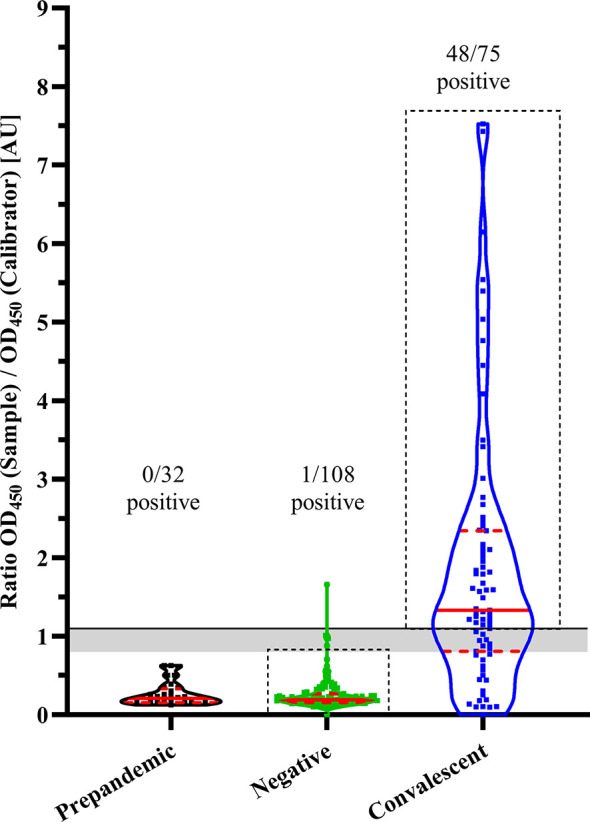
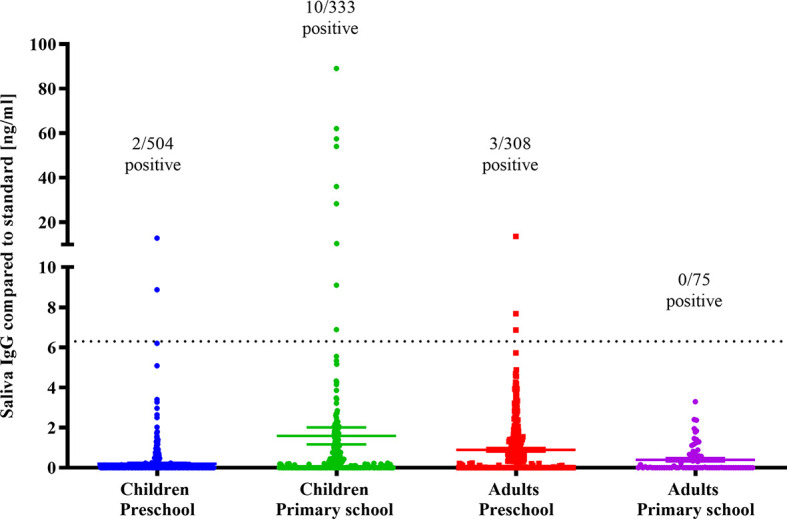
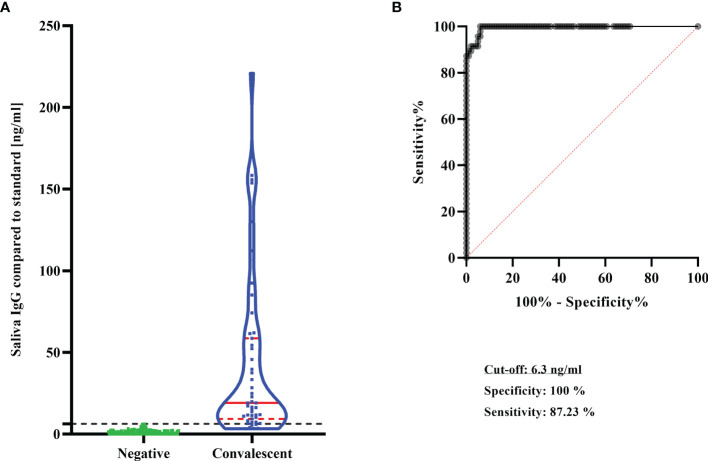
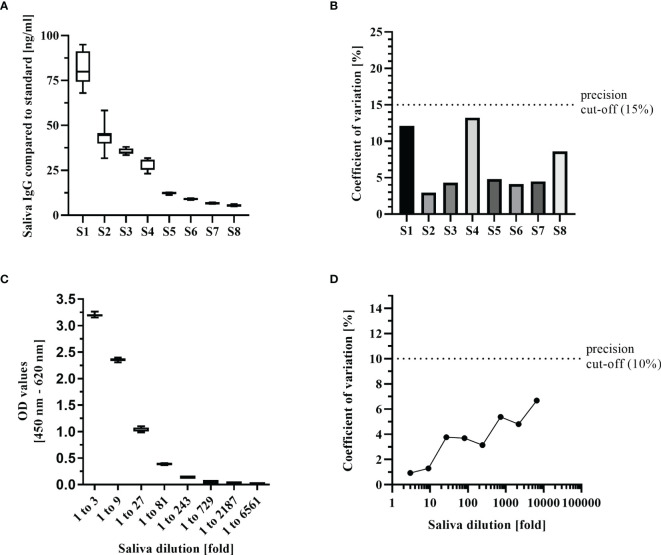
Saliva is a body fluid with hitherto unused potential for the assessment of SARS-CoV-2 antibodies. Specific antibodies can indicate a past SARS-CoV-2 infection and allow to estimate the proportion of individuals with a potential protective immunity. First, we carefully characterized plasma samples obtained from adult control groups with and without prior SARS-CoV-2 infection using certified reference ELISAs. Simultaneously collected saliva samples of confirmed convalescent and negative individuals where then used to validate the herein newly developed ELISA for the detection of SARS-CoV-2 IgG antibodies in saliva. The saliva ELISA was applied to assess SARS-CoV-2 exposure in young children (N = 837) in the age between 1 and 10 years in Tübingen, Germany, towards the end of the first pandemic year 2020. Sensitivity and specificity of the new saliva ELISA was 87% and 100%, respectively. With 12% of all Tübingen children sampled their respective educational institutions, estimates of SARS-CoV-2 antibody prevalence was 1.6%. Interestingly, only 0.4% preschool kids were positive compared to 3.0% of primary school children. Less than 20% of positive children self-reported symptoms within two months prior to saliva sampling that could be associated - but not exclusively - with a SARS-CoV-2 infection. The saliva ELISA is a valid and suitable protocol to enable population-based surveys for SARS-CoV-2 antibodies. Using non-invasive sampling and saliva ELISA testing, we found that prevalence of SARS-CoV-2 antibodies was significantly lower in young children than in primary school children.
唾液是一种具有尚未被充分利用的潜力的体液,可用于评估 SARS-CoV-2 抗体。特异性抗体可以指示过去的 SARS-CoV-2 感染,并可以估计具有潜在保护免疫力的个体比例。首先,我们使用经过认证的参考 ELISA 仔细分析了来自有和没有先前 SARS-CoV-2 感染的成年对照组的血浆样本。然后,使用同时采集的确诊恢复期和阴性个体的唾液样本来验证本文新开发的用于检测唾液中 SARS-CoV-2 IgG 抗体的 ELISA。将唾液 ELISA 用于评估德国图宾根 2020 年第一波大流行末期 1 至 10 岁的 837 名幼儿(N = 837)中的 SARS-CoV-2 暴露情况。新的唾液 ELISA 的灵敏度和特异性分别为 87%和 100%。在所采样的所有图宾根儿童中,有 12%来自各自的教育机构,估计 SARS-CoV-2 抗体的流行率为 1.6%。有趣的是,与小学生的 3.0%相比,只有 0.4%的幼儿园儿童呈阳性。在唾液采样前两个月内,不到 20%的阳性儿童自述有与 SARS-CoV-2 感染相关的症状,但这些症状不能完全归因于 SARS-CoV-2 感染。唾液 ELISA 是一种有效的、合适的方案,可以用于 SARS-CoV-2 抗体的人群调查。使用非侵入性采样和唾液 ELISA 检测,我们发现 SARS-CoV-2 抗体在幼儿中的流行率明显低于小学生。