Zheng Yajing, Jia Shanshan, Yu Zhaofei, Liu Jian K, Huang Tiejun
Department of Computer Science and Technology, National Engineering Laboratory for Video Technology, Peking University, Beijing 100871, China.
Institute for Artificial Intelligence, Peking University, Beijing 100871, China.
Patterns (N Y). 2021 Sep 17;2(10):100350. doi: 10.1016/j.patter.2021.100350. eCollection 2021 Oct 8.
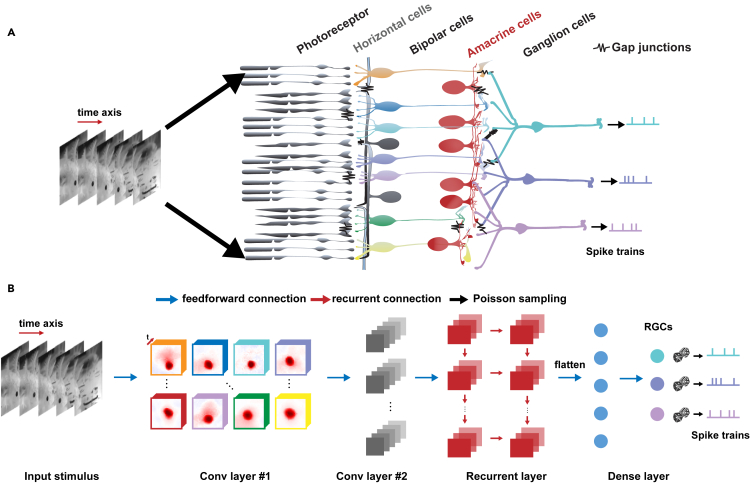
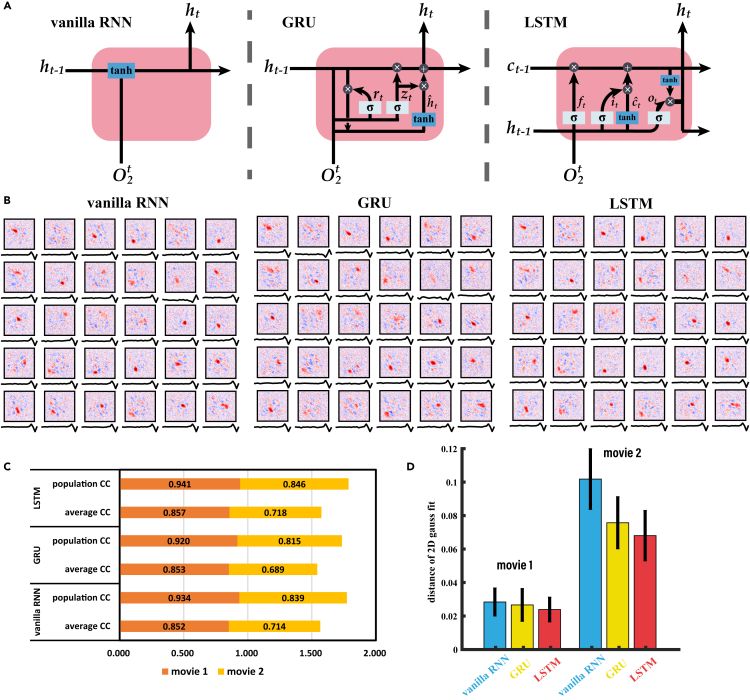
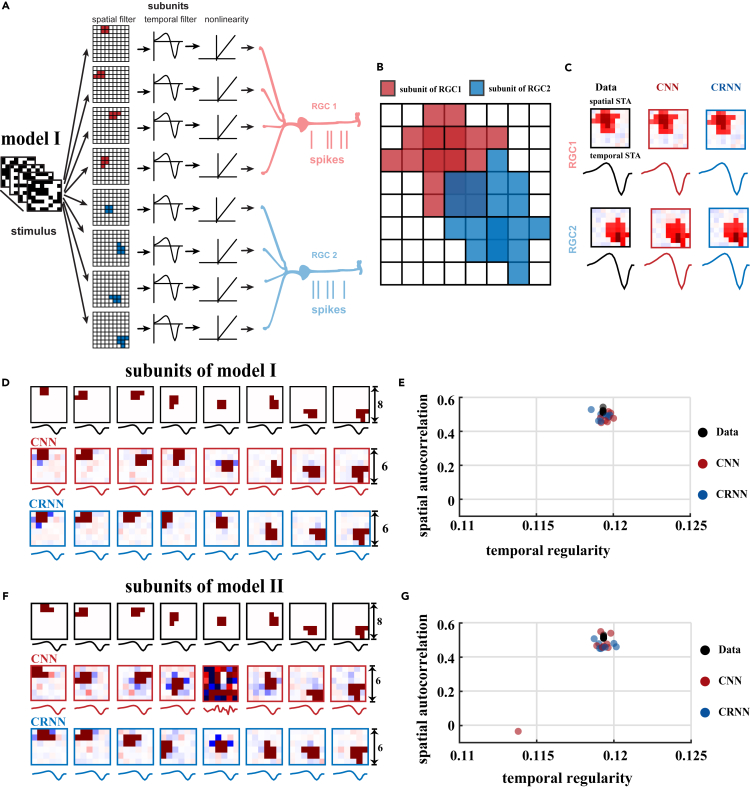
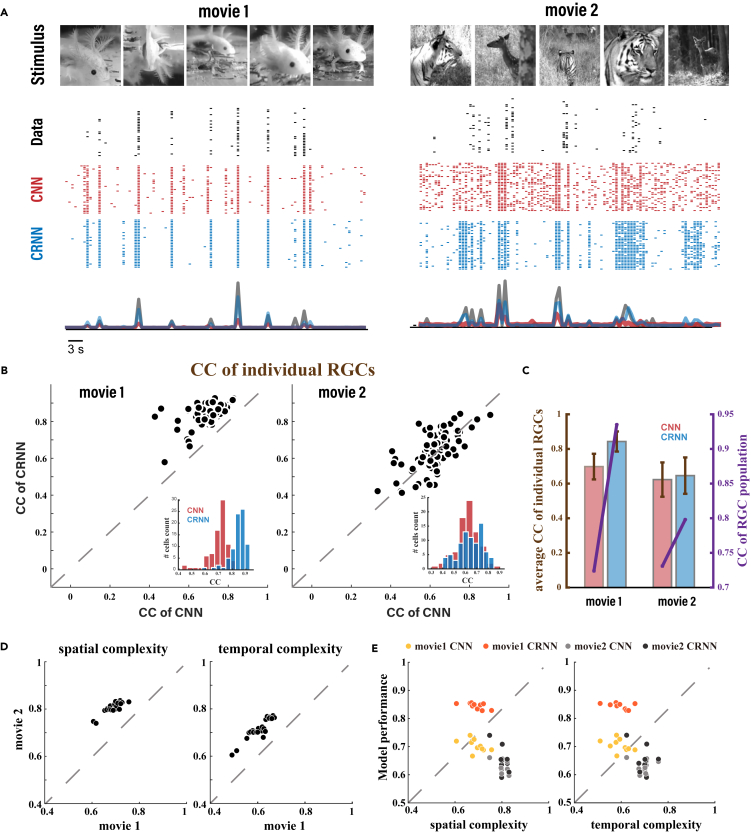
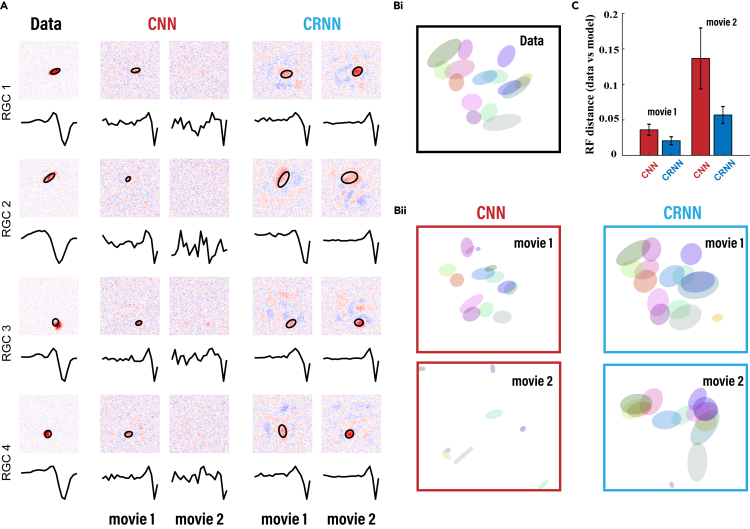
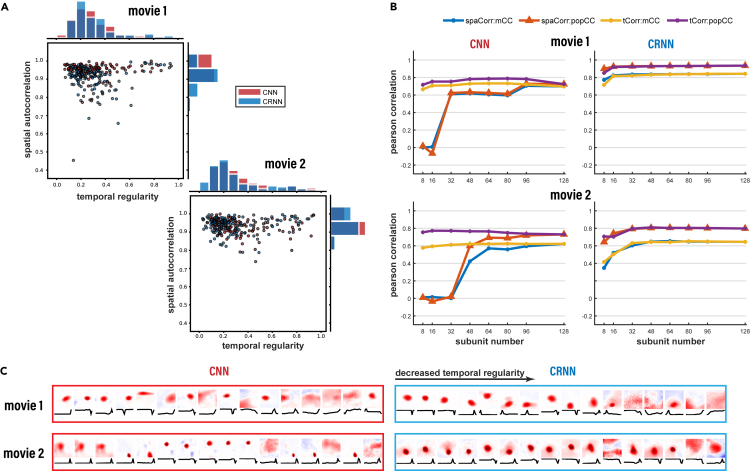
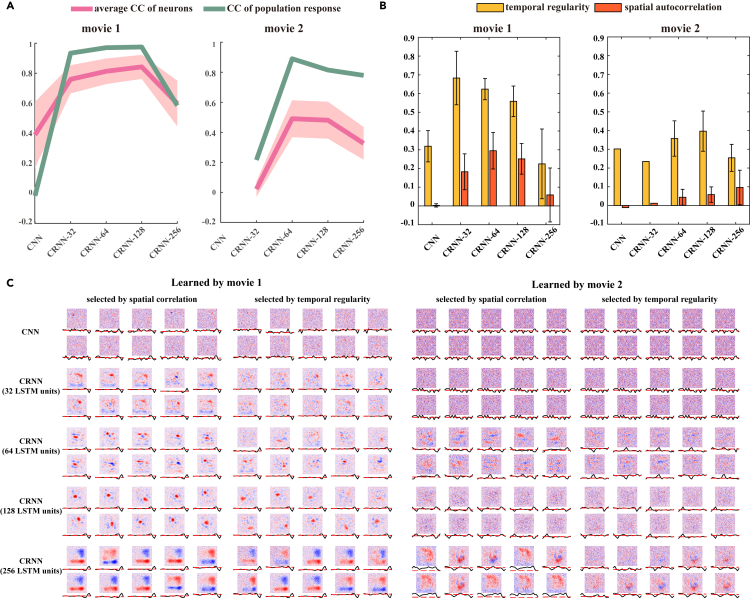
Traditional models of retinal system identification analyze the neural response to artificial stimuli using models consisting of predefined components. The model design is limited to prior knowledge, and the artificial stimuli are too simple to be compared with stimuli processed by the retina. To fill in this gap with an explainable model that reveals how a population of neurons work together to encode the larger field of natural scenes, here we used a deep-learning model for identifying the computational elements of the retinal circuit that contribute to learning the dynamics of natural scenes. Experimental results verify that the recurrent connection plays a key role in encoding complex dynamic visual scenes while learning biological computational underpinnings of the retinal circuit. In addition, the proposed models reveal both the shapes and the locations of the spatiotemporal receptive fields of ganglion cells.
传统的视网膜系统识别模型使用由预定义组件组成的模型来分析对人工刺激的神经反应。模型设计受限于先验知识,并且人工刺激过于简单,无法与视网膜处理的刺激进行比较。为了用一个可解释的模型来填补这一空白,该模型揭示神经元群体如何协同工作以编码更大的自然场景视野,我们在此使用深度学习模型来识别视网膜回路中有助于学习自然场景动态的计算元素。实验结果证实,循环连接在编码复杂动态视觉场景以及学习视网膜回路的生物学计算基础方面起着关键作用。此外,所提出的模型揭示了神经节细胞的时空感受野的形状和位置。