Department of Pharmacy, the First Hospital of Jilin University, Changchun, China.
Department of Pediatric Oncology, the First Hospital of Jilin University, Changchun, China.
Pharm Biol. 2021 Dec;59(1):1425-1431. doi: 10.1080/13880209.2021.1990356.
Severe nephrotoxicity greatly limits the clinical use of the common effective chemotherapeutic agent cyclophosphamide (CYP). Huaiqihuang (HQH) is a Chinese herbal complex with various pharmacological activities, widely used for treating kidney disease.
This study estimates the protective effect of HQH against CYP-induced nephrotoxicity in rats.
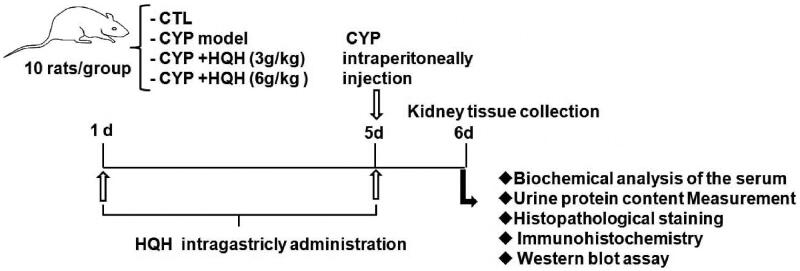
Four groups of 10 Sprague-Dawley rats were pre-treated with once-daily oral gavage of 3 and 6 mg/kg HQH for 5 days before receiving a single dose of CYP (200 mg/kg i.p.) on the 5th day; the control group received equivalent dose of saline. Renal function indices, morphological changes, oxidative stress, apoptosis and inflammatory mediators were measured. In addition, phosphorylation of the NF-κB/MAPK pathway and the activation of the NLRP3 inflammasome were analysed.
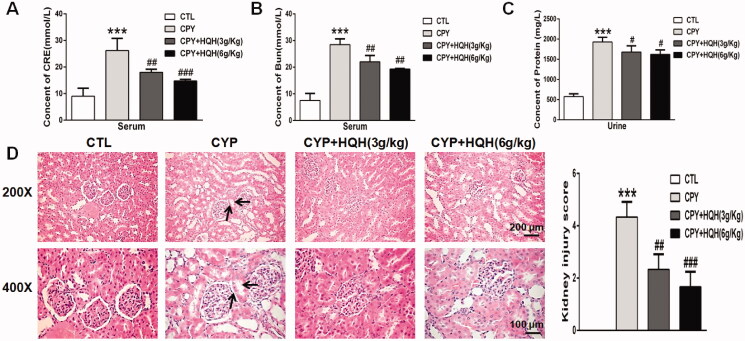
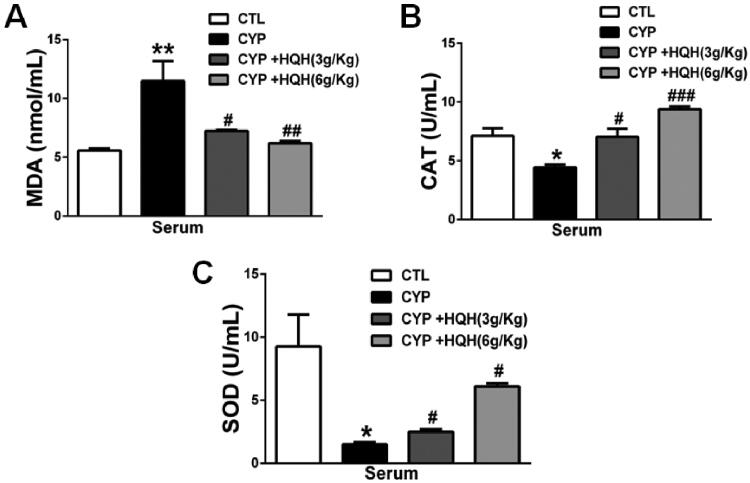
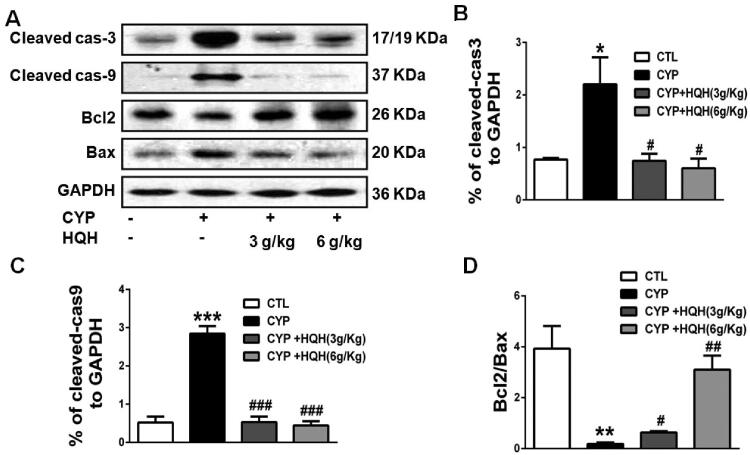
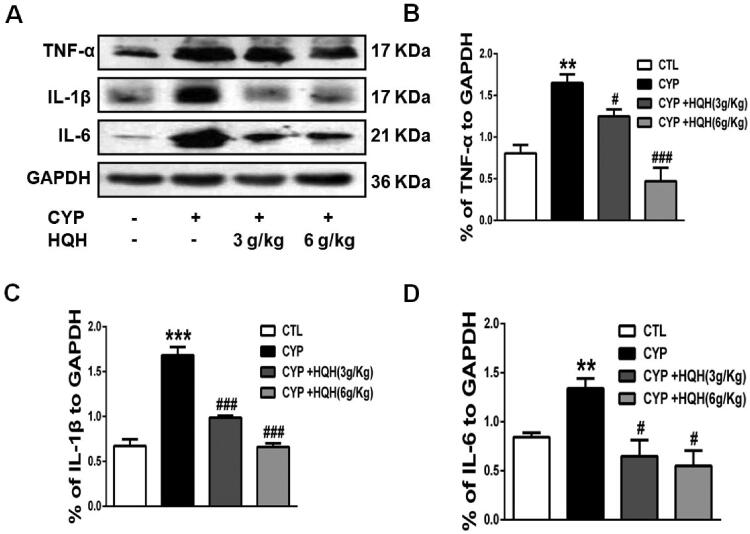
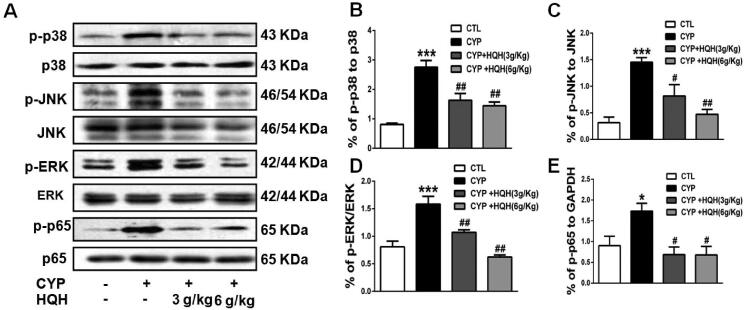
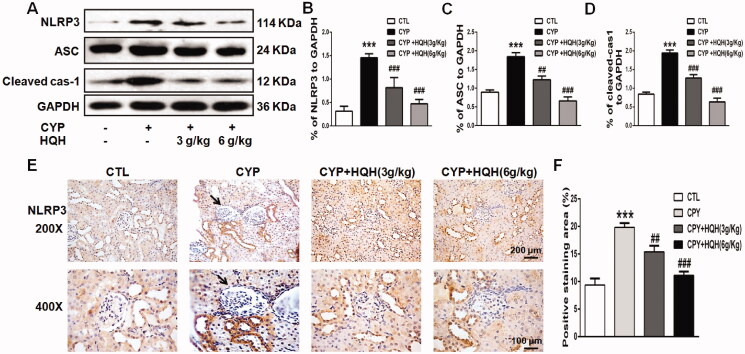
Both doses of HQH reduced the levels of serum creatinine (31.27%, 43.61%), urea nitrogen (22.66%, 32.27%) and urine protein (12.87%, 15.98%) in the CYP-treated rats, and improved histopathological aberrations. Additionally, HQH decreased the production of MDA (37.02%, 46.18%) and increased the activities of antioxidant enzyme CAT (59.18%, 112.25%) and SOD (67.10%, 308.34%) after CYP treatment. HQH protected against CYP-induced nephrotoxicity by modulating apoptosis-related protein and suppressing the inflammatory responses. Furthermore, the phosphorylation of the NF-κB/MAPK pathway and the activation of the NLRP3 inflammasome were significantly boosted in CYP-treated rats, which was also abrogated by HQH treatment.
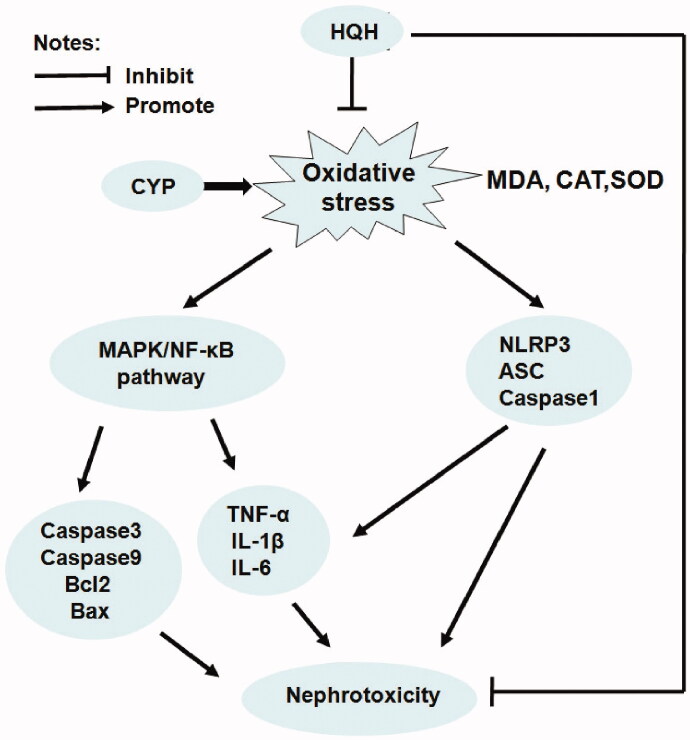
HQH effectively protected against CYP-induced nephrotoxicity, which was associated with regulating oxidative stress, apoptosis and inflammation, and so HQH may be a useful agent for treating nephrotoxicity caused by CYP.
严重的肾毒性极大地限制了常用有效化疗药物环磷酰胺(CYP)的临床应用。淮芪黄(HQH)是一种具有多种药理作用的中药复方,广泛用于治疗肾脏疾病。
本研究评估 HQH 对 CYP 诱导的大鼠肾毒性的保护作用。
四组 10 只 Sprague-Dawley 大鼠分别给予 HQH(3 和 6mg/kg)每日一次口服灌胃预处理 5 天,第 5 天给予 CYP(200mg/kg,ip)单次剂量;对照组给予等剂量生理盐水。测定肾功能指标、形态变化、氧化应激、细胞凋亡和炎症介质。此外,还分析了 NF-κB/MAPK 通路的磷酸化和 NLRP3 炎性体的激活。
HQH 降低了 CYP 处理大鼠血清肌酐(31.27%,43.61%)、尿素氮(22.66%,32.27%)和尿蛋白(12.87%,15.98%)水平,改善了组织病理学异常。此外,HQH 降低了 CYP 处理后 MDA 的产生(37.02%,46.18%),增加了抗氧化酶 CAT(59.18%,112.25%)和 SOD(67.10%,308.34%)的活性。HQH 通过调节细胞凋亡相关蛋白和抑制炎症反应来保护 CYP 诱导的肾毒性。此外,CYP 处理大鼠 NF-κB/MAPK 通路的磷酸化和 NLRP3 炎性体的激活显著增强,HQH 处理也可阻断这一过程。
HQH 能有效防治 CYP 诱导的肾毒性,其机制与调节氧化应激、细胞凋亡和炎症有关,因此 HQH 可能是治疗 CYP 引起的肾毒性的有效药物。