WHO Collaborating Centre for Reference and Research on Influenza, VIDRL, Peter Doherty Institute for Infection and Immunity, Melbourne 3053, Australia.
Department of Microbiology and Immunology, University of Melbourne, Melbourne 3053, Australia.
Viruses. 2021 Oct 17;13(10):2090. doi: 10.3390/v13102090.
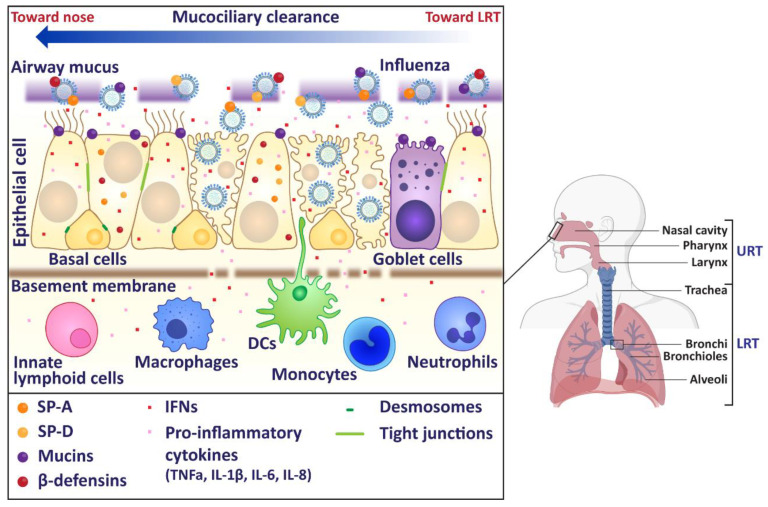
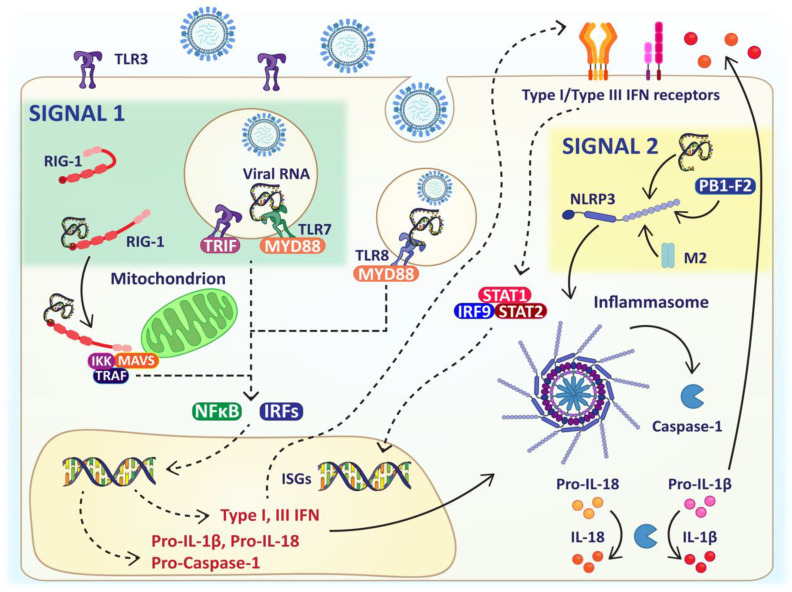
The innate immune system is the host's first line of immune defence against any invading pathogen. To establish an infection in a human host the influenza virus must replicate in epithelial cells of the upper respiratory tract. However, there are several innate immune mechanisms in place to stop the virus from reaching epithelial cells. In addition to limiting viral replication and dissemination, the innate immune system also activates the adaptive immune system leading to viral clearance, enabling the respiratory system to return to normal homeostasis. However, an overzealous innate immune system or adaptive immune response can be associated with immunopathology and aid secondary bacterial infections of the lower respiratory tract leading to pneumonia. In this review, we discuss the mechanisms utilised by the innate immune system to limit influenza virus replication and the damage caused by influenza viruses on the respiratory tissues and how these very same protective immune responses can cause immunopathology.
先天免疫系统是宿主抵御任何入侵病原体的第一道免疫防线。为了在人体宿主中建立感染,流感病毒必须在上呼吸道的上皮细胞中复制。然而,有几种先天免疫机制可以阻止病毒到达上皮细胞。除了限制病毒的复制和传播外,先天免疫系统还激活适应性免疫系统,导致病毒清除,使呼吸系统恢复正常的体内平衡。然而,过度活跃的先天免疫系统或适应性免疫反应可能与免疫病理学有关,并有助于下呼吸道的继发性细菌感染导致肺炎。在这篇综述中,我们讨论了先天免疫系统用来限制流感病毒复制的机制,以及流感病毒对呼吸道组织造成的损害,以及这些同样的保护性免疫反应如何导致免疫病理学。