Titahong Collins N, Ayongwa Gideon N, Waindim Yvonne, Nguafack Dubliss, Kuate Albert Kuate, Wandji Irene Adeline Goupeyou, Wringe Alison, Mbassa Vincent, Sander Melissa S, Mitchell Ellen M H
Tuberculosis Reference Laboratory Bamenda, Center for Health Promotion and Research, Bamenda, Northwest, Cameroon.
National TB Program, Yaoundé, Center, Cameroon.
Trop Med Infect Dis. 2021 Sep 22;6(4):171. doi: 10.3390/tropicalmed6040171.
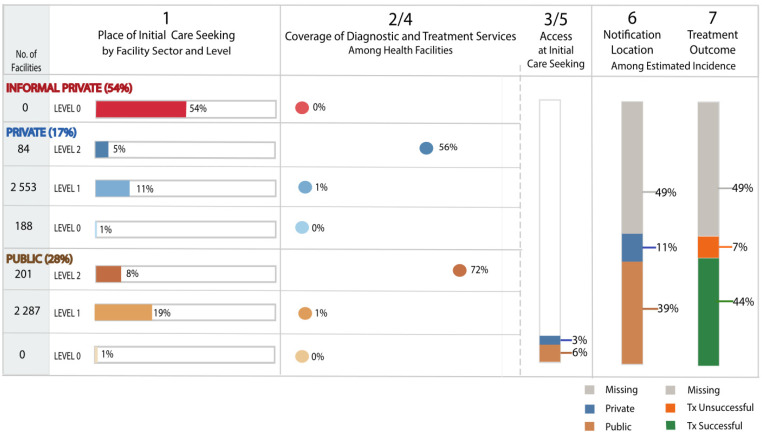
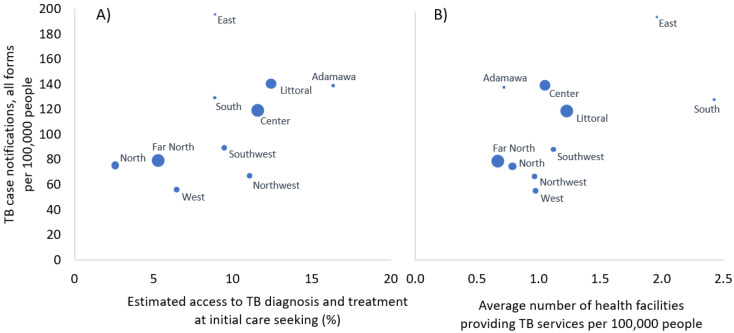
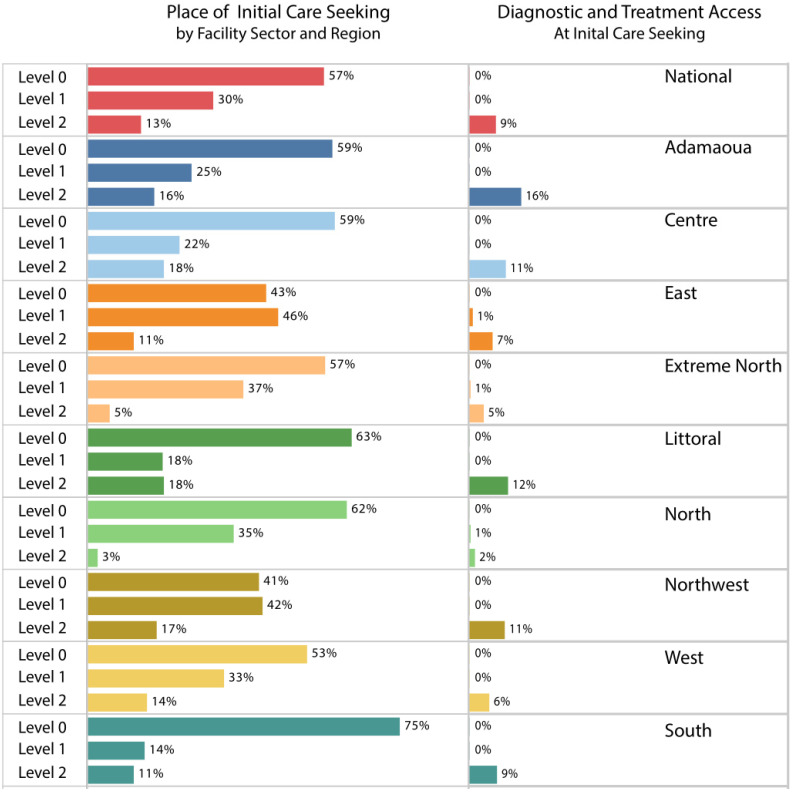
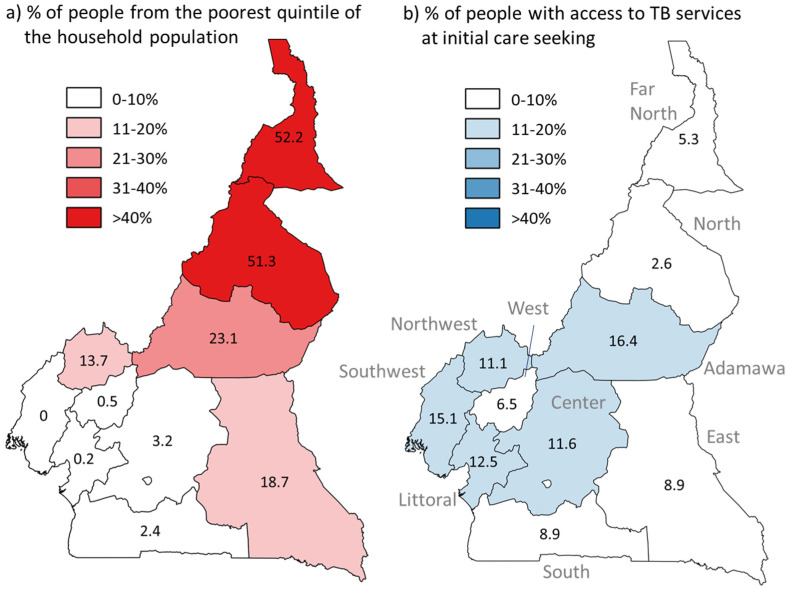
In Cameroon, in 2019, tuberculosis (TB) treatment coverage was estimated at 53%, indicating that almost half of all people sick with TB were not diagnosed or linked to care. To inform strategies to improve access to TB services, we conducted an evaluation of the alignment between patient-initiated care-seeking behavior and spatial and institutional allocation of TB services. Data sources included the Cameroon Demographic and Health Survey (2018), the Health Facility List (2017), and routinely collected TB surveillance data. Data visualization was performed in Tableau and QGIS. The pathway analysis showed that only an estimated 9% of people attended a health facility providing TB services at initial care-seeking, with access varying from <3% to 16% across the ten regions of the country. While 72% of government and 56% of private hospitals (Level 2 facilities) provide TB services, most Cameroonians (87%) initially chose primary care (Level 1) or informal private sector sites (Level 0) without TB services. The gaps were greatest in regions with the highest prevalence of poverty, a significant determinant for TB. These results indicate that access may be improved by expanding TB services at both public and private facilities across the country, prioritizing regions with the greatest gaps.
2019年在喀麦隆,结核病治疗覆盖率估计为53%,这表明几乎一半的结核病患者未被诊断或未获得治疗。为了为改善结核病服务可及性的策略提供依据,我们对患者主动寻求治疗行为与结核病服务的空间和机构分配之间的一致性进行了评估。数据来源包括喀麦隆人口与健康调查(2018年)、卫生设施清单(2017年)以及常规收集的结核病监测数据。数据可视化在Tableau和QGIS中进行。路径分析表明,在初次寻求治疗时,估计只有9%的人前往提供结核病服务的卫生设施就诊,该国十个地区的就诊率从不到3%到16%不等。虽然72%的政府医院和56%的私立医院(二级设施)提供结核病服务,但大多数喀麦隆人(87%)最初选择了没有结核病服务的初级保健机构(一级)或非正规私营部门场所(零级)。在贫困率最高的地区差距最大,贫困是结核病的一个重要决定因素。这些结果表明,通过在全国范围内扩大公立和私立设施的结核病服务,并优先考虑差距最大的地区,可以提高可及性。