Department of Biochemistry, Faculty of Biological Sciences, Quaid-i-Azam University, Islamabad, 45320, Pakistan.
Faculty of Agriculture, Shahrood University of Technology, 3619995161, Shahrood, Iran.
Sci Rep. 2021 Oct 26;11(1):21122. doi: 10.1038/s41598-021-00510-4.
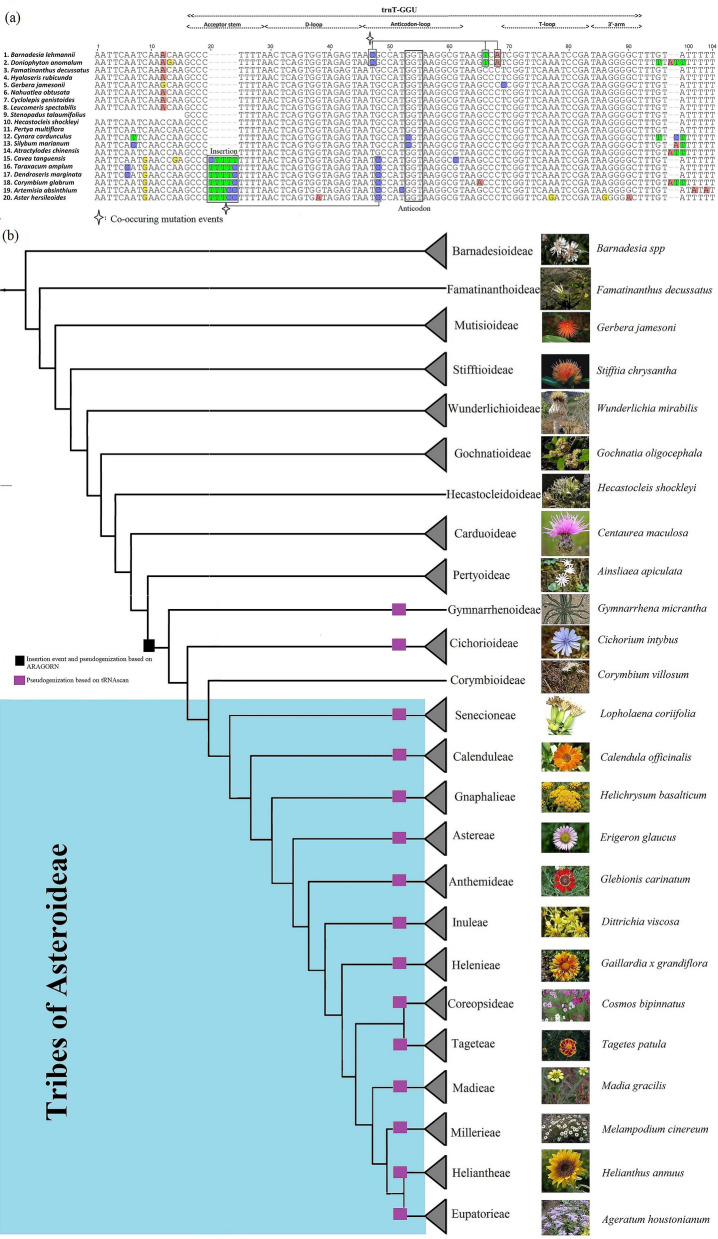
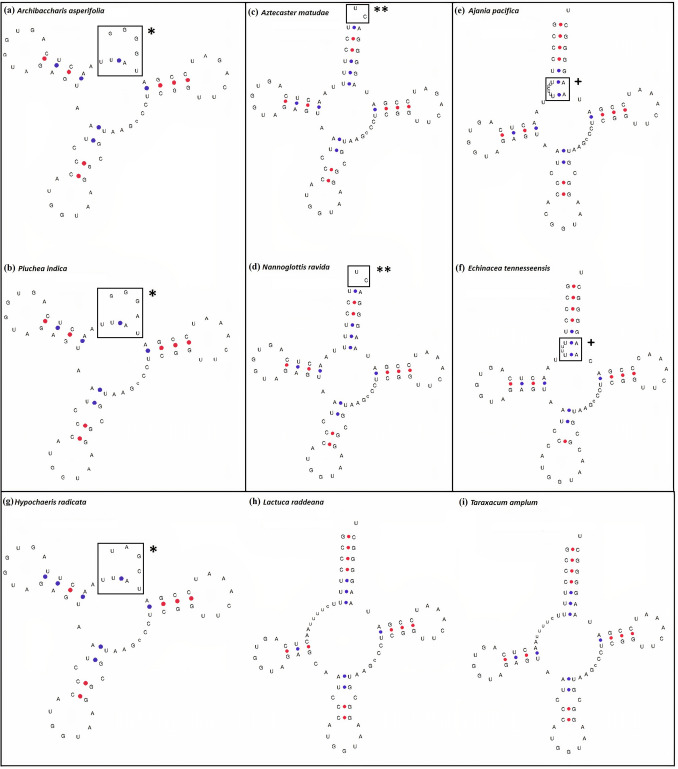
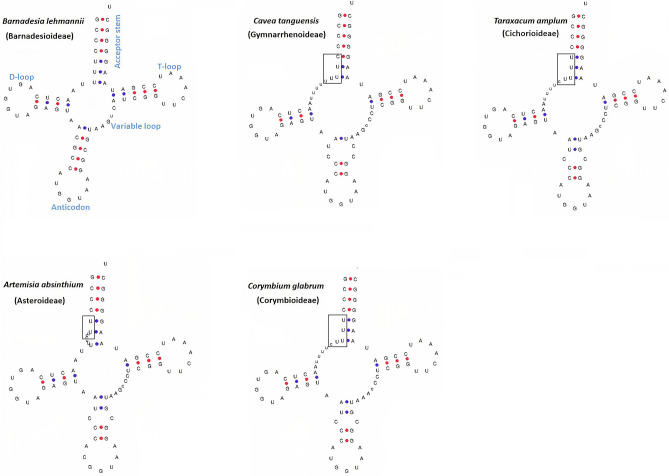
The chloroplast genome evolves through the course of evolution. Various types of mutational events are found within the chloroplast genome, including insertions-deletions (InDels), substitutions, inversions, gene rearrangement, and pseudogenization of genes. The pseudogenization of the chloroplast threonine (trnT-GGU) gene was previously reported in Cryptomeria japonica (Cupressaceae), Pelargonium × hortorum (Geraniaceae), and Anaphalis sinica and Leontopodium leiolepis of the tribe Gnaphalieae (Asteroideae, Asteraceae). Here, we performed a broad analysis of the trnT-GGU gene among the species of 13 subfamilies of Asteraceae and found this gene as a pseudogene in core Asteraceae (Gymnarrhenoideae, Cichorioideae, Corymbioideae, and Asteroideae), which was linked to an insertion event within the 5' acceptor stem and is not associated with ecological factors such as habit, habitat, and geographical distribution of the species. The pseudogenization of trnT-GGU was not predicted in codon usage, indicating that the superwobbling phenomenon occurs in core Asteraceae in which a single transfer RNA (trnT-UGU) decodes all four codons of threonine. To the best of our knowledge, this is the first evidence of a complete clade of a plant species using the superwobbling phenomenon for translation.
叶绿体基因组在进化过程中不断演变。在叶绿体基因组中发现了各种类型的突变事件,包括插入-缺失(InDels)、替换、倒位、基因重排和基因假基因化。先前曾在Cryptomeria japonica(柏科)、Pelargonium ×hortorum(天竺葵科)以及Anaphalis sinica 和 Leontopodium leiolepis 的Gnaphalieae 族(菊科 Asteraceae 的一个亚科)中报道过叶绿体苏氨酸(trnT-GGU)基因的假基因化。在这里,我们对 13 个菊科亚科的物种中的 trnT-GGU 基因进行了广泛分析,发现该基因在核心菊科(Gymnarrhenoideae、Cichorioideae、Corymbioideae 和 Asteraceae)中是一个假基因,与 5' 受体茎内的插入事件有关,而与物种的生态因素(如习性、栖息地和地理分布)无关。trnT-GGU 的假基因化在密码子使用中没有被预测到,这表明超扭摆现象发生在核心菊科中,其中单个转移 RNA(trnT-UGU)可以解码苏氨酸的所有四个密码子。据我们所知,这是首次在一个植物物种的完整分支中发现使用超扭摆现象进行翻译的证据。