Chen Weihong, Zhang Mengjiu, Guo Yan, Wang Zhen, Liu Qingqing, Yan Runze, Wang Yi, Wu Qiaoru, Yuan Kai, Sun Weiwei
Department of Nephrology, Dongzhimen Hospital, Beijing University of Chinese Medicine, Beijing, 100700, People's Republic of China.
School of Life Sciences, Beijing University of Chinese Medicine, Beijing, 100029, People's Republic of China.
Diabetes Metab Syndr Obes. 2021 Oct 19;14:4283-4296. doi: 10.2147/DMSO.S320169. eCollection 2021.
Dysbiosis of gut microbiota impairs the homeostasis of immune and metabolic systems. Although previous studies have revealed the correlation between gut microbiota and various diseases, the function between gut microbiota and diabetic nephropathy (DN) has not been discovered distinctly. In this study, we tried to investigate the profile and function of gut microbiota in DN.
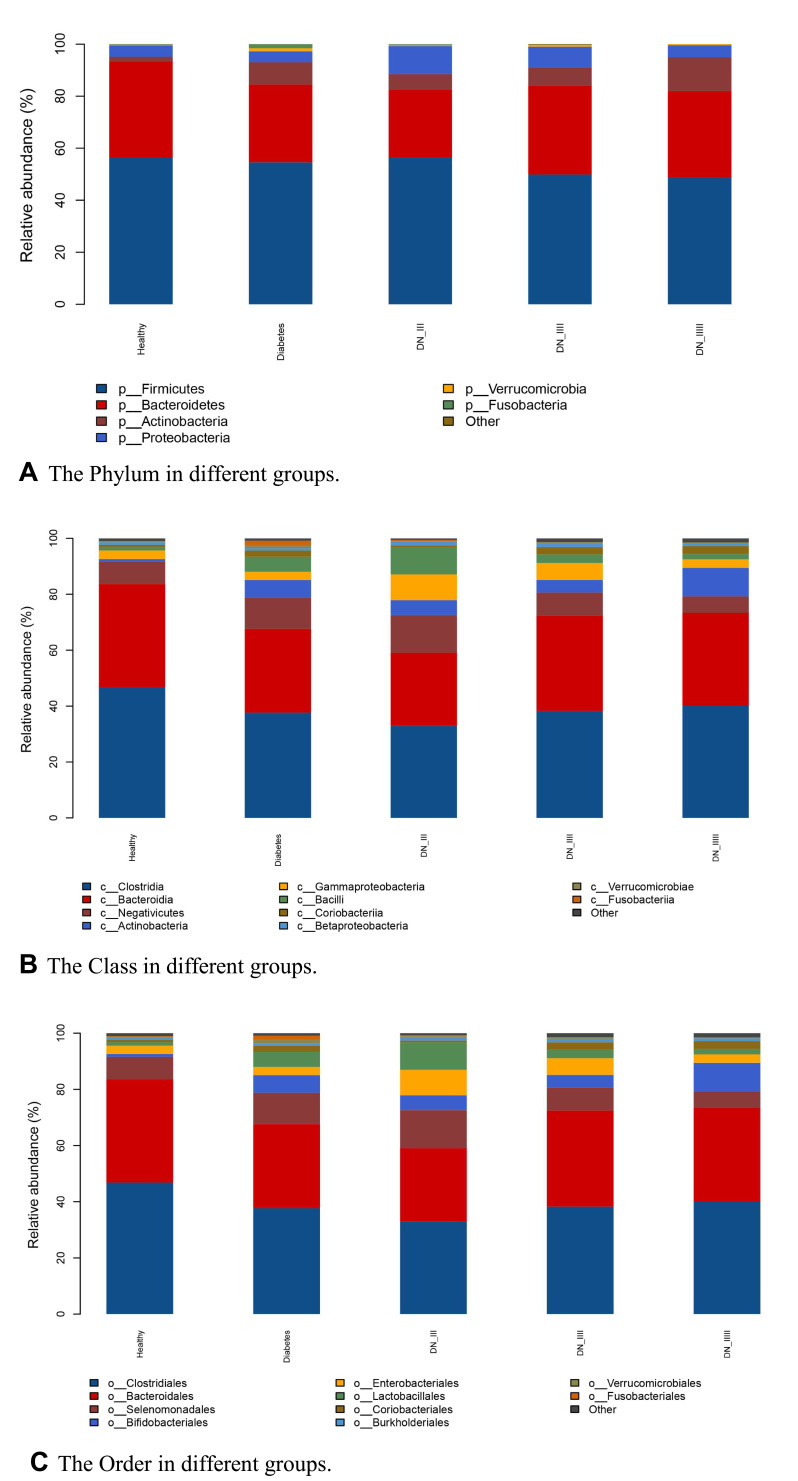
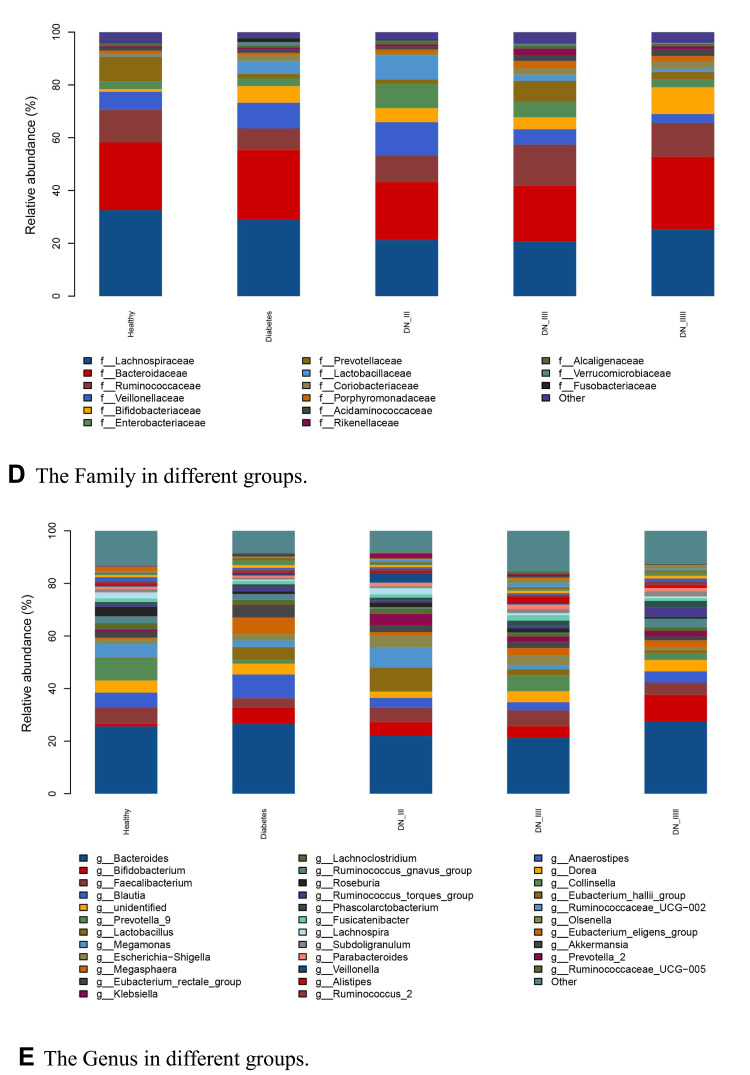
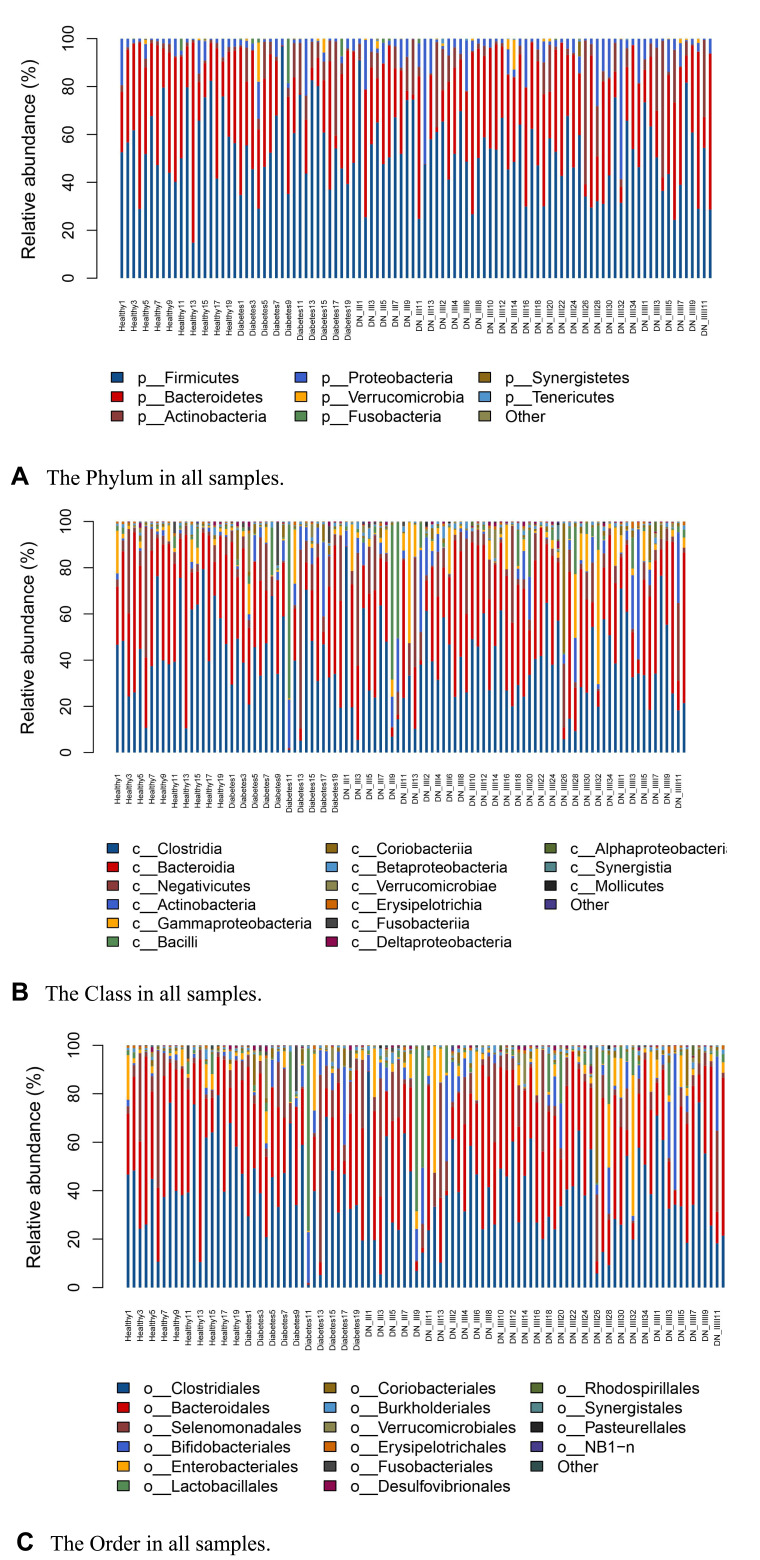
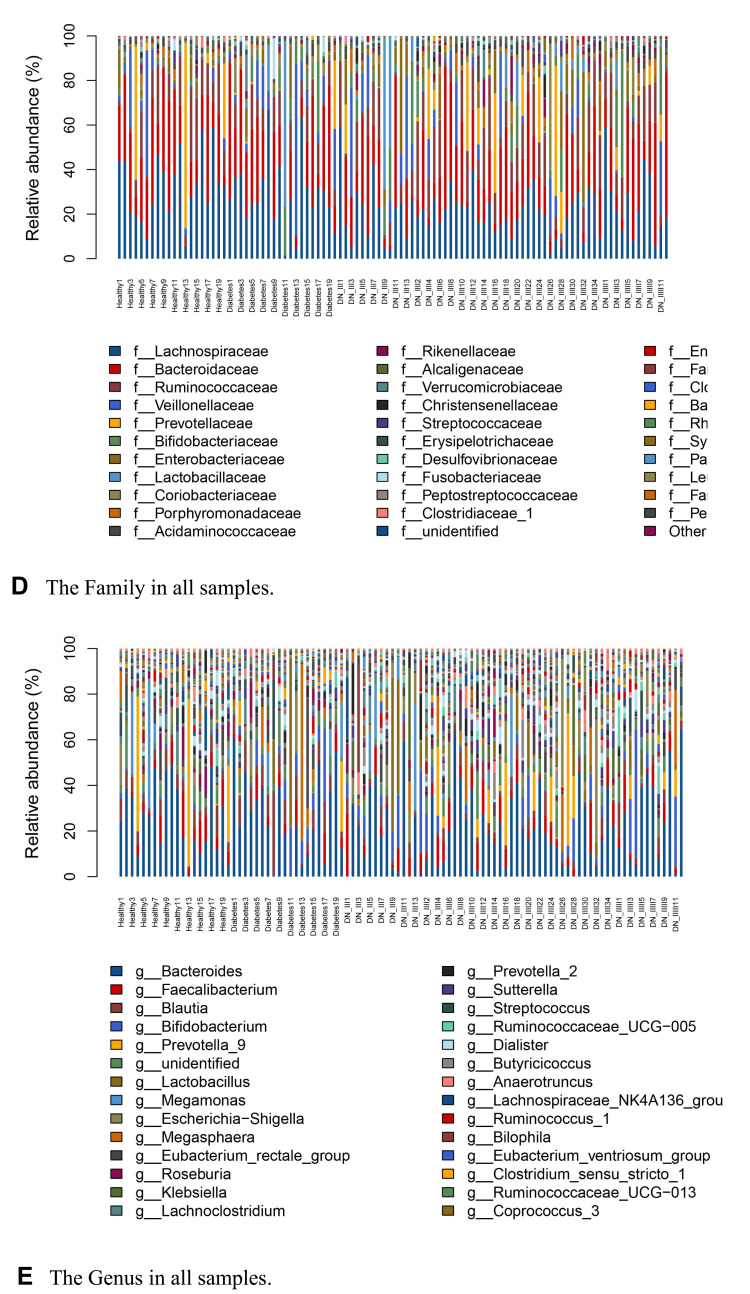
A total of 100 people were enrolled in this study. Twenty were healthy people, 20 were diabetes patients, and 60 were DN patients. The DN patients were divided into three stages including stage III, IV, and V. We conducted taxonomic analyses in different groups. The distributions of phyla, classes, orders, families, and genera in different groups and samples were investigated. We also evaluated the correlations between clinical parameters and gut microbiota in 60 DN patients.
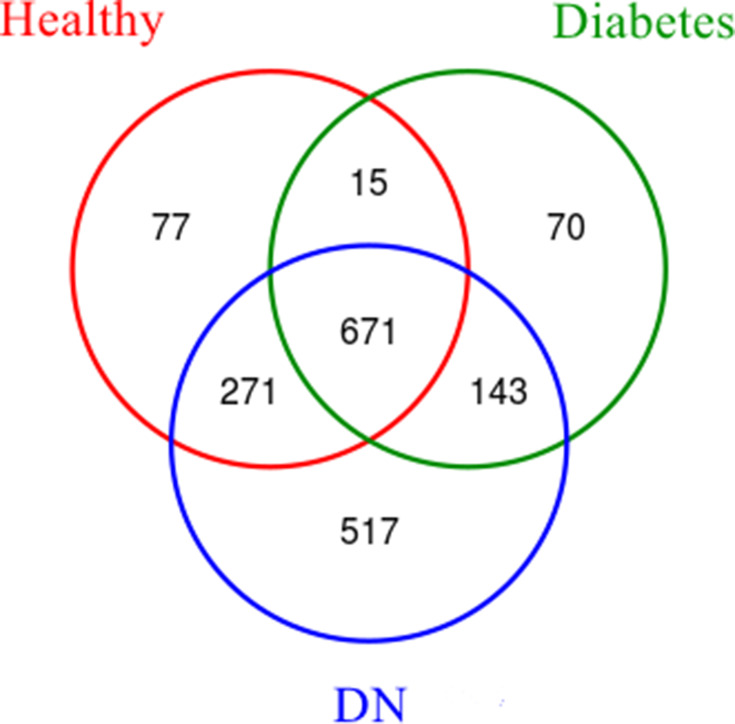
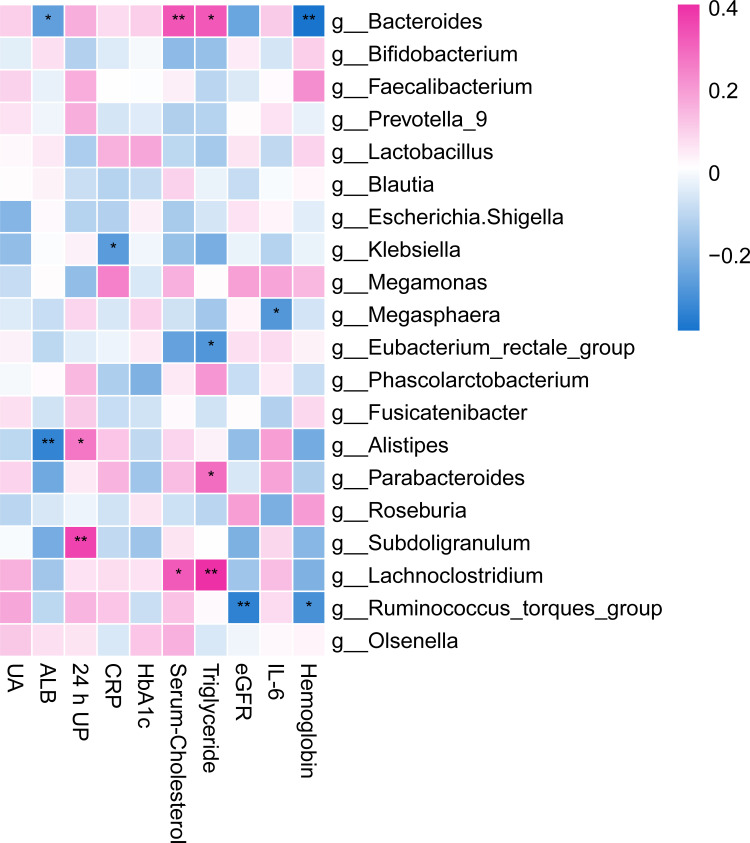
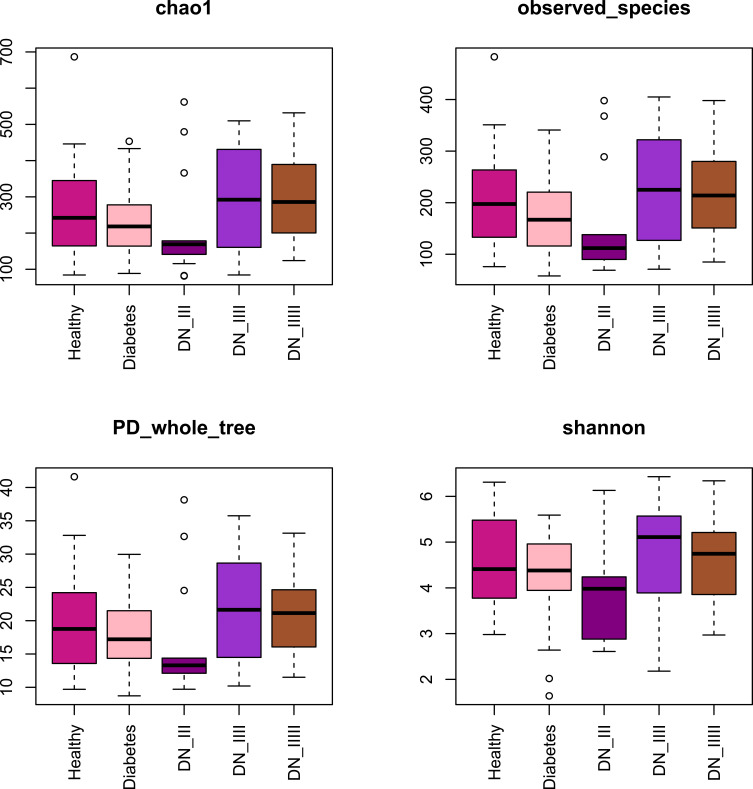
The gut microbiota in the healthy group, diabetes group, and DN group had 1764 operational taxonomic units (OTUs) in total. The healthy group had 1034 OTUs, the diabetes group had 899 OTUs, and the DN group had 1602 OTUs. The diversity of gut microbiota in the stage III DN group was smaller than that in the other groups. 24-h urinary protein was positively correlated with and , cholesterol was positively correlated with and , and estimated glomerular filtration rate was negatively correlated with group.
The gut microbiota might play an important role in the development and pathogenesis of DN. A change in gut microbiota diversity is correlated with disease progression. Some kinds of gut microbiota including , , , , and group might be detrimental factors in DN.
肠道微生物群失调会损害免疫和代谢系统的稳态。尽管先前的研究已经揭示了肠道微生物群与各种疾病之间的相关性,但肠道微生物群与糖尿病肾病(DN)之间的功能尚未明确发现。在本研究中,我们试图探究DN中肠道微生物群的特征和功能。
本研究共纳入100人。其中20人为健康人,20人为糖尿病患者,60人为DN患者。DN患者分为III期、IV期和V期三个阶段。我们对不同组进行了分类学分析。研究了不同组和样本中门、纲、目、科和属的分布情况。我们还评估了60例DN患者临床参数与肠道微生物群之间的相关性。
健康组、糖尿病组和DN组的肠道微生物群共有1764个可操作分类单元(OTU)。健康组有1034个OTU,糖尿病组有899个OTU,DN组有1602个OTU。III期DN组肠道微生物群的多样性低于其他组。24小时尿蛋白与[具体菌属1]和[具体菌属2]呈正相关,胆固醇与[具体菌属3]和[具体菌属4]呈正相关,估计肾小球滤过率与[具体菌属5]组呈负相关。
肠道微生物群可能在DN的发生和发病机制中起重要作用。肠道微生物群多样性的变化与疾病进展相关。某些肠道微生物群,包括[具体菌属1]、[具体菌属2]、[具体菌属3]、[具体菌属4]和[具体菌属5]组,可能是DN的有害因素。