MERLN Institute for Technology-Inspired Regenerative Medicine, Complex Tissue Regeneration Department, Maastricht University, P.O. Box 616, Maastricht, 6200MD, The Netherlands.
POLYMAT, University of the Basque Country UPV/EHU, Avenida Tolosa 72, Donostia/San Sebastián, Gipuzkoa, 20018, Spain.
Adv Healthc Mater. 2022 Jan;11(1):e2101415. doi: 10.1002/adhm.202101415. Epub 2021 Nov 12.
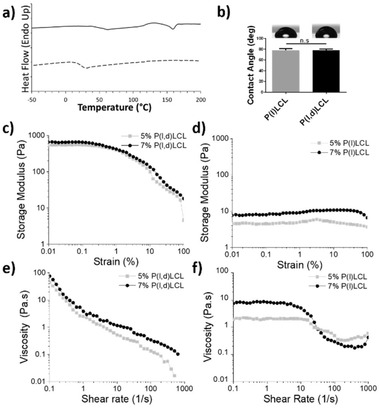
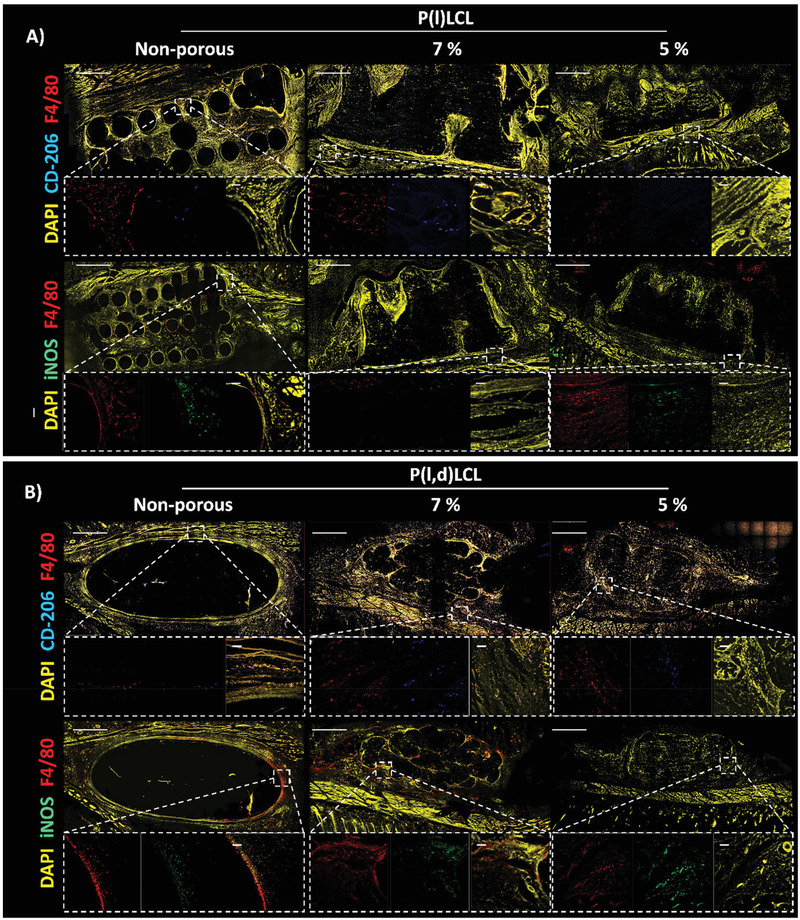
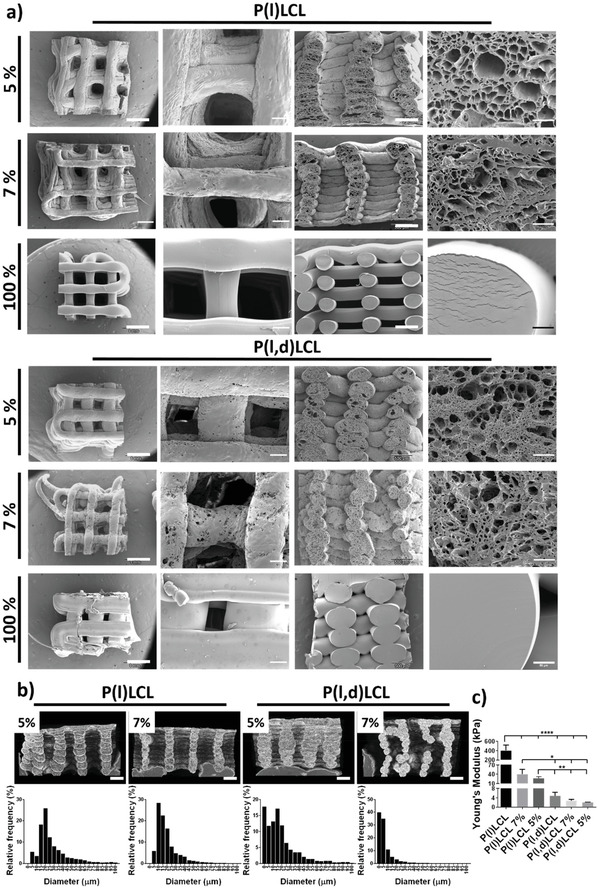
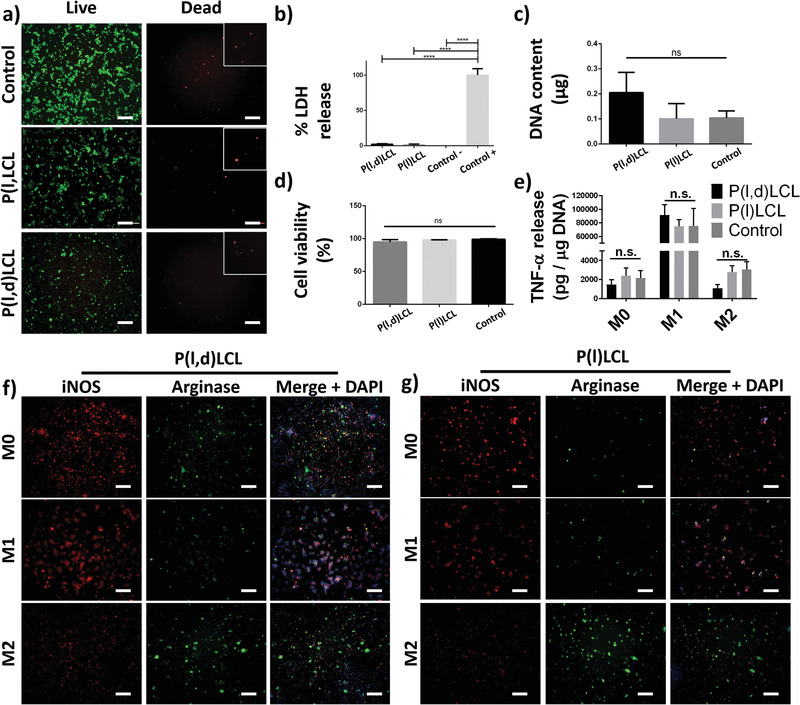
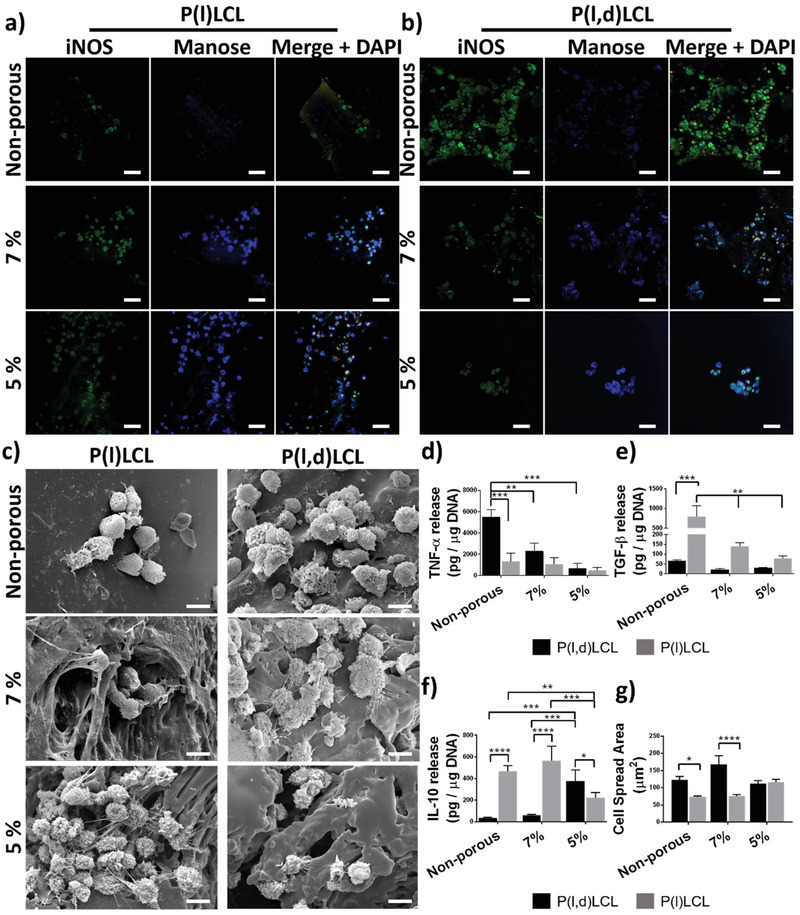
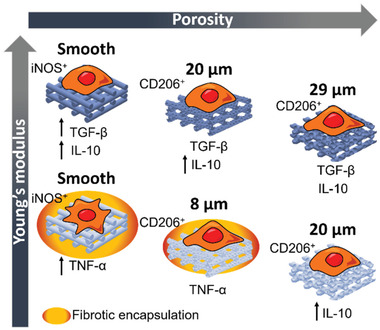
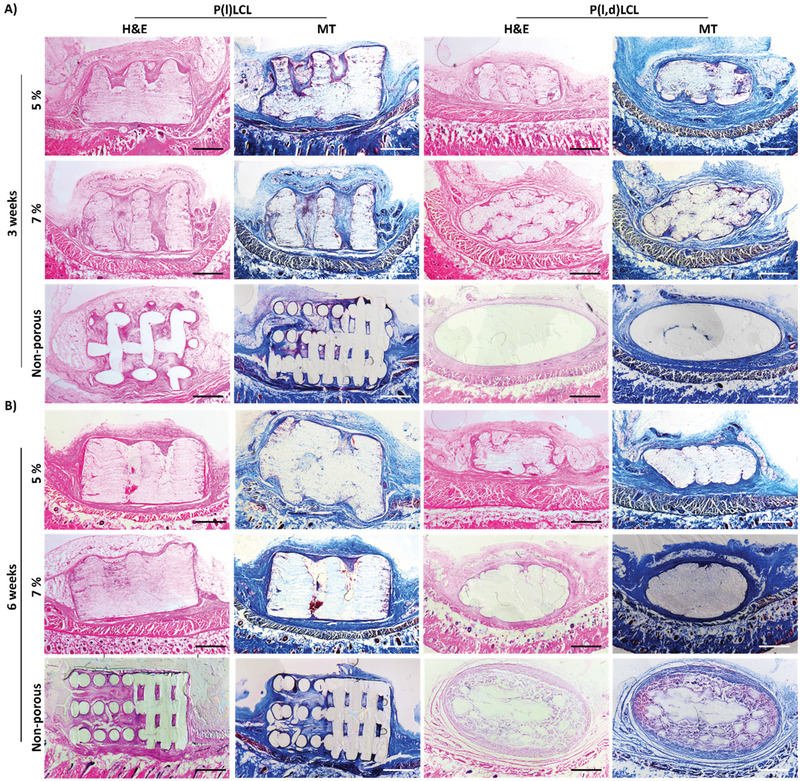
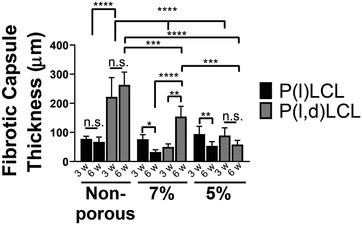
Tissue regeneration evolves toward the biofabrication of sophisticated 3D scaffolds. However, the success of these will be contingent to their capability to integrate within the host. The control of the mechanical or topographical properties of the implant appears as an ideal method to modulate the immune response. However, the interplay between these properties is yet not clear. Dual-porosity scaffolds with varying mechanical and topographical features are created, and their immunomodulatory properties in rat alveolar macrophages in vitro and in vivo in a rat subcutaneous model are evaluated. Scaffolds are fabricated via additive manufacturing and thermally induced phase separation methods from two copolymers with virtually identical chemistries, but different stiffness. The introduction of porosity enables the modulation of macrophages toward anti-inflammatory phenotypes, with secretion of IL-10 and TGF-β. Soft scaffolds (<5 kPa) result in a pro-inflammatory phenotype in contrast to stiffer (>40 kPa) scaffolds of comparable porosities supporting a pro-healing phenotype, which appears to be related to the surface spread area of cells. In vivo, stiff scaffolds integrate, while softer scaffolds appear encapsulated after three weeks of implantation, resulting in chronic inflammation after six weeks. The results demonstrate the importance of evaluating the interplay between topography and stiffness of candidate scaffolds.
组织再生朝着复杂 3D 支架的生物制造方向发展。然而,这些支架的成功将取决于它们在宿主内的整合能力。控制植入物的机械或形貌特性似乎是调节免疫反应的理想方法。然而,这些特性之间的相互作用尚不清楚。我们创建了具有不同机械和形貌特征的双重孔隙支架,并在体外大鼠肺泡巨噬细胞和体内大鼠皮下模型中评估了它们的免疫调节特性。支架通过增材制造和热诱导相分离方法从两种化学性质几乎相同但刚度不同的共聚物中制造。引入孔隙率使巨噬细胞向抗炎表型转变,分泌 IL-10 和 TGF-β。与具有相似孔隙率的更硬 (>40 kPa) 支架相比,软支架 (<5 kPa) 导致促炎表型,这似乎与细胞的表面展开面积有关。在体内,硬支架会整合,而较软的支架在植入三周后似乎会被包裹,导致六周后出现慢性炎症。研究结果表明,评估候选支架的形貌和刚度之间相互作用的重要性。