Al-Rashidi Hayat S, El-Wakil Eman S
Department of Biology, College of Science, Qassim University, Buraydah 52571, Saudi Arabia.
Department of Parasitology, Theodor Bilharz Research Institute, Kornaish El-Nile, Warrak El-Hadar, Imbaba, P.O. Box 30, Giza 12411, Egypt.
Microorganisms. 2024 Oct 16;12(10):2076. doi: 10.3390/microorganisms12102076.
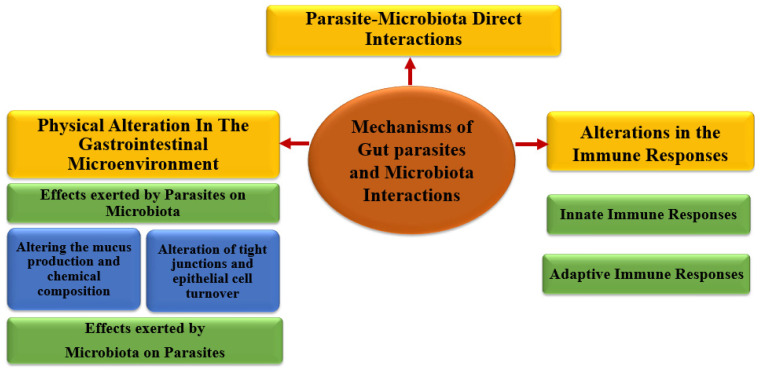
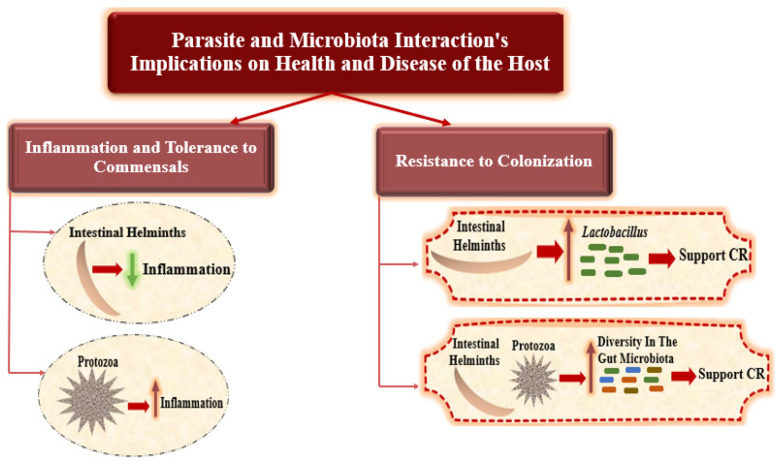
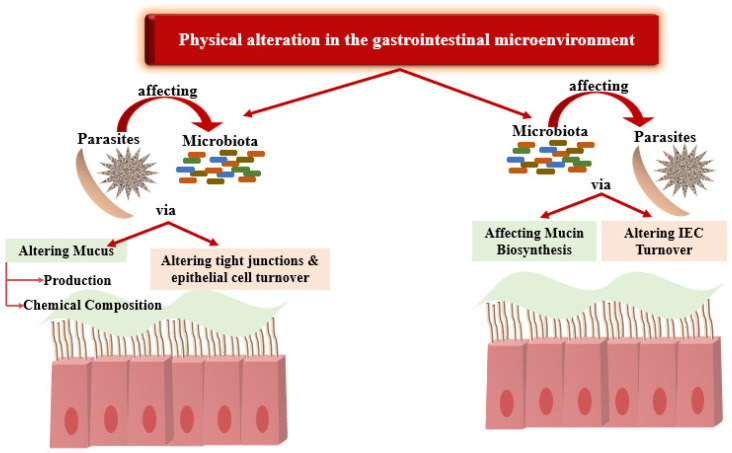
The human gut hosts a diverse and active community of bacteria that symbiotically support the physiology, metabolism, and immunity of the intestinal lining. Nevertheless, a dynamic community of parasites (helminths and protozoa) may share a habitat with gut-dwelling microbiota. Both microbiota and parasites can significantly change the physical and immunological environment of the gut, thus generating several mechanisms of interaction. Studying this field is crucial for understanding the pathogenesis of parasitic diseases. Additionally, intestinal microbiota and gut-dwelling parasites may interact with each other and with the host immunity to alleviate or exacerbate the disease. These interactions can alter the pathogenicity of both parasites and microbiota, thereby changing the infection outcomes and the overall disease profile. Parasites and microbiota interactions occur via several mechanisms, including physical alteration in both the gastrointestinal microenvironment and the adaptive and innate immune responses. By modulating the microbiota, treating parasitic infections and microbiota dysbiosis may be improved through knowing the mechanisms and consequences of the interactions between intestinal parasites and the microbiota. Thus, new biological tools of treatment including probiotics can be introduced, particularly with the emergence of drug resistance and adverse effects.
人类肠道中栖息着一个多样化且活跃的细菌群落,它们以共生方式支持肠壁的生理功能、新陈代谢和免疫功能。然而,一个动态的寄生虫群落(蠕虫和原生动物)可能与肠道微生物群共享一个栖息地。微生物群和寄生虫都能显著改变肠道的物理和免疫环境,从而产生多种相互作用机制。研究这一领域对于理解寄生虫病的发病机制至关重要。此外,肠道微生物群和肠道寄生虫可能相互作用,并与宿主免疫相互作用,从而减轻或加重疾病。这些相互作用可以改变寄生虫和微生物群的致病性,从而改变感染结果和整体疾病状况。寄生虫与微生物群的相互作用通过多种机制发生,包括胃肠道微环境以及适应性和先天性免疫反应的物理改变。通过调节微生物群,了解肠道寄生虫与微生物群之间相互作用的机制和后果,可能会改善寄生虫感染和微生物群失调的治疗。因此,可以引入包括益生菌在内的新的生物治疗工具,特别是在出现耐药性和不良反应的情况下。