Tiji Salima, Rokni Yahya, Benayad Ouijdane, Laaraj Nassima, Asehraou Abdeslam, Mimouni Mostafa
Team of Electrochemistry, Laboratory of Applied Chemistry, Faculty of Sciences Oujda, University Mohammed First, Oujda, Morocco.
Laboratory of Bio-Resources, Biotechnology, Ethno-Pharmacology and Health, Faculty of Sciences Oujda, University Mohammed First, Oujda, Morocco.
Evid Based Complement Alternat Med. 2021 Oct 23;2021:8308050. doi: 10.1155/2021/8308050. eCollection 2021.
L. () is an aromatic and medicinal plant commonly used in Mediterranean cuisine. Its grains contain a large amount of fixed oil and have many therapeutic virtues and medicinal properties (antioxidant, antidiabetic, antimicrobial, and anticancer).
The aim of this work is to study the antimicrobial activity of L. extracts and separated fractions on various pathogenic strains and to correlate that with its chemical composition.
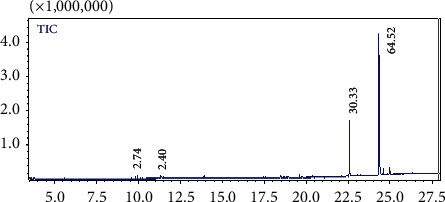
Extracts from Moroccan seeds were extracted using successive organic solvents, and their hexane and acetone extracts were separated by column chromatography. The chemical composition of extracts, fractions, and essential oil was determined by GC-MS and HPLC-DAD. Extracts and fractions were evaluated for antimicrobial activity through disk diffusion against Gram-positive bacteria (, , and , Gram-negative bacteria and and yeast ( for 1 mg/mL concentration. Bacterial strains were followed to study their behaviors over time in different concentrations. The minimum inhibitory concentration of essential oil was determined against , , , and . . Although hexane extract was active against both types of bacteria (Gram+ and Gram-), some of its fractions were specifically active against only one type. Fraction (SH4) had the highest activity (15 mm inhibitory diameter). Acetone extract was nonactive but surprisingly resulted in specific active fractions, and the most interesting one was (SA7) that had an inhibitory diameter of 13 mm. This antibacterial effect was related to fatty acids (linoleic and palmitic acids) in (SH4) and 17 pentatriacontene in (SA7). Moreover, the antifungal activity of hexane fractions (10-13 mm) was higher than hexane extract (8 mm), but for acetone, it was the opposite. Acetone extract had a higher activity (18 mm) than its fractions (8-12 mm), except for (SA7) (19 mm). Those inhibitions were attributed to gallic acid, cysteine, and apigenin in acetone extract and cysteine with ascorbic acid in fraction (SA7). Antifungal activity of the essential oil was more pronounced than the antibacterial one. Indeed, determined MICs in the first case were on the microgram scale (MIC = 8 g/mL, ), while in the second case, they were on the milligram scale (MIC = 0.96 mg/mL for , 0.5 mg/mL for and 0.68 mg/mL for ). This antifungal activity was attributed to three major compounds beta-cymene, alpha-thujene, origanene, and thymoquinone. Results of strains behavior over time at different concentrations of the fractions showed all the curves went through a maximum around 20 hours and had a delay of expression of 5 hours at the start. Taking all results into count, L. extracts and/or derived principles could form promising antimicrobial agents for therapeutical and industrial uses.
L.()是一种芳香药用植物,常用于地中海美食。其种子含有大量的固定油,具有多种治疗功效和药用特性(抗氧化、抗糖尿病、抗菌和抗癌)。
本研究旨在研究L.提取物及其分离组分对各种致病菌株的抗菌活性,并将其与化学成分相关联。
采用连续有机溶剂萃取摩洛哥L.种子提取物,并用柱色谱法分离其己烷和丙酮提取物。通过气相色谱 - 质谱联用(GC - MS)和高效液相色谱 - 二极管阵列检测(HPLC - DAD)测定提取物、组分和精油的化学成分。通过纸片扩散法评估提取物和组分对革兰氏阳性菌(、、和)、革兰氏阴性菌(和)以及酵母(浓度为1mg/mL)的抗菌活性。跟踪细菌菌株以研究它们在不同浓度下随时间的行为。测定L.精油对、、、和的最低抑菌浓度。虽然己烷提取物对两种类型的细菌(革兰氏阳性菌和革兰氏阴性菌)均有活性,但其一些组分仅对一种类型具有特异性活性。组分(SH4)具有最高活性(抑菌直径为15mm)。丙酮提取物无活性,但令人惊讶的是产生了特异性活性组分,最有趣的是(SA7),其抑菌直径为13mm。这种抗菌作用与(SH4)中的脂肪酸(亚油酸和棕榈酸)以及(SA7)中的17 - 三十五碳烯有关。此外,己烷组分的抗真菌活性(10 - 13mm)高于己烷提取物(8mm),但对于丙酮提取物则相反。丙酮提取物的活性(18mm)高于其组分(8 - 12mm),除了(SA7)(19mm)。这些抑制作用归因于丙酮提取物中的没食子酸、半胱氨酸和芹菜素以及组分(SA7)中的半胱氨酸和抗坏血酸。精油的抗真菌活性比抗菌活性更显著。实际上,在第一种情况下测定的最低抑菌浓度为微克级(最低抑菌浓度 = 8μg/mL,),而在第二种情况下,它们为毫克级(对的最低抑菌浓度 = 0.96mg/mL,对的最低抑菌浓度 = 0.5mg/mL,对的最低抑菌浓度 = 0.68mg/mL)。这种抗真菌活性归因于三种主要化合物β - 伞花烃、α - 侧柏烯、奥里根烯和百里醌。不同浓度组分下菌株随时间行为的结果表明,所有曲线在约20小时左右达到最大值,并且在开始时有5小时的表达延迟。综合所有结果,L.提取物和/或其衍生成分可成为用于治疗和工业用途的有前景的抗菌剂。