Department of Dermatology, Dermatology Hospital of Southern Medical University, Guangzhou, China.
Front Immunol. 2021 Oct 18;12:764384. doi: 10.3389/fimmu.2021.764384. eCollection 2021.
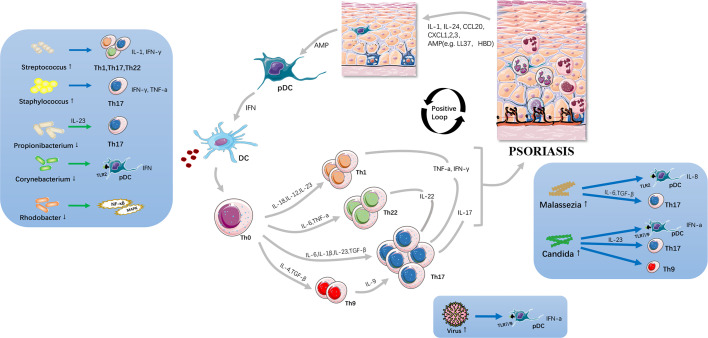
Psoriasis is a multifactorial immune-mediated disease. The highly effective and eligible treatment for psoriasis is limited, for its specific pathogenesis is incompletely elucidated. Skin microbiota is a research hotspot in the pathogenesis of immune-mediated inflammatory skin diseases nowadays, and it may have significant involvement in the provocation or exacerbation of psoriasis with broadly applicable prospects. It is postulated that skin microbiota alternation may interplay with innate immunity such as antimicrobial peptides and Toll-like receptors to stimulate T-cell populations, resulting in immune cascade responses and ultimately psoriasis. Achieving a thorough understanding of its underlying pathogenesis is crucial. Herein, we discuss the potential immunopathogenesis of psoriasis from the aspect of skin microbiota in an attempt to yield insights for novel therapeutic and preventive modalities for psoriasis.
银屑病是一种多因素免疫介导的疾病。由于其特定的发病机制尚未完全阐明,目前对于银屑病,高度有效的合格治疗方法十分有限。皮肤微生物组是当今免疫介导的炎症性皮肤病发病机制的研究热点,它可能在银屑病的诱发或加重中具有重要作用,具有广泛的应用前景。据推测,皮肤微生物组的改变可能与抗菌肽和 Toll 样受体等先天免疫相互作用,刺激 T 细胞群,导致免疫级联反应,最终导致银屑病。彻底了解其潜在的发病机制至关重要。在此,我们从皮肤微生物组的角度探讨银屑病的潜在免疫发病机制,以期为银屑病的新型治疗和预防方法提供思路。